
The Plants Come In: 10 Nordic Pieces for Indoor Greenery
The balcony plants come inside before the first frost, and most of them arrive in the wrong pot. Ten Nordic pots, saucers and watering cans for the dark half.
Read More →The week the clocks change is the week the first fire gets lit. Ten Nordic pieces for the hearth, from the wood carrier to the lidded ash bucket.
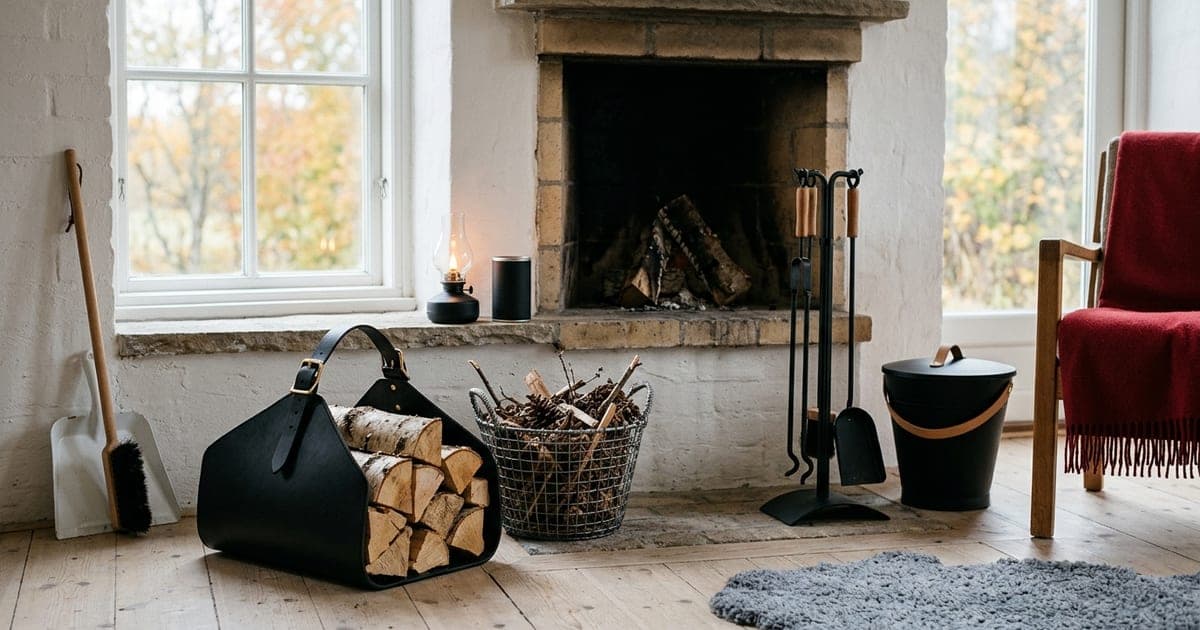
Nobody writes the date down, but every house with a chimney has one: the evening somebody decides it is cold enough, finds the matches, and lights the first fire of the year. In the Nordics that evening falls around now, the week the clocks change and the afternoon gives up at four. The fire itself is free. What makes it a habit rather than an event is everything standing around it.
A hearth collects clutter faster than any other corner of a room, which is why the pieces below are mostly containers: for logs, for kindling, for matches, for the ash that has to go out in the morning. All ten are in stock in the UK, Germany, Norway and Denmark, so you can compare what the shops are asking on ScandiDeals before the cold settles in properly.
⸻
Cut from black leather and stitched in white, with a strap and buckle across the top that doubles as the handle. It is a carrier more than a basket: you fill it at the woodpile, walk it in, and set it down by the stove without a trail of bark across the floor. The leather stiffens into the shape of its own load within a winter. The Ørskov firewood basket holds an evening's worth and, empty, looks more like luggage than kit.

⸻
Steel wire woven by hand into a twenty-four-litre bucket, with a bail handle that drops flat against the rim when you let go of it. Nothing about it can rot or hold damp, which counts when the wood comes in wet: the open weave lets a load dry out and lets the dust fall through instead of settling in the bottom. Kindling, cones, rolled newspaper, a stack of split birch. The Korbo bucket spends the summer in a hallway holding something else.

⸻
A black lacquered tube with a lid that knocks off, the running child in gold down one side. Inside are a hundred long matches, which is the only kind worth having at a fireplace: a short match asks you to put your hand where the fire is about to be. Long ones reach the back of the grate and let you light paper under a stacked load. The matchstick tube stands on the mantelpiece, where matches can actually be found.

⸻
A sleeve of brushed brass that an ordinary matchbox slides into, etched with the harlequin from Stig Lindberg's Karneval: pointed cap, bells, a coat drawn in fine diamonds. A cut-away at one end lets a thumb push the box back out when it is empty, so the brass outlives any number of refills. The Karneval matchbox holder is the small weight of metal that stops a box of matches looking like shopping.

⸻
Powder-coated black steel, drawn as slim uprights that bend over into hooks, standing on a curved base plate that doubles as the tray for whatever comes off the brush. The tools hang separately rather than crowding into a pot, so each one lifts out on its own. Ferm Living works out of Copenhagen, and the restraint is the point: not a scroll or a curlicue anywhere. The Port set spends most of its life being looked at rather than used.

⸻
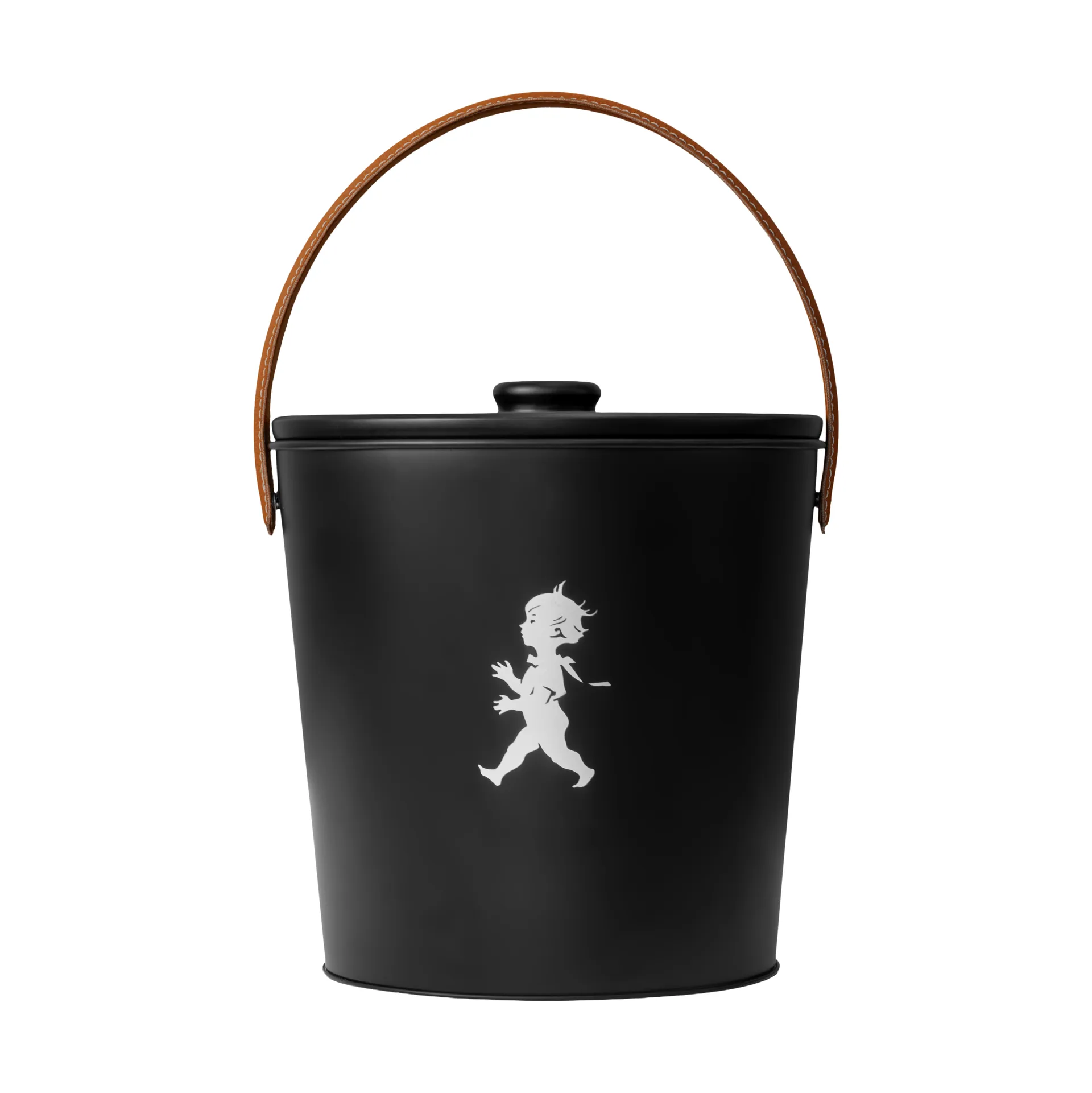
The same running child, in white this time, on a tapered matt black bucket with a close-fitting lid and a tan leather handle stitched in white. The lid is the whole argument. Cold ash is a fine powder that travels on the smallest draught, and clearing a grate into an open pail redecorates the room. With a lid on, the morning job takes one trip. The ash bucket can also hold the kindling until the season starts in earnest.
⸻
A long beech handle, dark horsehair bristles, and a chalk-white pan on a handle of its own, the two hooked together so they stand in the corner as a single object. Horsehair is soft enough not to scratch a stone hearth and stiff enough to move grit and splinters. Sweeping in front of a fire is a daily job from November onwards, and doing it upright is the difference between doing it and meaning to. The Iris Hantverk set earns the space it takes.

⸻
A heavy black base ten centimetres across, with a clear glass shade that lifts straight off. The flame sits low and deep inside it, which is what a room with an open chimney needs: a draught that makes a candle flicker all evening leaves this one alone. Stelton is a Copenhagen house: plain, weighted, nothing to catch the eye but the light. The Hoop lantern works on the hearth before the fire is lit and outside the door on a still night.

⸻
Wool woven in a diagonal twill, 130 by 200 centimetres, in a red that reads almost brown across a room and then warms up the moment the fire does. Klippan has been weaving in southern Sweden since 1879, and Gotland is the plain one in the range: no pattern, a knotted fringe at each end, and length enough to cover a tall person lying down. The Gotland throw belongs on the arm of whichever chair is closest to the heat.

⸻
A single sheepskin in a greyish stone colour, left in its natural outline, with wool cut short so the curls stay tight instead of parting into clumps. On the boards in front of a stove it takes the chill out of the floor for anyone sitting down there; over a hard chair it does the same job vertically. Short wool sheds less and brushes back up after being sat on. The Ella sheepskin is where people end up instead of the sofa.

⸻
None of this makes a fire burn better. What it does is remove the reasons not to light one: the wood that was left outside, the matches nobody can find, the ash still in the grate from the last time. A hearth that is set up properly gets used three nights a week instead of three nights a winter, and that is the whole return on a leather carrier and a bucket with a lid.
Buy for the ten years rather than the ten weeks. Steel wire, horsehair, brass, wool and leather all age into something better looking than they started, and none of them mind heat or being handled with cold hands. When you have decided which pieces your own fireplace is missing, compare what the shops across the UK, Germany, Norway and Denmark are charging on ScandiDeals first — the same piece rarely costs the same thing in two places.
The balcony plants come inside before the first frost, and most of them arrive in the wrong pot. Ten Nordic pots, saucers and watering cans for the dark half.
Read More →
From late October the washing dries indoors until spring. Ten baskets, rails and racks that help a Nordic flat absorb a week of laundry.
Read More →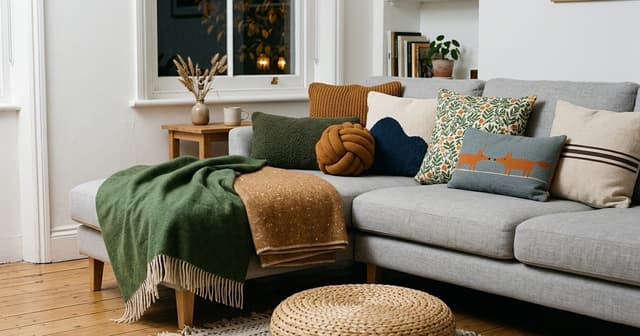
Somewhere in October the blanket stops being folded away. Ten Nordic pieces for the sofa: three throws, six cushions and something to put your feet on.
Read More →