
10 Scandinavian Vases and the Art of the Single Stem
A bouquet is a Friday purchase and a Tuesday problem. Ten Nordic vessels for one stem, three stems or a branch, from a pin holder to a frosted glass tower.
Read More →In the Nordic countries October is the month the candles come out and stay out until spring. Ten pieces in glass, brass, porcelain and steel to carry the flame.
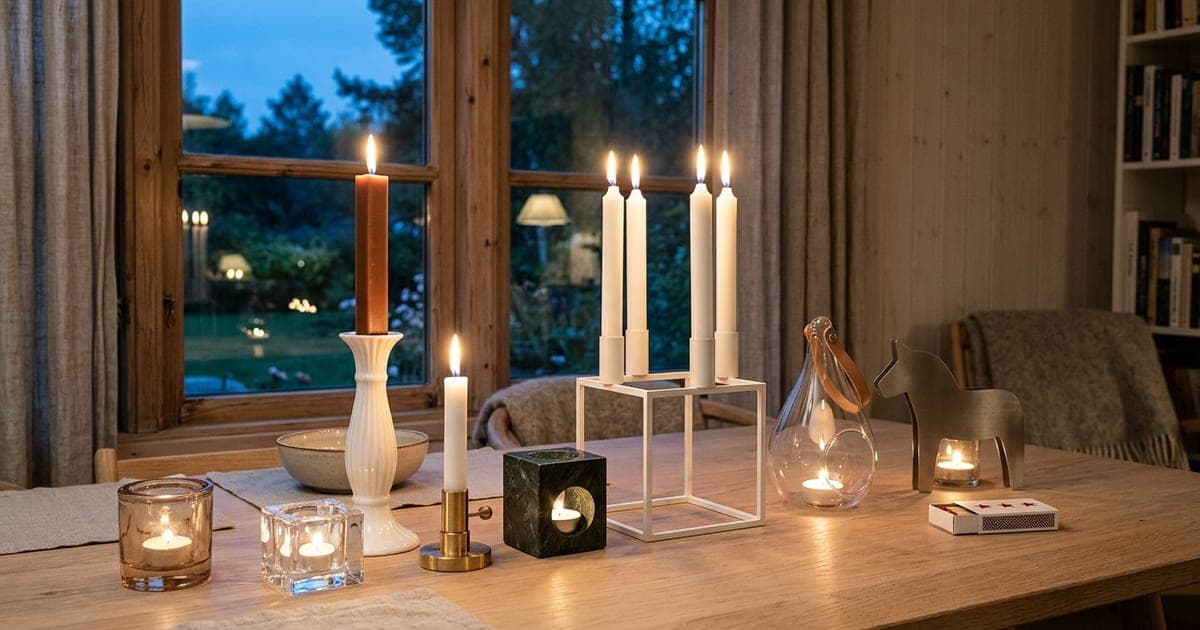
There is a week in October when the candles come out of the drawer and stay out until spring. Nobody announces it. The afternoon turns blue at four, somebody lights one at the kitchen table while the water boils, and the matches stay next to the salt from then on. In Sweden they are called levande ljus, living light, which is a fair description of what a flame does to a room that the ceiling fitting cannot.
What follows is not one table’s shopping list. It is the collection a Nordic household gathers over years: low votives to scatter, one holder with weight to it, a lantern for the step outside, and the candles and matches to feed them. All ten are in stock in the UK, Germany, Norway and Denmark, and every one can be compared on price on ScandiDeals.
⸻
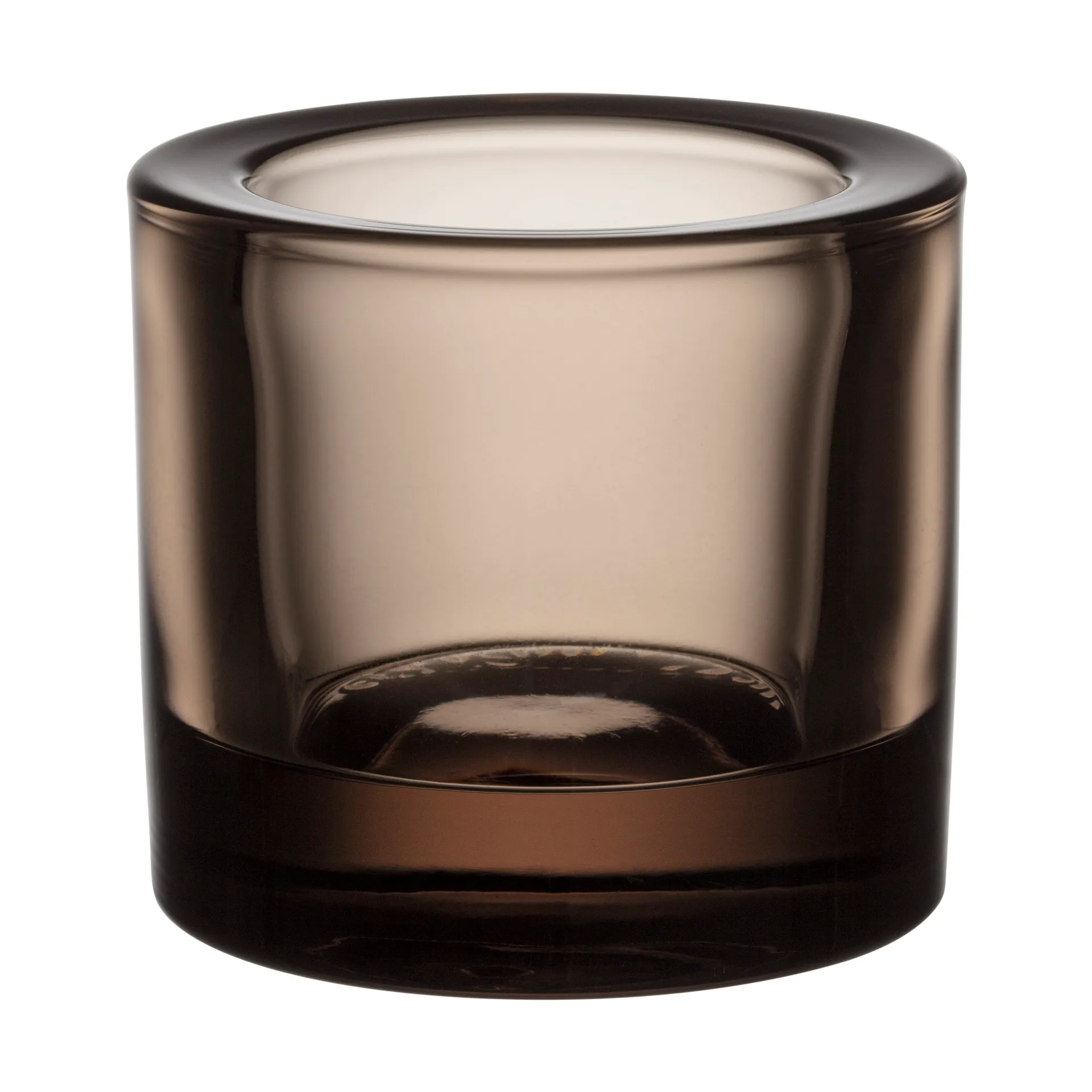
Start here, and start with more than one. Kivi is a pressed glass cylinder 60 millimetres tall with walls thick enough to feel like a stone in the hand, which is what its name means. This one is Linen, a warm pale brown that turns amber the moment a tea light is in it. Scattered along a windowsill in threes and fives they do more than one large candle manages, because the light comes from several places at once.
⸻
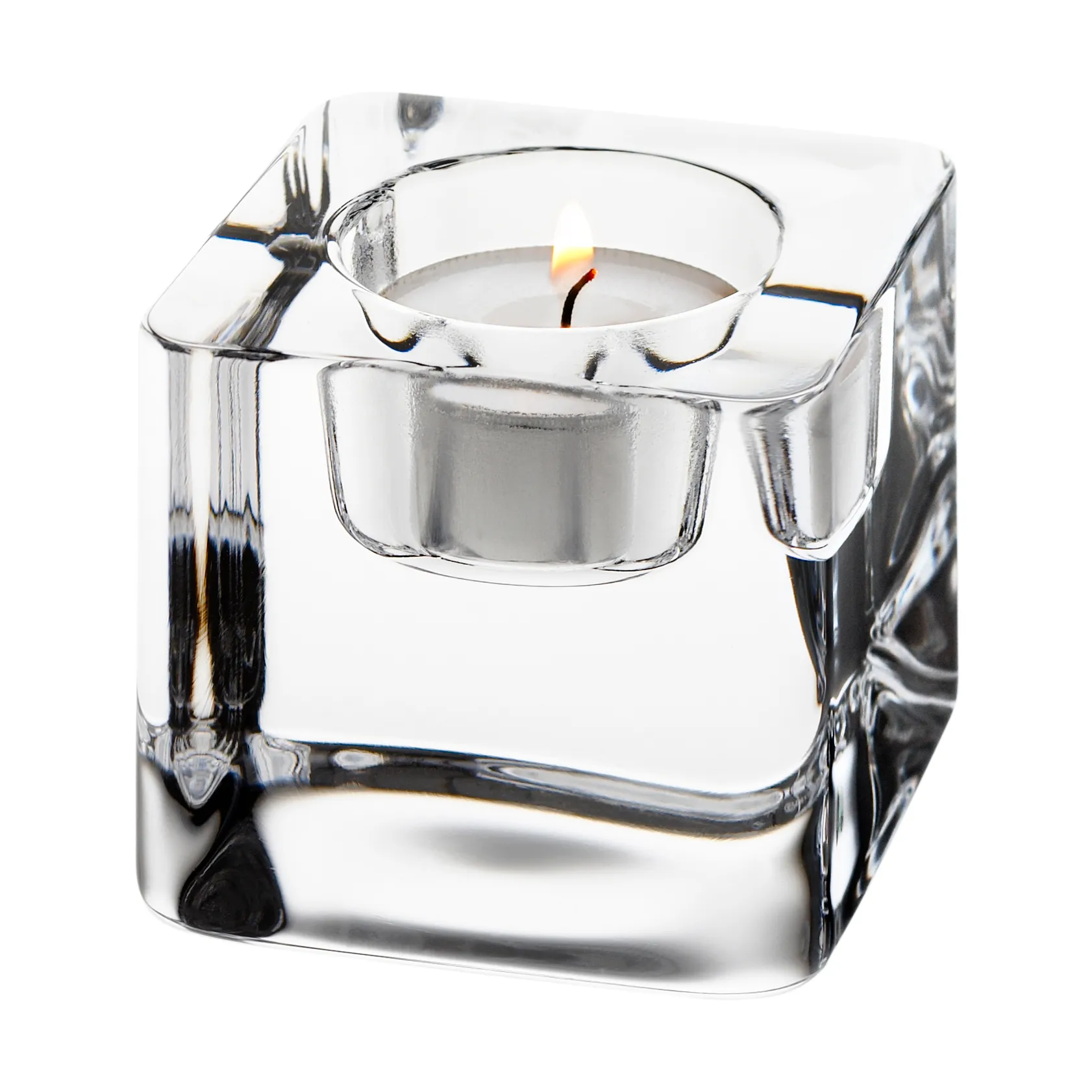
Orrefors has been blowing and cutting glass in Småland for well over a century, and this is the house skill at its most compact. The Ice cube lantern is a 70 millimetre block of clear crystal with a round well cut into the top for a tea light and faces left slightly irregular, so the flame refracts and the whole cube glows rather than just the candle in it. It is heavy for its size: put it where a draught would knock a lighter holder over.
⸻
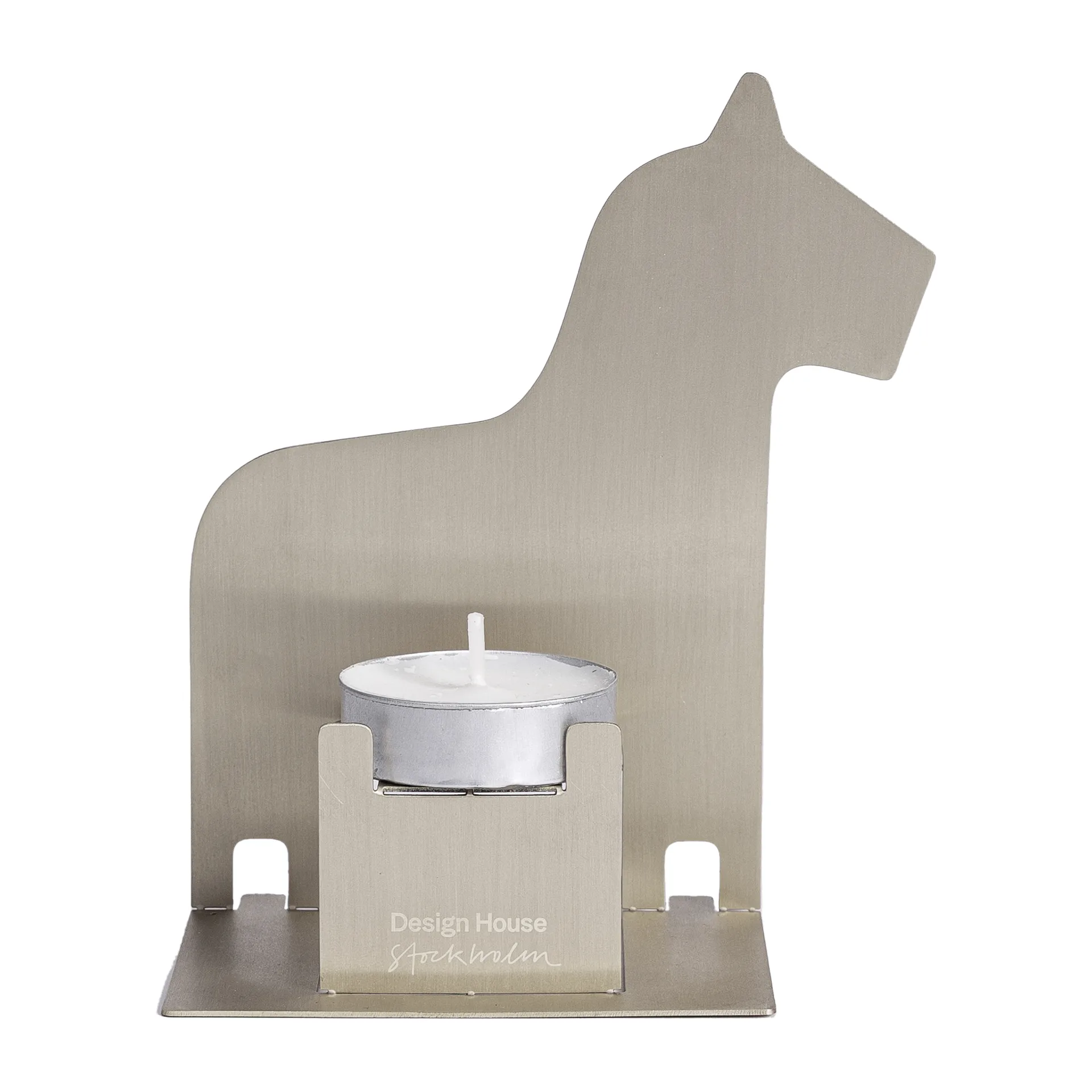
The dala horse is the most recognisable object Sweden has, and this is the quietest version of it. The Pop-up tea light holder arrives as a single flat sheet of stainless steel and folds into a horse standing behind a small cradle for the candle. The brushed steel body acts as a reflector, throwing the light forward instead of letting it drift upwards. It folds flat again for the summer, which is more than can be said for most seasonal decoration.
⸻
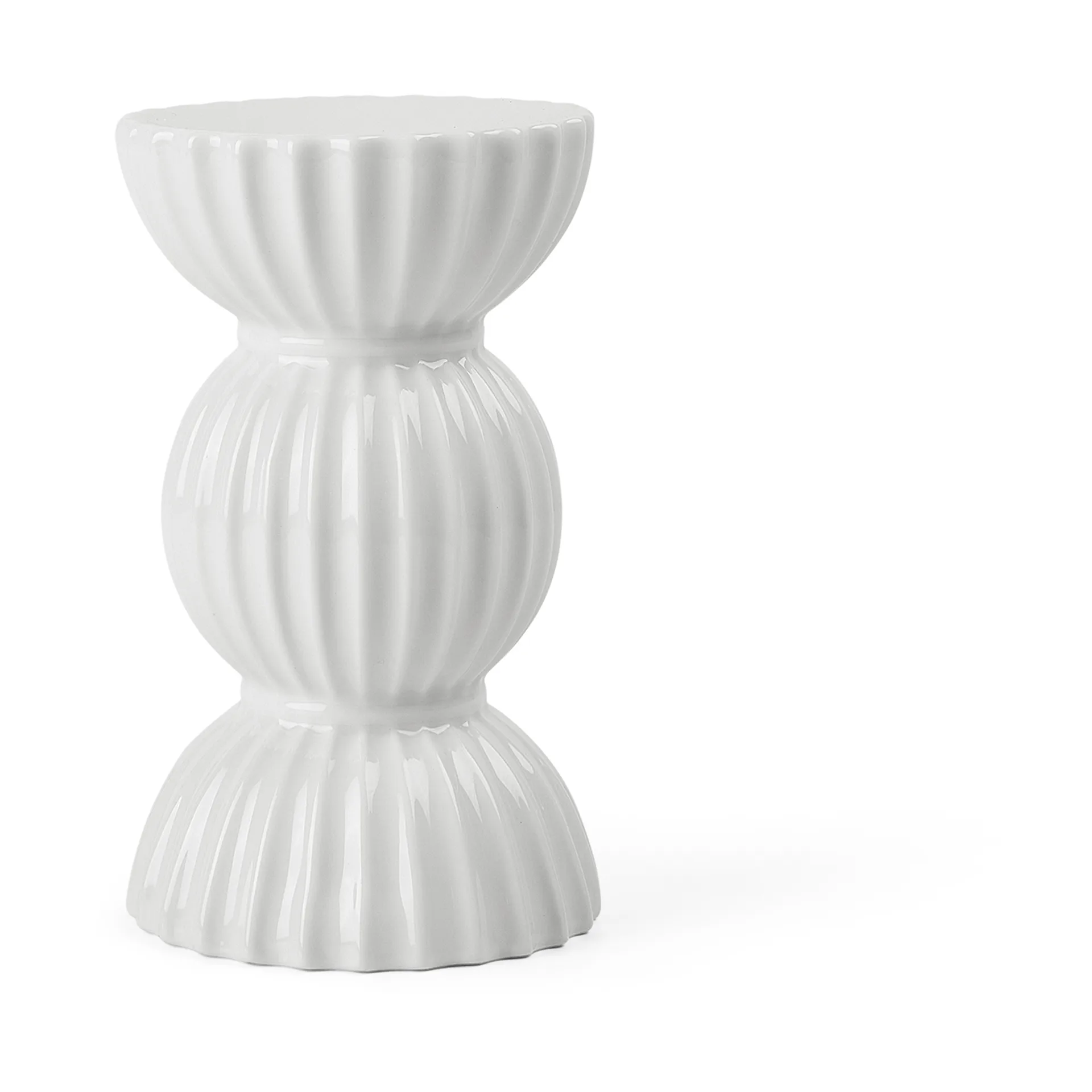
Fluting is the Danish porcelain signature, and the Tura candle holder is 14 centimetres of it: a flared foot, a round belly and a cup at the top, every surface ribbed and glazed a plain white. The shape reads as turned wood until you pick it up and find porcelain. White is the useful choice here, because a white holder disappears against a white wall and leaves only the candle visible. One on a shelf is enough; a pair on a dining table is better.
⸻
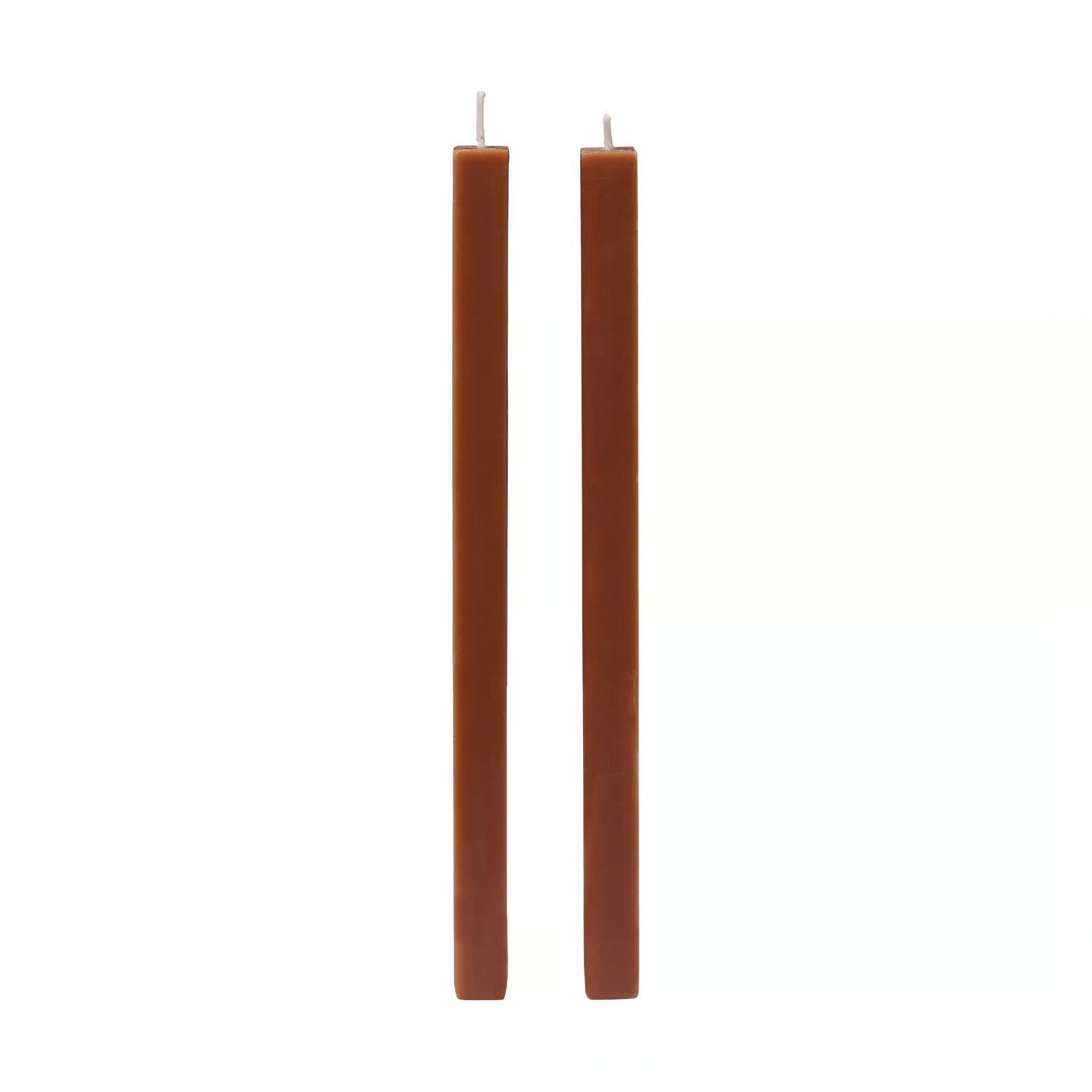
Holders are useless without something to burn, and the candle is where most tables go wrong: bright white wax under a warm lamp looks like a hospital corridor. The Burren tapers come two to a pack in a bronze brown close to dry bracken, with flat square sides rather than the usual round taper, so they catch the light down one edge and sit in a holder without rolling. Two of these in plain holders will carry an evening meal on their own.
⸻
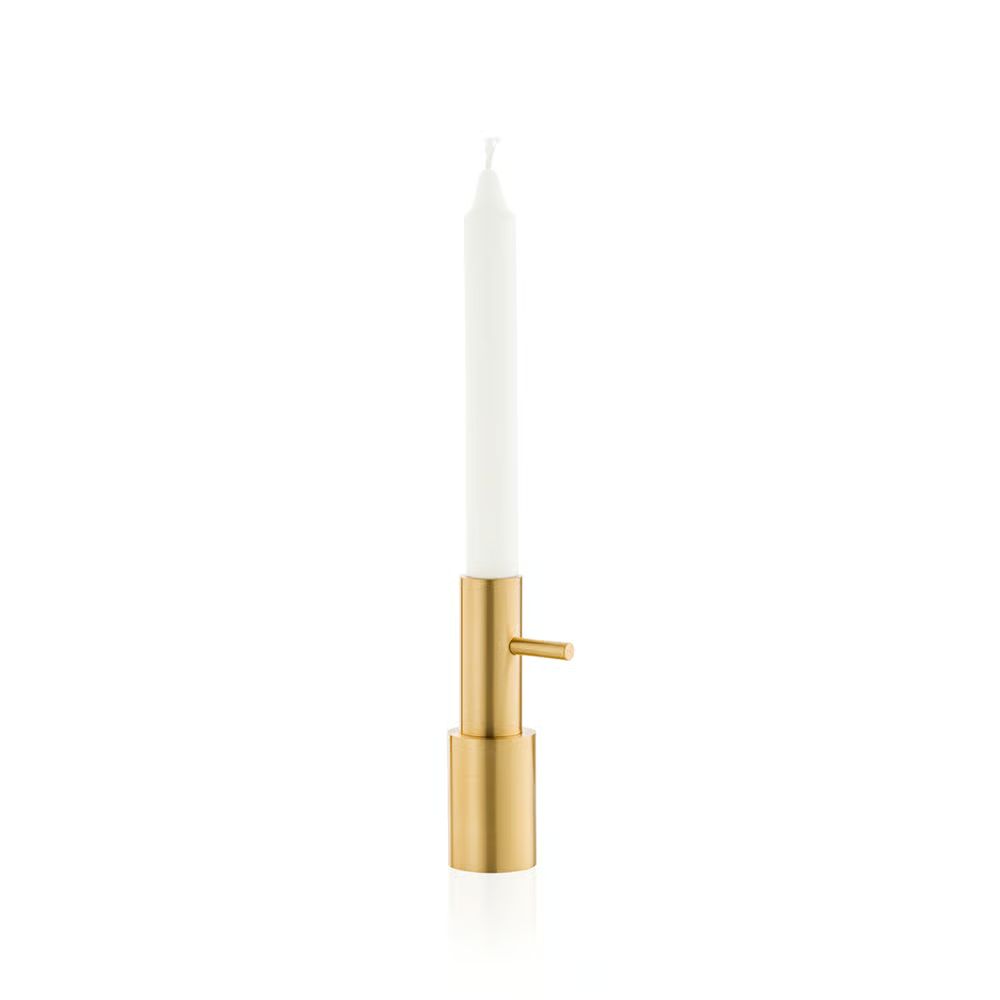
Jaime Hayon has drawn several objects for Fritz Hansen, and this is the smallest and the most useful. The Single candle holder is a stepped brass cylinder for one taper, with a short pin projecting from the side like the handle of a chamberstick. The brass dulls and warms with handling rather than staying bright. It holds one candle, deliberately: set it where you want the eye to go and let the rest of the table stay dark.
⸻
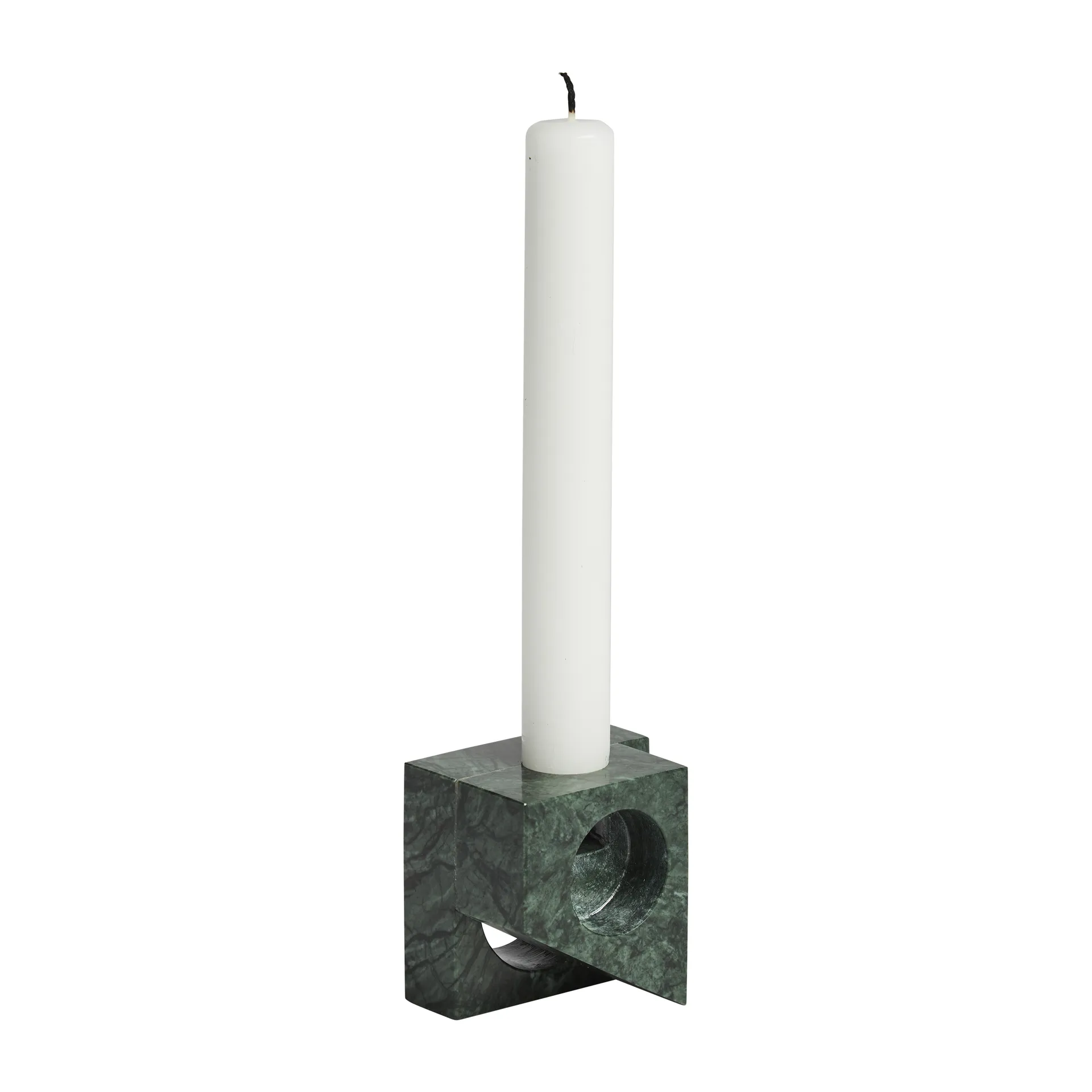
Jeu de dés is a solid block of dark green marble with two holes drilled into it: a narrow one through the top for a taper and a wide round one through the side for a tea light. Turn the block over and it becomes the other kind of holder. The marble is veined in grey and almost black at the edges, cold to the touch and heavy enough that nothing knocks it off a side table. One stone object in a room of glass and steel is usually the piece people pick up.
⸻
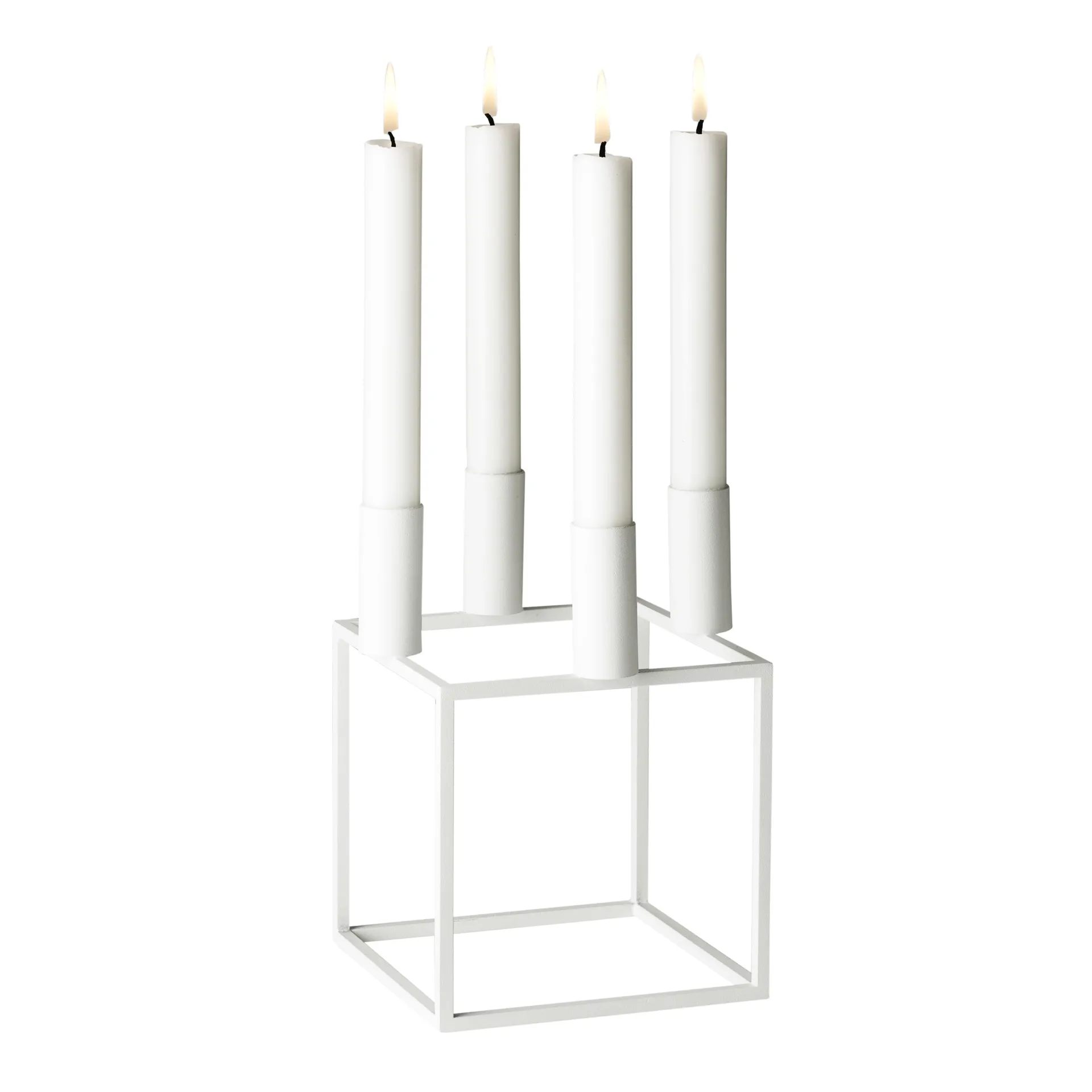
Kubus 4 is an open cube welded from thin square steel rod, with four sockets set into the top face, finished here in matt white. Lit, it is four candles in formation above almost no visible structure; unlit, a drawing of a cube on the sideboard. It is the piece here that sets the tone of a room, and the one to buy once. Four tapers of the same height, every time: the symmetry is the whole point.
⸻
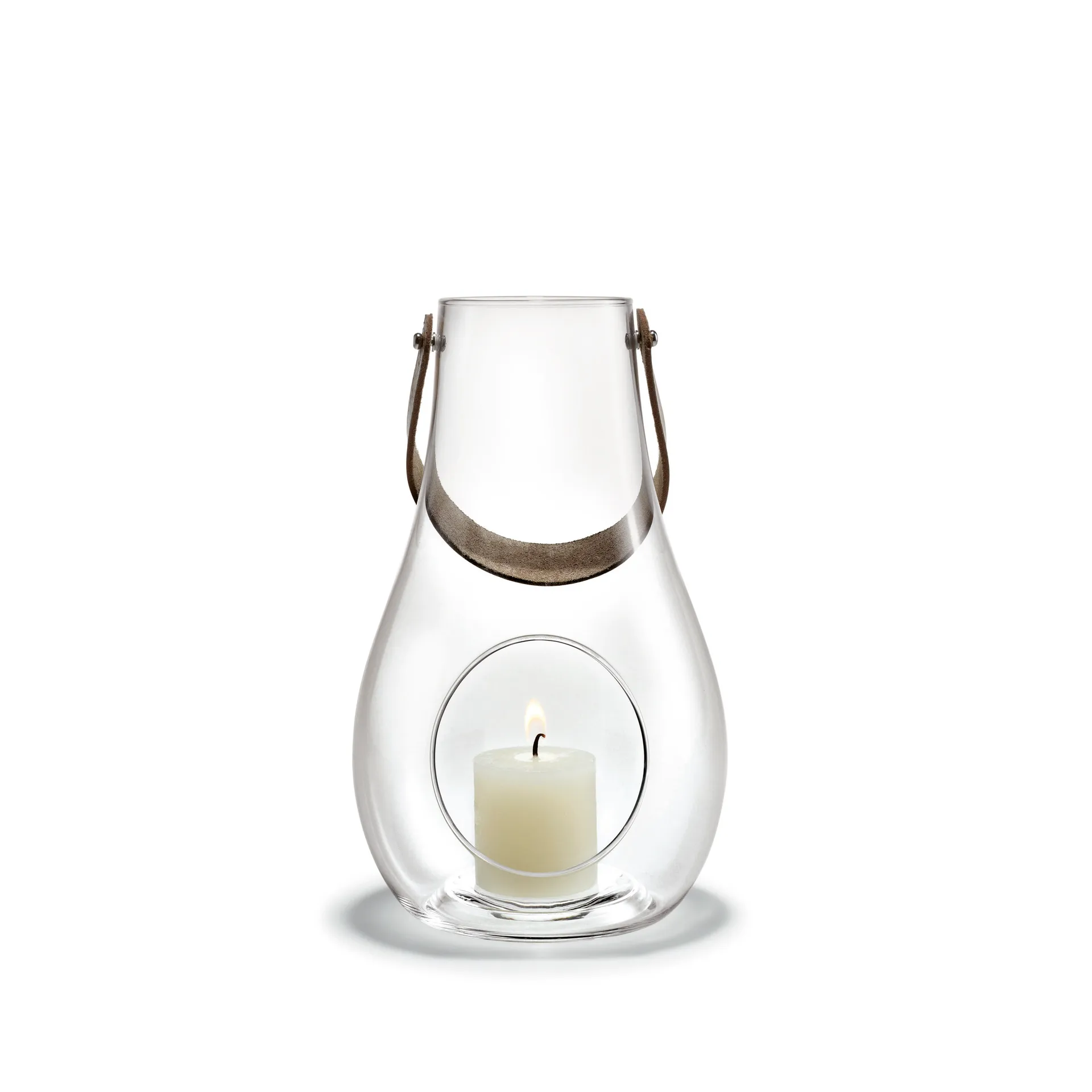
Holmegaard has been making glass in Denmark since 1825, and this is the piece that leaves the house. The Design With Light lantern is a mouth-blown clear glass teardrop almost 25 centimetres tall, open at the top, with a round porthole in the side to reach a block candle and a leather strap for a handle. The glass shields the flame from wind, so it works on a doorstep, a balcony rail or a path, then comes back in and stands on the floor by the sofa.
⸻
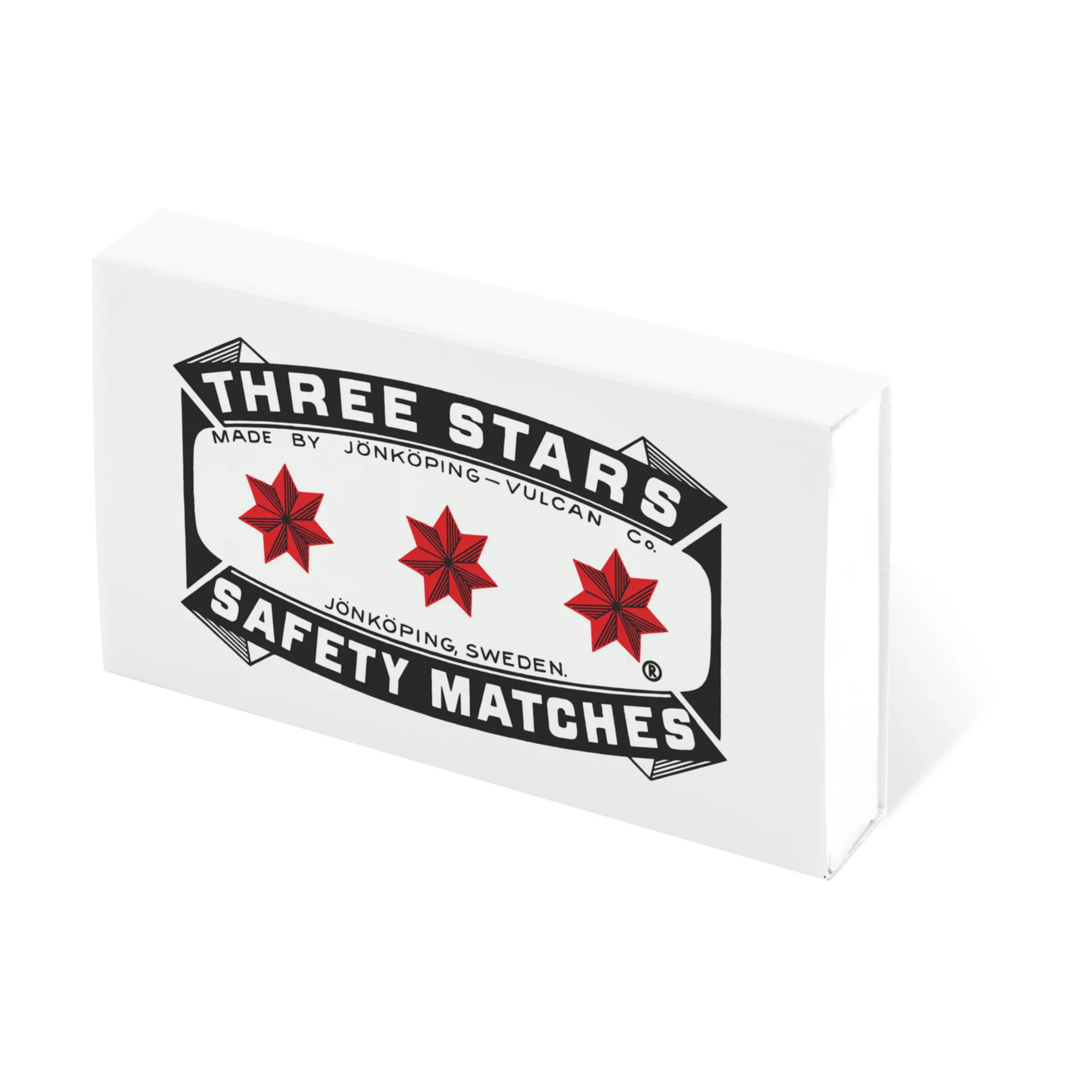
The least designed thing here is the one you reach for most. The Three Stars refill is fifty boxes of safety matches, each printed with three red stars and the line that says they are made in Jönköping, Sweden, the town that built its name on matches. Long wooden matches reach into a lantern without burning your fingers. Keep a box in every room you light candles in and the ritual stops depending on finding the lighter.
⸻
Candlelight is the cheapest change you can make to a dark room, and the one most easily overdone. The Nordic habit is restraint: a few low flames at eye level or below, warm wax rather than white, and holders in materials that look as good cold as they do lit. Glass, brass, porcelain, marble, steel. Buy them one at a time, in the knowledge that none of them will be out of date in ten years.
Everything on this list is in stock in the UK, Germany, Norway and Denmark, and prices for the same piece differ between shops and between weeks. Compare them on ScandiDeals before you order, then light one tonight while the kettle boils. That is how the season starts.
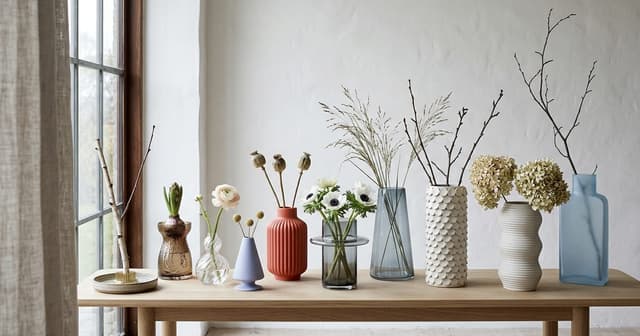
A bouquet is a Friday purchase and a Tuesday problem. Ten Nordic vessels for one stem, three stems or a branch, from a pin holder to a frosted glass tower.
Read More →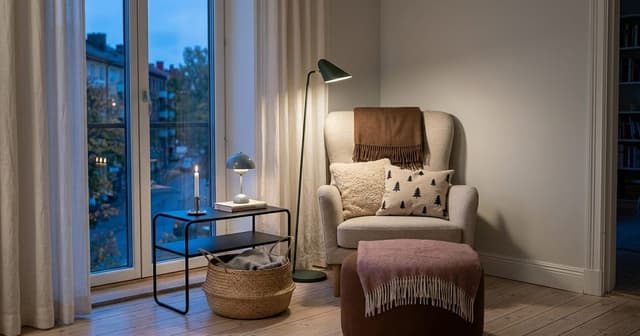
One chair, one light aimed at the page and enough wool within reach. Ten Nordic pieces that turn a corner of the room into the best seat in the house.
Read More →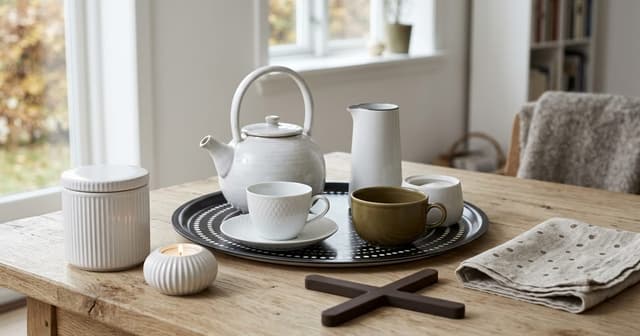
Coffee belongs to the Nordic morning. The hour after four, when the light goes, belongs to a pot of tea. Ten pieces for the quietest part of the day.
Read More →