
Candlelight Season: 10 Nordic Pieces for Dark Evenings
In the Nordic countries October is the month the candles come out and stay out until spring. Ten pieces in glass, brass, porcelain and steel to carry the flame.
Read More →In October the plants come in and the windowsill becomes the brightest place in the flat. Ten Nordic pots for the next six months.
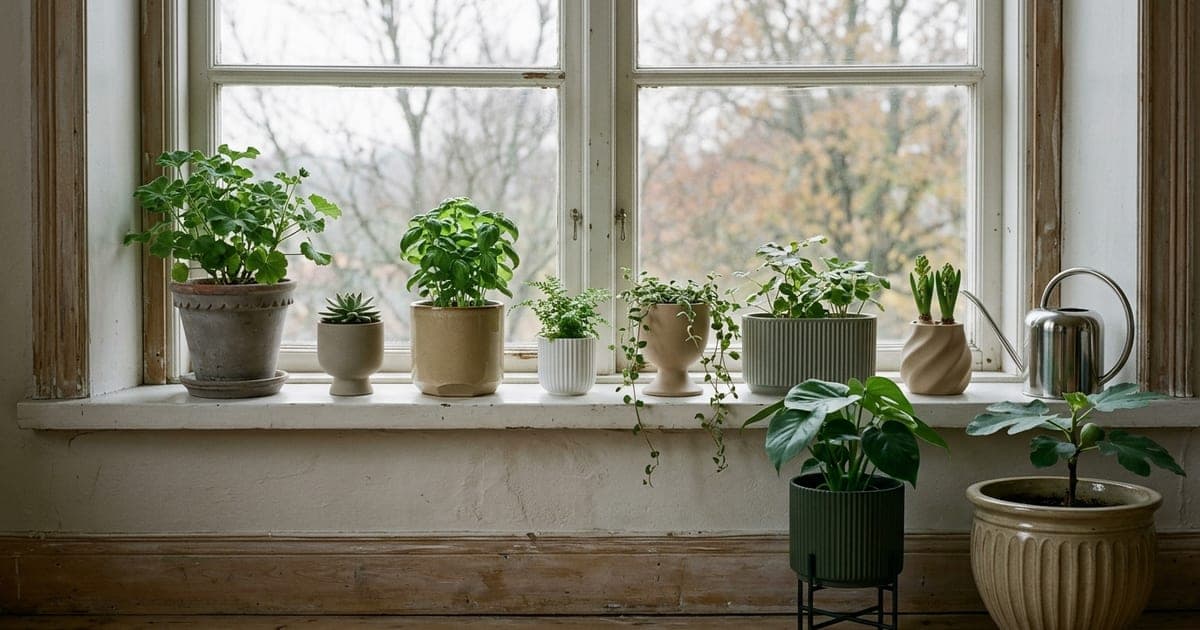
Somewhere in the first half of October the plants come in. Off the balcony, off the front step, out of the cold frame, and into a flat with nowhere obvious to put them. The windowsill turns into the most valuable surface in the house, because from now until March that is where the light is, and there is not much of it.
A plant brought in now will stand in the same spot for six months, so the pot matters more than it does in June. It has to fit a ledge that is often only fifteen centimetres deep, take a saucer, survive being watered badly, and look like something you chose. These ten manage it, from a herb on the kitchen window to a tree beside the terrace door. All are in stock in the UK, Germany, Norway and Denmark, and every one can be compared on price on ScandiDeals.
⸻
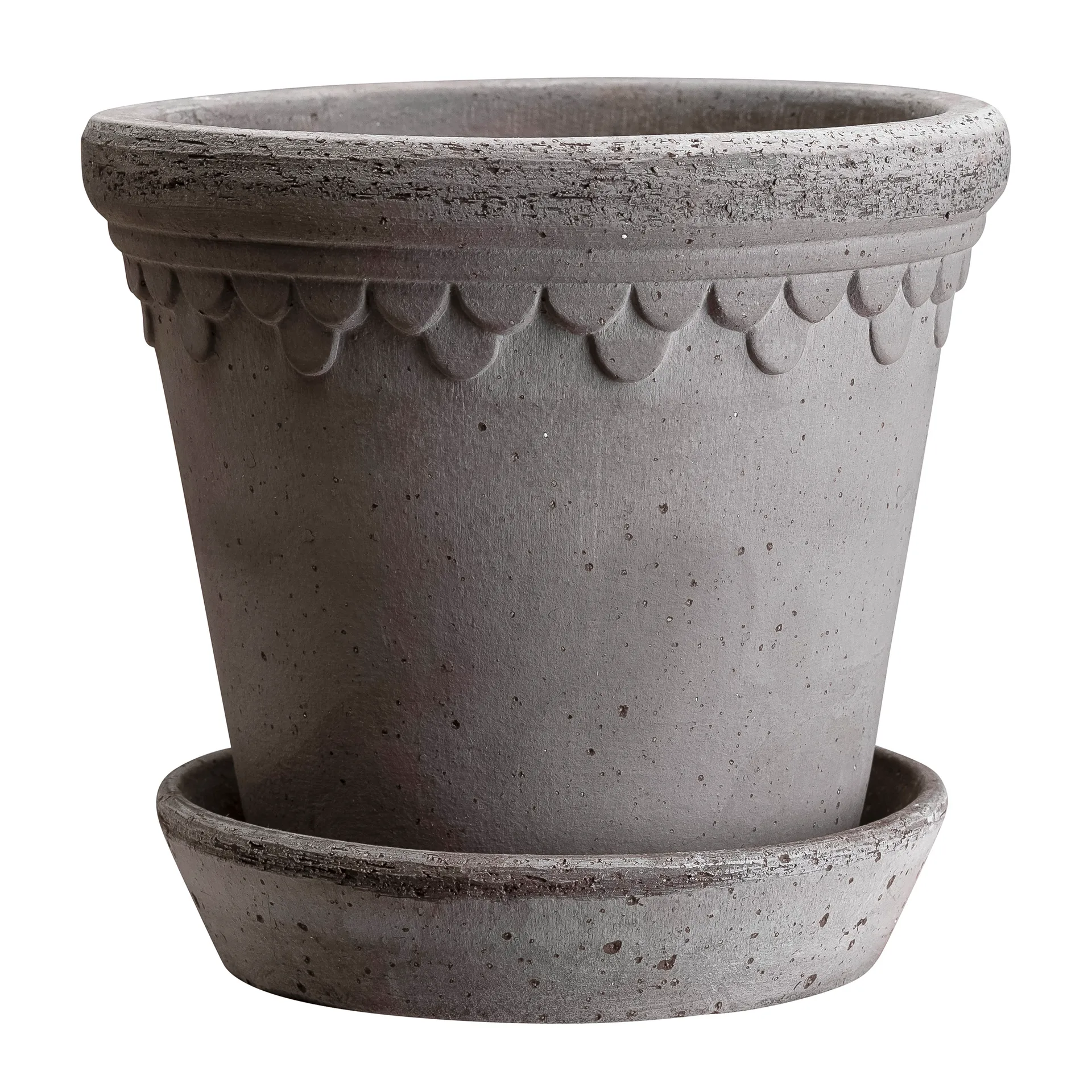
Start with the plain one. The Københavner is clay all the way through, unglazed, faintly rough under the thumb, grey the way a rain-washed garden wall is grey. A rolled rim runs round the top with a row of small scallops beneath it, and a saucer comes with it. Sixteen centimetres across takes a repotted pelargonium, or the rosemary that spent the summer outdoors. Porous clay lets the soil dry between waterings, which is what a plant resting through a dark winter actually wants.
⸻
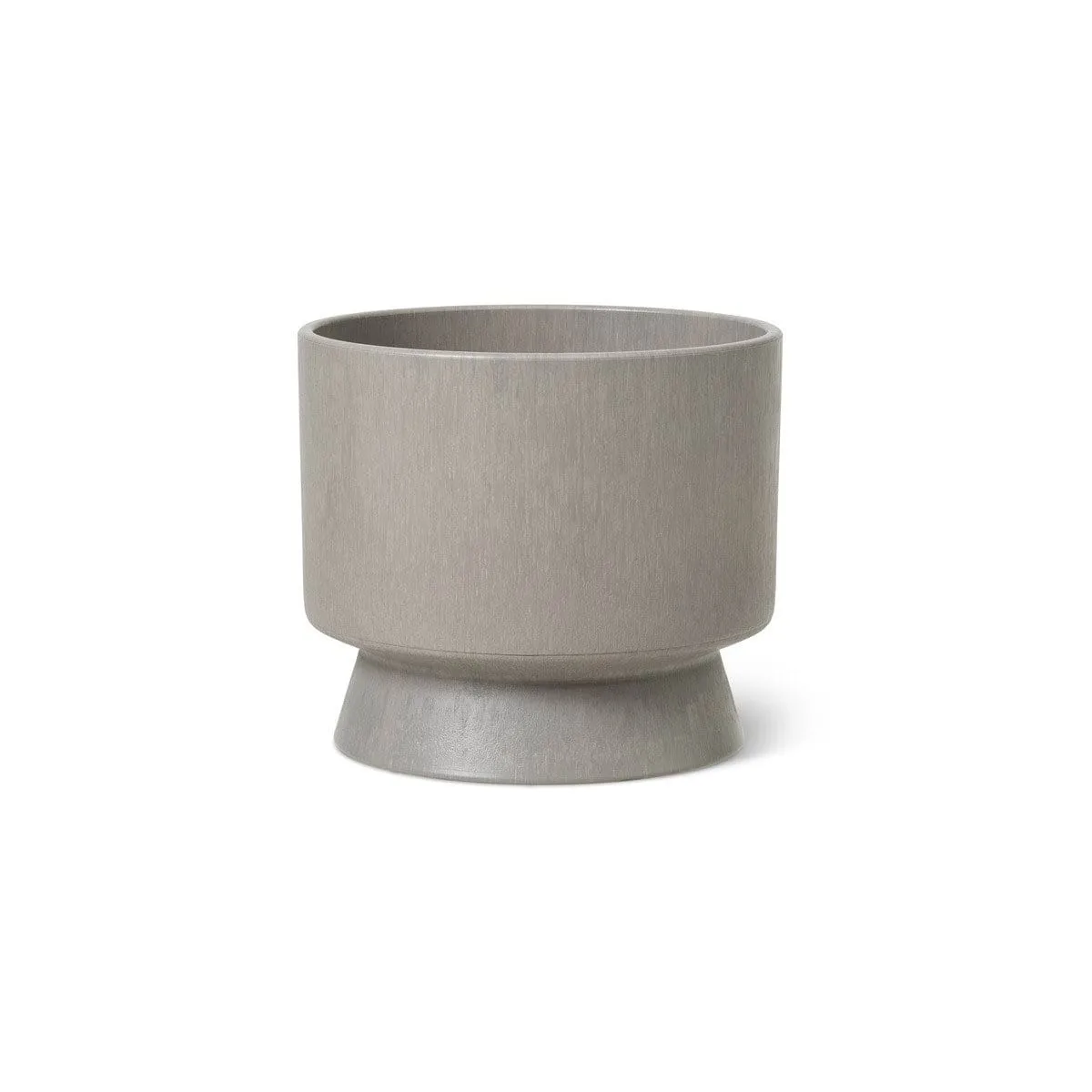
The Ro pot is a straight-sided cup set on a short splayed foot, matte and chalky, a warm grey the brand files under sand. Fifteen centimetres across, light enough to move with one hand. The foot does real work: a sill above a radiator or under old glazing is the harshest spot in the flat, and a pot standing clear of it rather than sitting in a cold ring of water gives the roots an easier winter.
⸻
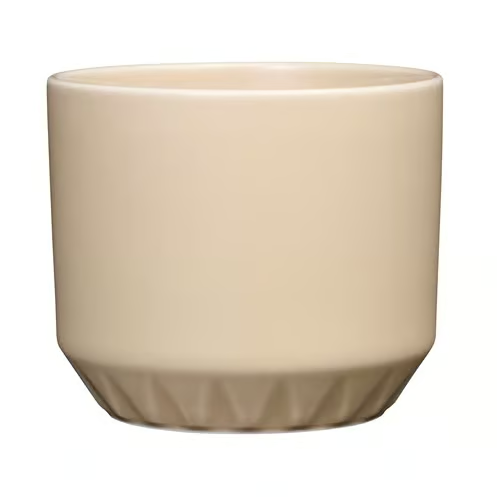
Twelve centimetres across and ten high, which is exactly the size of the herb pot a supermarket sells. Slide the plastic out, drop the root ball into Ilona, and the basil on the kitchen window suddenly looks deliberate. The glaze is a glossy sand that goes a shade darker where it pools, the sides are straight, and a band of shallow facets is cut round the base like the foot of a tumbler. Small, washable, ready for whatever replaces the herb in February.
⸻
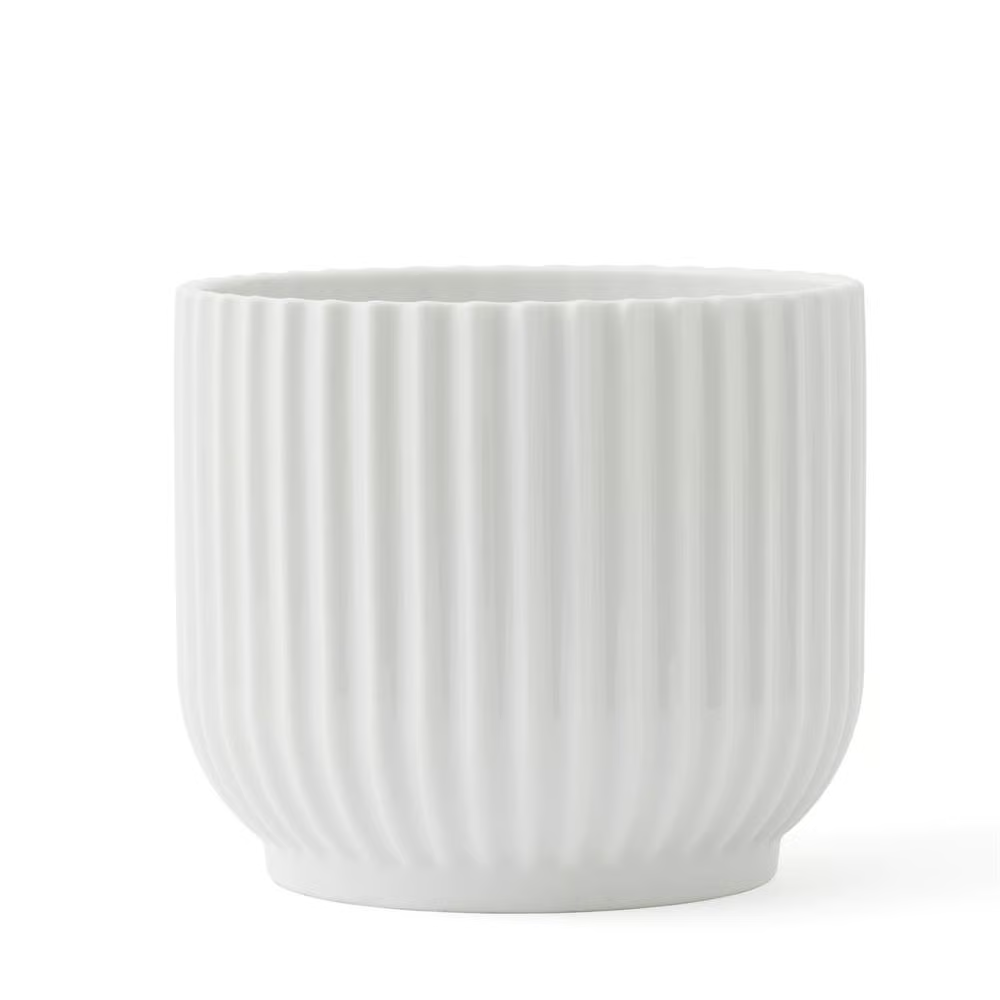
The ribbing is the whole design. The Lyngby pot wears the close vertical fluting the Danish factory is known for, pressed into white porcelain and running from a narrow foot to a plain rim. Eleven and a half centimetres is a modest footprint, which counts on a ledge shared with a radiator and a pile of post. White porcelain against a black window in December gives back what little lamplight there is, and the ribs catch it in thin bright lines down the side.
⸻
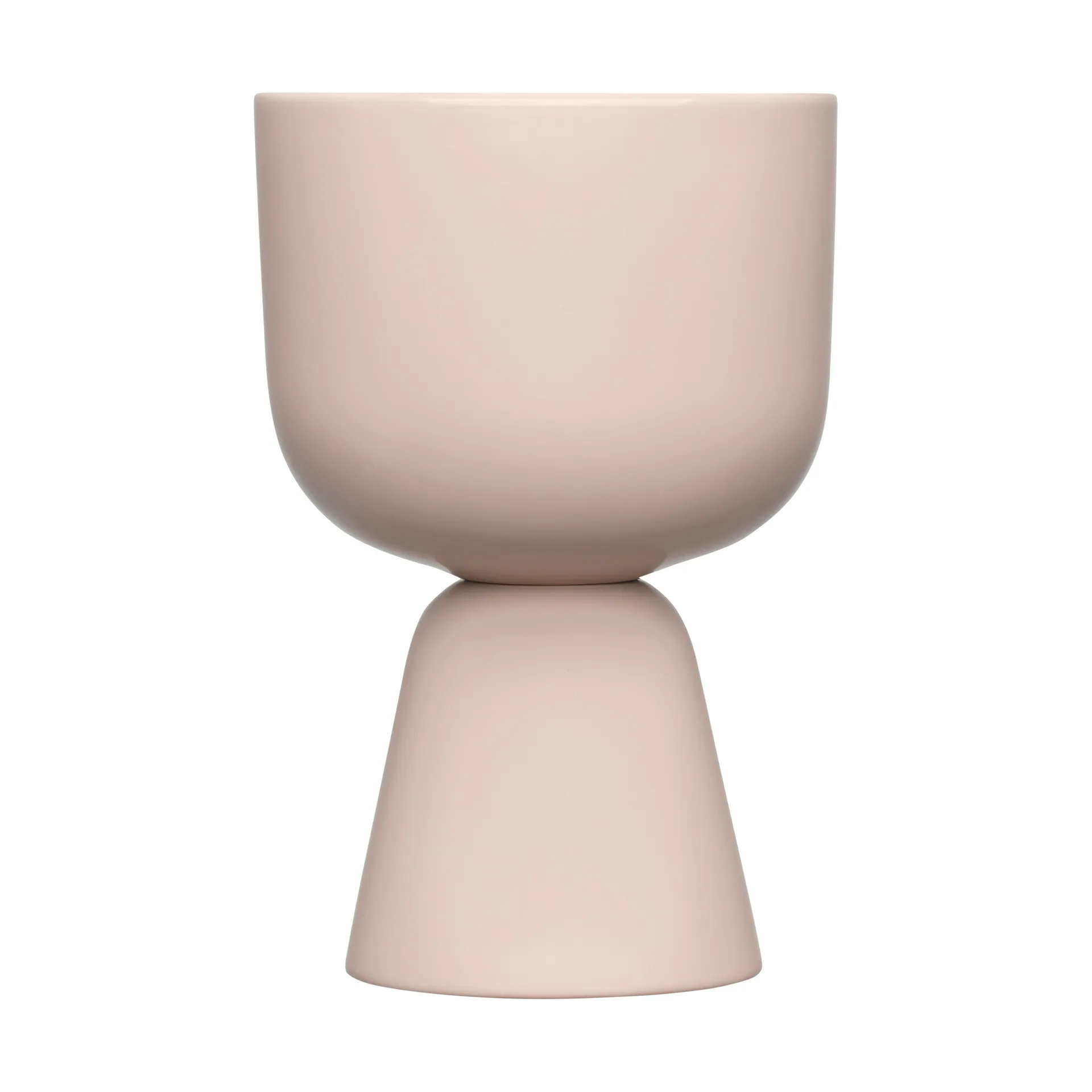
Nappula is built like an egg cup for a plant: a deep cup on a waisted stem that flares out again to a round foot, nineteen centimetres tall and twelve and a half across the top. The pot lifts a small plant well clear of the surface, so a trailing stem hangs instead of pooling on the sill. The beige is soft and faintly pink in daylight, which treats green leaves better than a hard white.
⸻
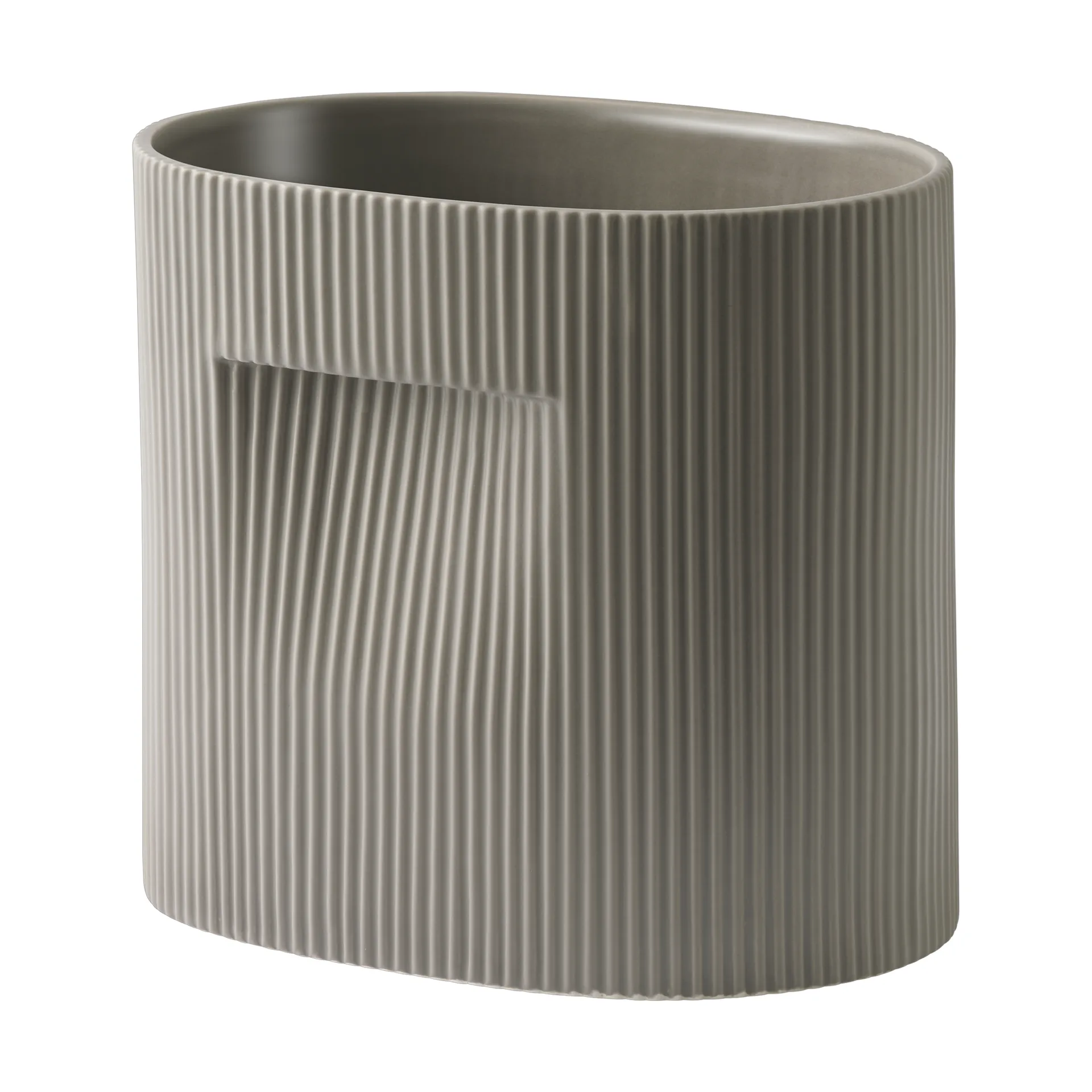
Windowsills are rarely deep. Ridge is drawn for that: an oval, twenty-four centimetres wide but flattened front to back, so it stands where a round pot of the same volume would hang over the edge. The outside is combed in fine vertical ridges, broken by one smooth recessed panel on the front, and the taupe is a grey-green that sits quietly behind foliage. Two or three in a row read as a planted trough, not a collection of pots.
⸻
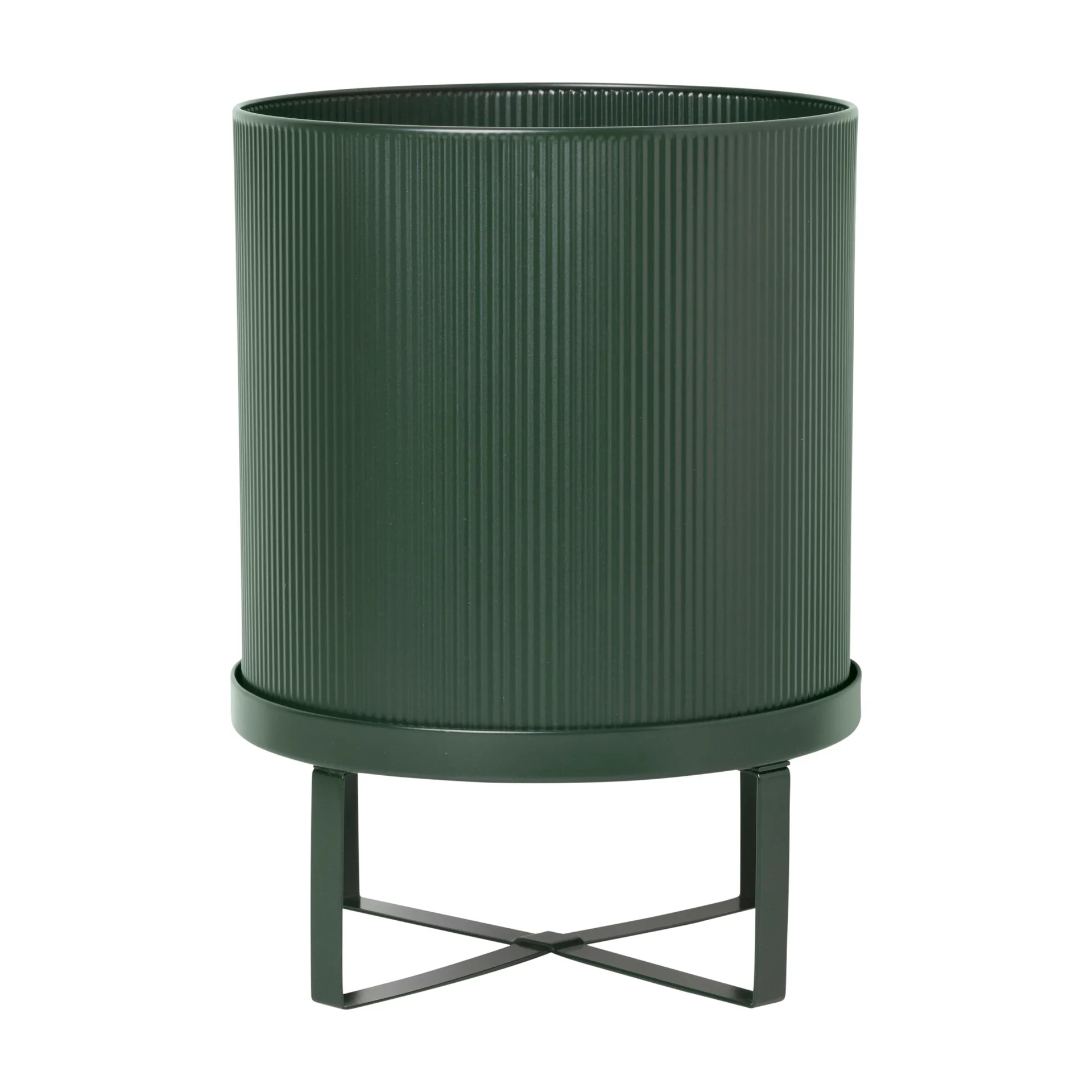
Bau stands up. A ribbed cylinder twenty-eight centimetres across in dark green, raised on four slim steel legs with a cross brace between them. Near a window that helps twice over: the leaves come nearer the light, and the pot sits off a floor that is cold from November onwards. Big enough for the monstera that has outgrown its nursery pot, and the legs keep a big plant from looking immovable.
⸻
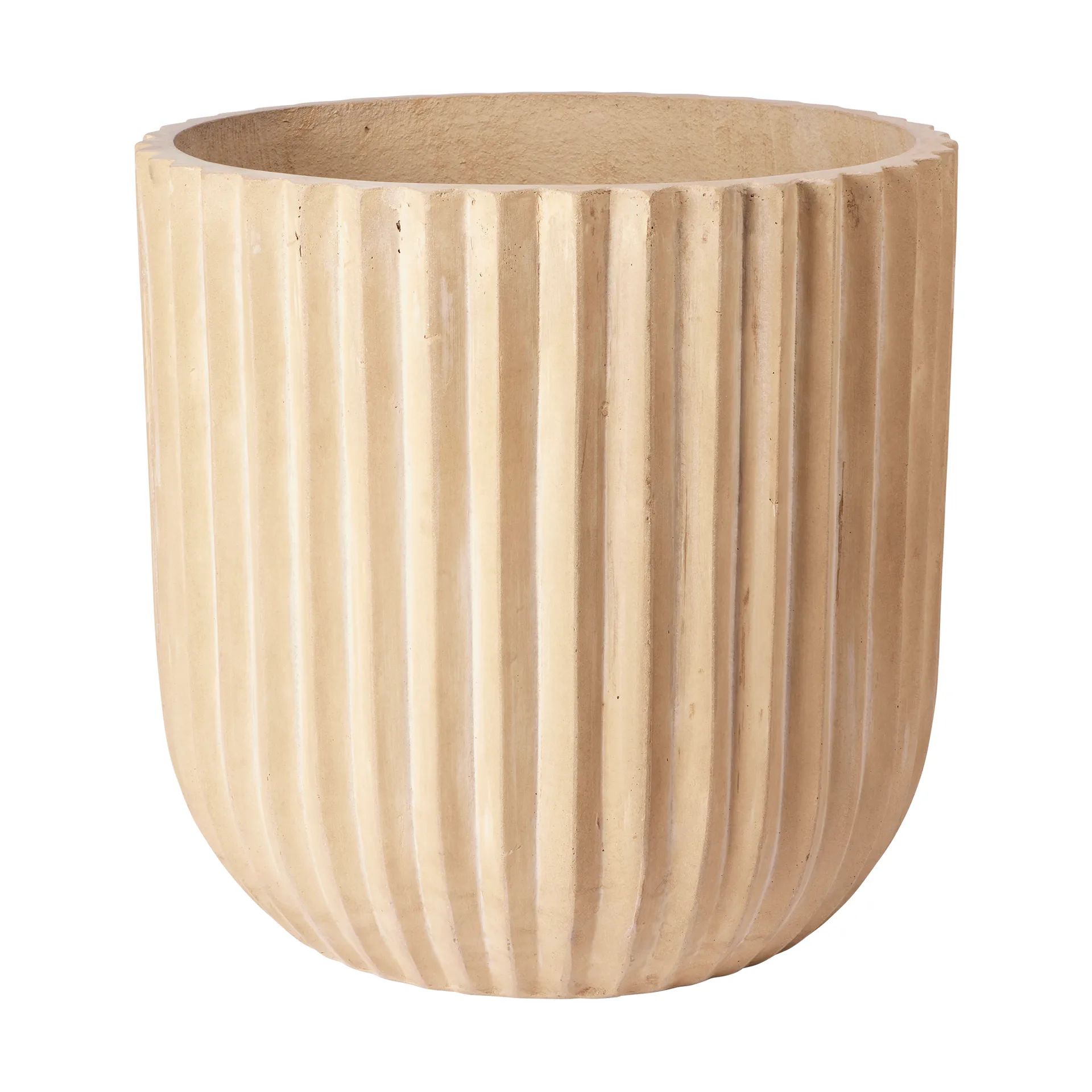
Every flat has one plant that got away from it. The Fiber pot is for that one: fifty centimetres across, deeply fluted the whole way round, in an antique beige with the dry, chalky surface of a garden pot and a soft curve where the sides meet the base. A fig or an olive brought in before the first frost will take this and nothing smaller. Stand it where the floor is sound, and put gravel in the bottom before the compost.
⸻
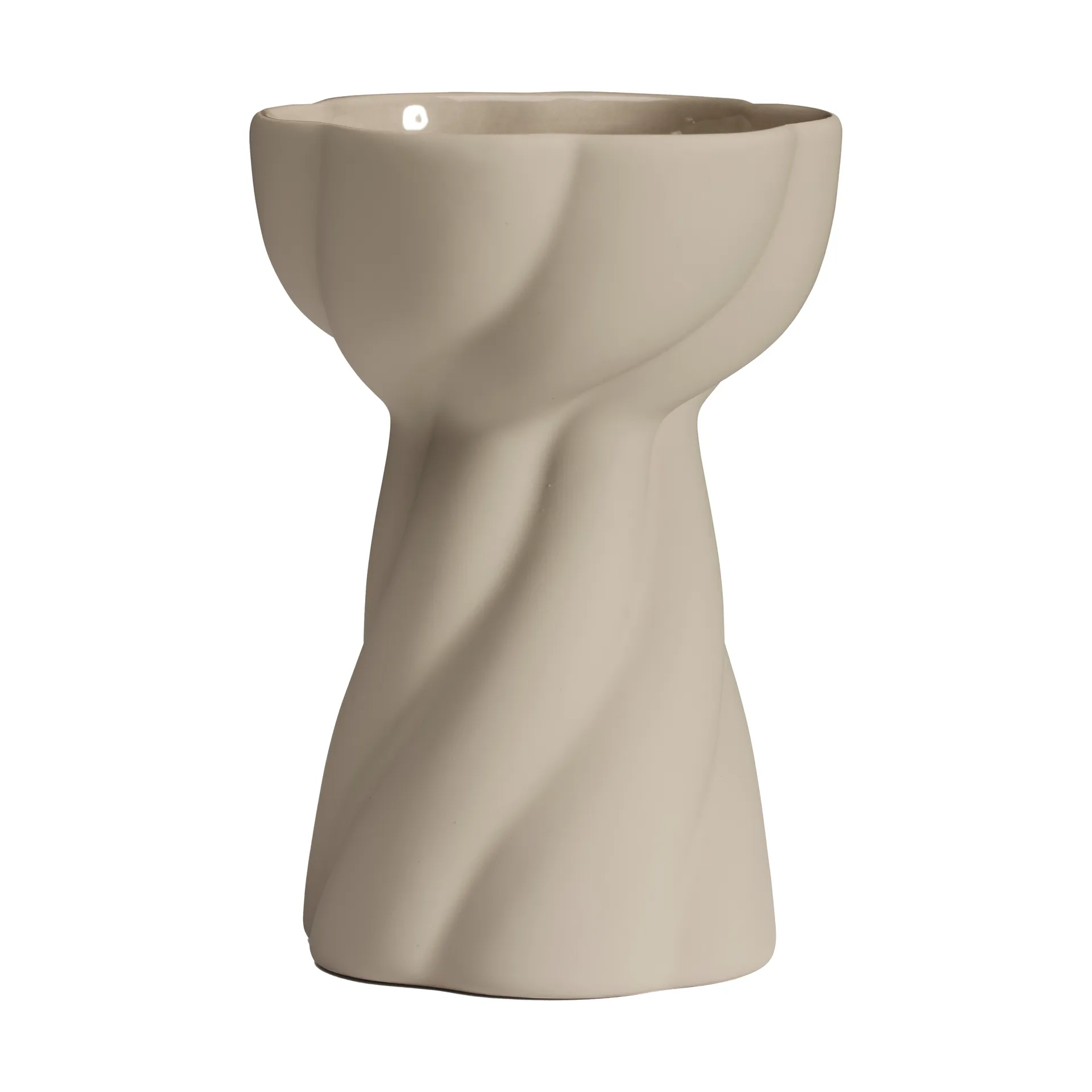
Nothing flowers on a Nordic windowsill in January, but plenty arrives cut: hyacinths, paperwhites, the first forced tulips, all of them short in the stem. The Twist vase is sized for them at just under thirteen centimetres, matte sand, the body turned through a soft spiral as though the clay had been wrung once and left. Set among a row of pots it breaks the line of straight sides. The rest of the year it takes whatever the garden is doing.
⸻
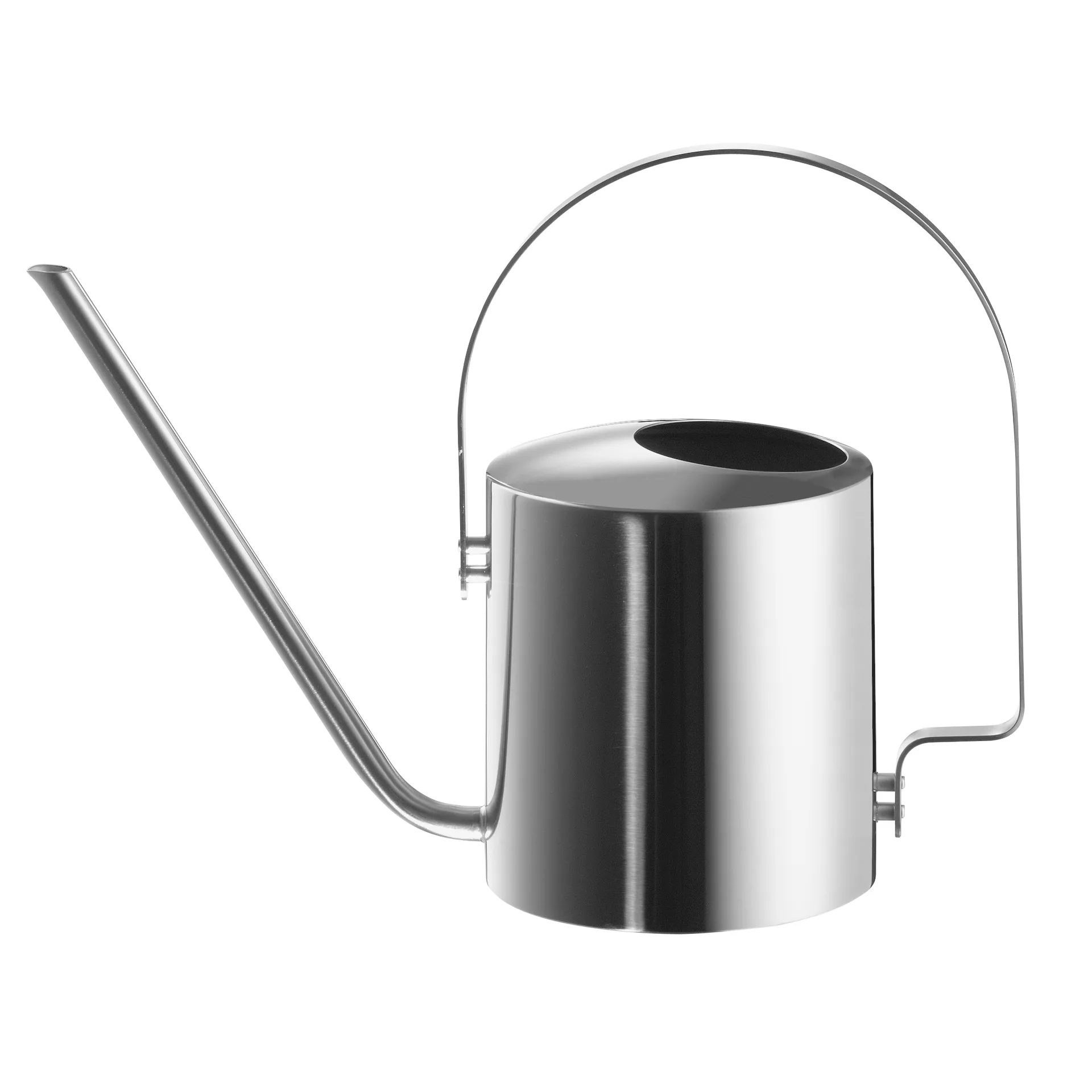
Indoors in winter plants want less water, not more, and most of what dies on a sill in February drowned. The Original can holds one point seven litres, which is a deliberate limit. Mirror-polished stainless steel, a drum with a long thin spout running out low from the base and an arched handle over the top. The spout reaches under the leaves to the soil, and along a row of pots without lifting the one in front. Left out on the ledge it looks like equipment, not a chore.
⸻
A windowsill is not a garden. It is a shelf with the weather on one side of it, and through a Nordic winter the weather wins most of the arguments. What a pot can do is keep the plant going long enough to matter: let the soil breathe, stand clear of the cold, fit the depth of the ledge, and look like it was chosen rather than carried home from a supermarket.
Buy for the plant you have, not for the picture. One honest terracotta pot and one that lifts a trailing stem will change a window more than six matching cylinders, and both will still be in use when the plant has been divided twice. When you have decided which one, compare it across the Nordic shops on ScandiDeals first. The same pot, the same glaze, four different prices.
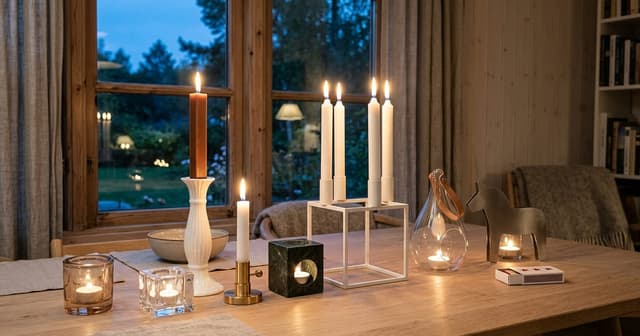
In the Nordic countries October is the month the candles come out and stay out until spring. Ten pieces in glass, brass, porcelain and steel to carry the flame.
Read More →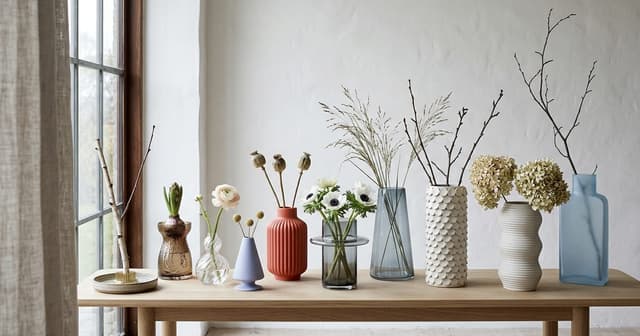
A bouquet is a Friday purchase and a Tuesday problem. Ten Nordic vessels for one stem, three stems or a branch, from a pin holder to a frosted glass tower.
Read More →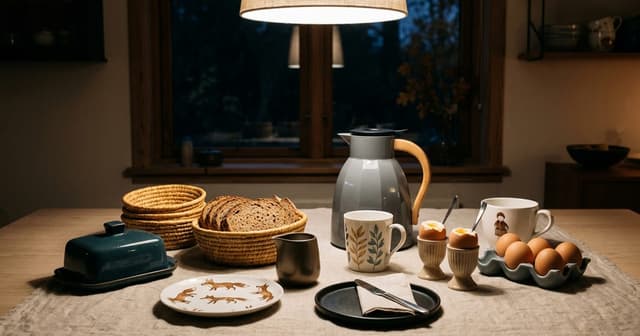
By mid-October breakfast in the North happens before the light does. Ten pieces that make the first meal of the day worth switching a lamp on for.
Read More →