
Serving Season: 10 Nordic Pieces for Having People Over
From October the eating moves indoors and the table has to hold eight. Ten Nordic platters, bowls, a jug and a tray for food served in the middle.
Read More →Glögg season opens the week the clocks go back. Ten Nordic pieces for it: small cups, a glass jug, a pan, a ladle and a plate for ginger thins.
The bottles appear in Nordic shops the moment the clocks go back, stacked by the door with a bag of blanched almonds beside them. Glögg in Sweden, gløgg in Norway and Denmark, and not a drink anyone sips alone in front of the television. It arrives in a small cup with raisins and almonds at the bottom, handed over at a doorway with wet coats still on, and the first one of the year tends to happen in the first week of November, long before anyone has thought about Christmas.
What the ritual needs is modest and oddly specific. Cups small enough that the drink stays hot to the last mouthful. Something to warm the bottle in that will not scorch it. A ladle, a bowl for the raisins and almonds, a long spoon to fish them out again, a plate for the ginger thins. Ten pieces are below, from a six-centimetre stoneware cup to a glass jug that sits over a tealight. All ten are in stock in the UK, Germany, Norway and Denmark, and every one can be compared on price on ScandiDeals.
⸻
Glögg is poured in small measures, which is why the Nordic cup for it is barely bigger than an espresso cup with a handle. The ERNST mulled wine mug is six centimetres across, thrown in stoneware under a soft off-white glaze that pools slightly at the rim, with a small maker's stamp on the side. The wall is thick enough to hold the heat and the handle small enough that you cradle the body instead. Fill it twice rather than once and nobody is drinking anything lukewarm.

⸻
Half the pleasure of glögg is its colour: deep red going almost black where the cup is thick, with the raisins swollen at the bottom and a cinnamon stick leaning out. Clear glass is the only way to see it. The ERNST ribbed mulled wine glass holds ten centilitres, is ribbed from base to rim so the light breaks across it, and has a proper handle, which matters when the contents have just come off the heat.

⸻
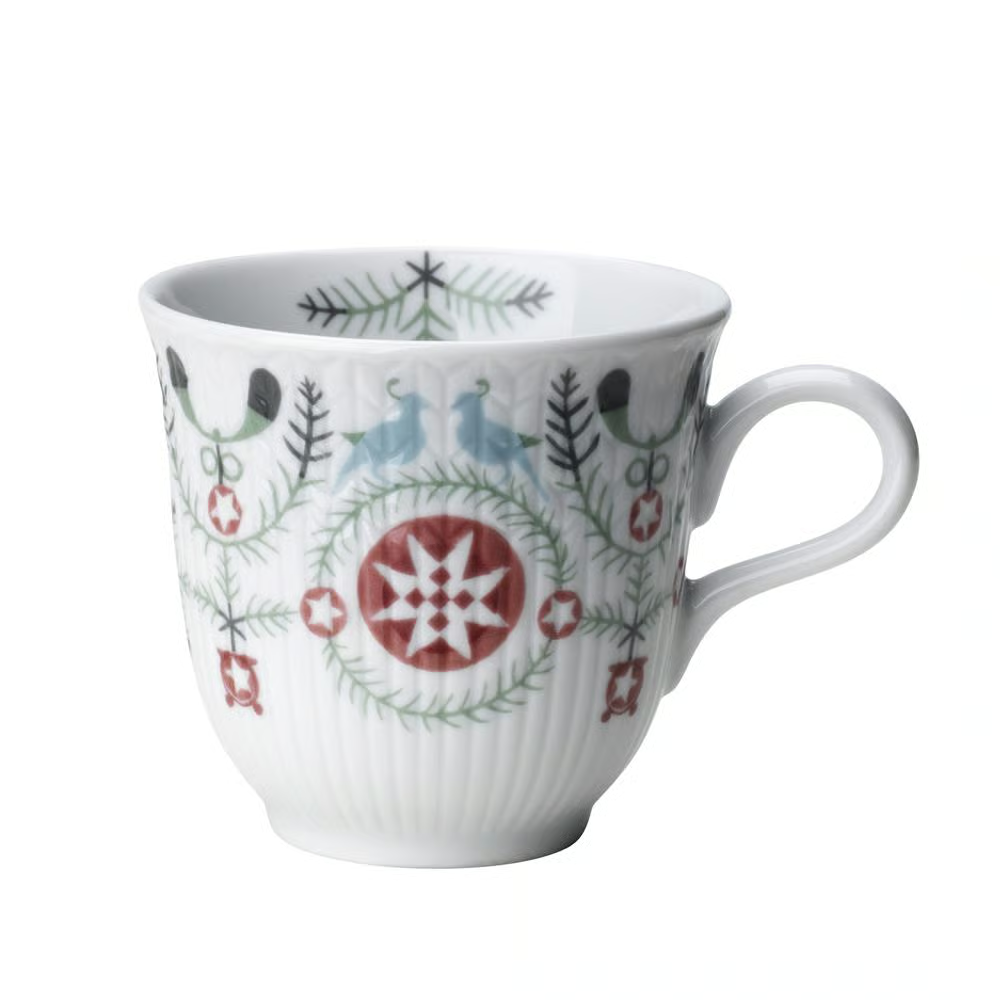
Rörstrand's Swedish Grace shape is the fluted one, vertical ribs running up the lower half of the body, and the Winter version adds a band around the rim: eight-pointed red rosettes, grey-blue birds and dark fir sprigs, drawn fine enough to read as pattern rather than decoration. The Swedish Grace Winter mulled wine mug holds ten centilitres. It is porcelain, so it goes in the dishwasher in January with everything else and comes out ready for next year.
⸻
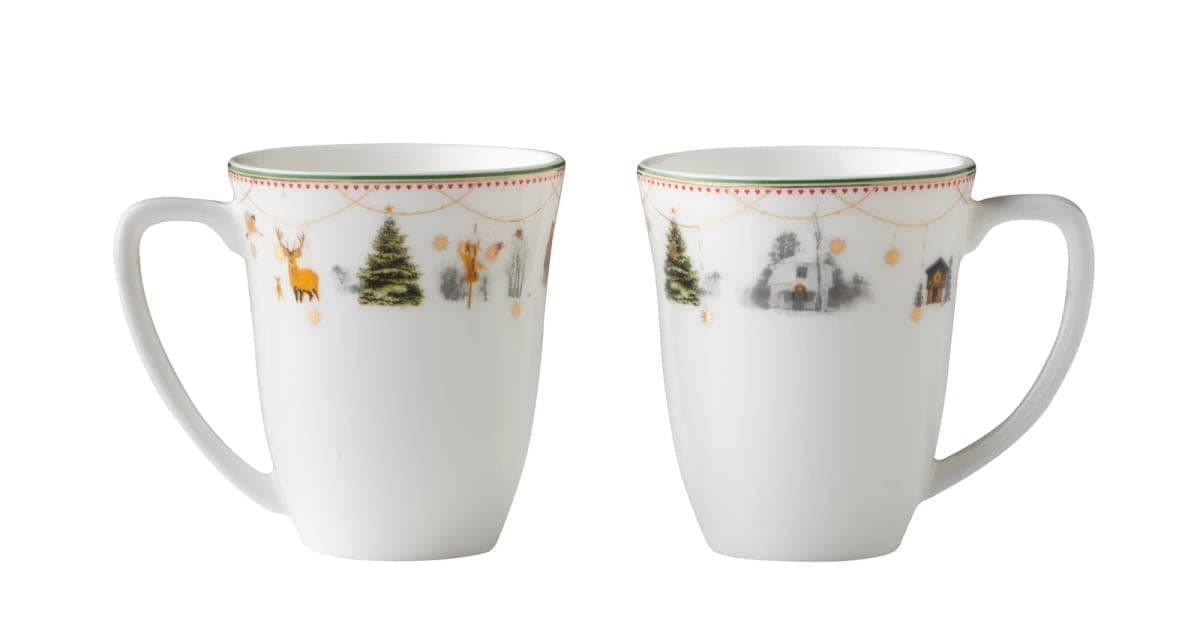
Julemorgen means Christmas morning, and the Norwegian studio Wik & Walsøe has drawn the whole of it in a thin band around these cups: a deer among the trees, small lit houses, garlands strung between them, and a fine dotted border at the rim. The Wik & Walsøe Julemorgen glögg mugs come as a pair, which is the honest unit for glögg: one for you, one for whoever has just come in out of the rain with their scarf still on.

⸻
A pan on the hob means somebody is always in the kitchen. The Dorre Gerry glögg pot moves the job to the table: a straight-sided glass jug holding 1.2 litres with a generous handle, sitting in a black steel frame with a tealight underneath. The flame does not cook the drink, it only stops it cooling, which is the right amount of heat for an evening that runs long.

⸻
The one rule of glögg is that it must not boil. Boiling drives off the alcohol and flattens the cardamom and clove into something stewed. A small pan with an even base lets you bring it up slowly and hold it there. The Eva Solo Eva Trio Slip-Let saucepan holds 1.8 litres in brushed stainless steel with a ceramic non-stick interior and a long riveted handle, so the sugar at the bottom lifts off under warm water afterwards.

⸻
Pouring from a hot pan into a cup the size of an egg is how tablecloths are ruined. A ladle solves it. Kay Bojesen's Grand Prix line is the Danish cutlery with the narrow waisted handle and the quiet matte finish, and the Grand Prix ladle is the small one, eighteen and a half centimetres, sized for sauce rather than soup. That makes it right for glögg: one measured scoop per cup, raisins and all, with nothing slopped over the side.

⸻
Raisins and blanched almonds go in the cup before the drink does, and they want to be sitting out where people can help themselves to more. The Scandi Living Terra serving bowl is nine and a half centimetres across in matte black stoneware, a shallow cone that puts a handful of almonds within easy reach without taking over the table. Out of season it holds olives, salt, or the clips that keep the coffee bags shut.

⸻
The almonds at the bottom are the best part and they are unreachable with a normal spoon once the cup is narrow and the drink is gone. The Broste Copenhagen Sletten teaspoon has a long slim handle and a small oval bowl, forged in stainless steel with a full satin finish that does not throw candlelight back in your eyes. It is a sound everyday teaspoon for the other eleven months, and in December it earns its keep twice a night.

⸻
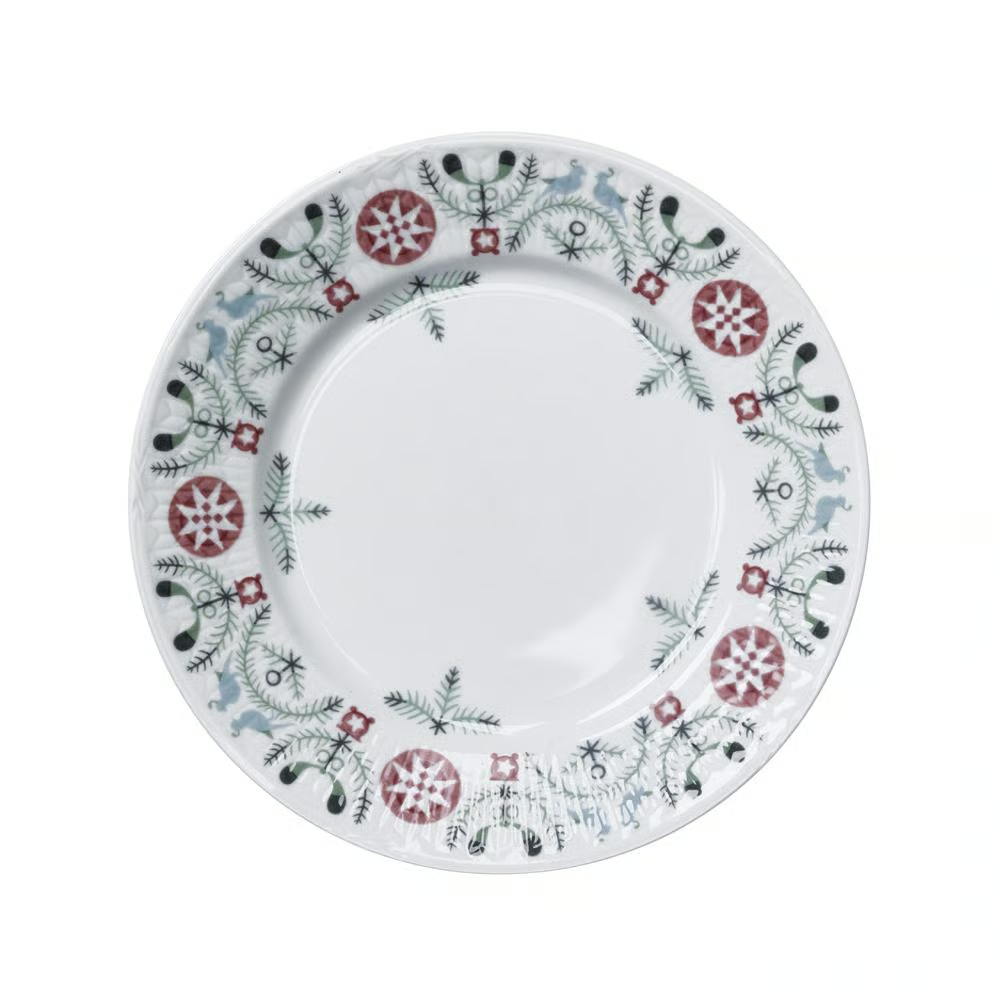
Glögg is never served alone. There are pepparkakor, thin and snapping, and often a wedge of blue cheese on top of them. The Swedish Grace Winter side plate is seventeen centimetres, the right size to hold six biscuits without looking like a main course, and carries the same rosettes, birds and fir around its rim as the mug. Buy them as a pair and the whole business looks considered rather than assembled on the night.
⸻
None of this is complicated, and that is rather the point. Glögg asks for small cups, gentle heat and something to eat beside it, and the Nordic answer has been the same for generations: a few plain pieces that come out in November, work hard for eight weeks and go back in the cupboard in good condition. The pan and the ladle are not seasonal at all.
If you are starting from nothing, four small cups, a bowl and a ladle will carry you through the dark half of the year. Add the jug and its tealight when you find yourself making it for six. Prices move between the Nordic shops from one week to the next, so compare all ten on ScandiDeals before the season gets properly underway.
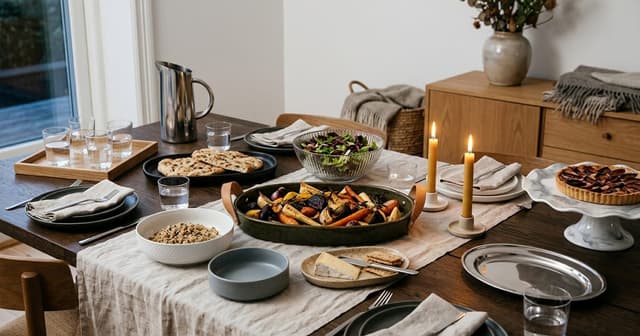
From October the eating moves indoors and the table has to hold eight. Ten Nordic platters, bowls, a jug and a tray for food served in the middle.
Read More →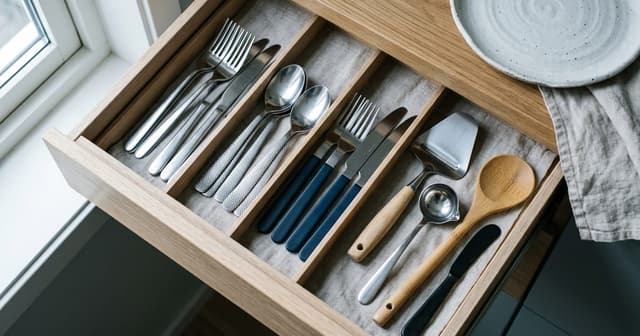
The clocks go back this weekend and dinner moves indoors under a lamp for five months. Ten Nordic pieces for the drawer you open three times a day.
Read More →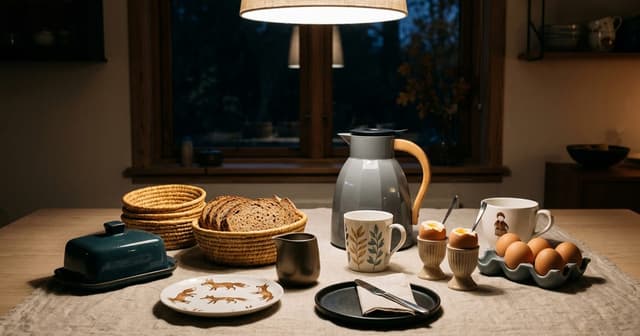
By mid-October breakfast in the North happens before the light does. Ten pieces that make the first meal of the day worth switching a lamp on for.
Read More →