
Setting a Nordic Autumn Dinner Table: 10 Quiet Classics
Plain plates, one pattern, a bowl big enough for the whole meal and glass that catches candlelight: 10 Nordic pieces for the autumn dinner table.
Read More →Coffee belongs to the Nordic morning. The hour after four, when the light goes, belongs to a pot of tea. Ten pieces for the quietest part of the day.
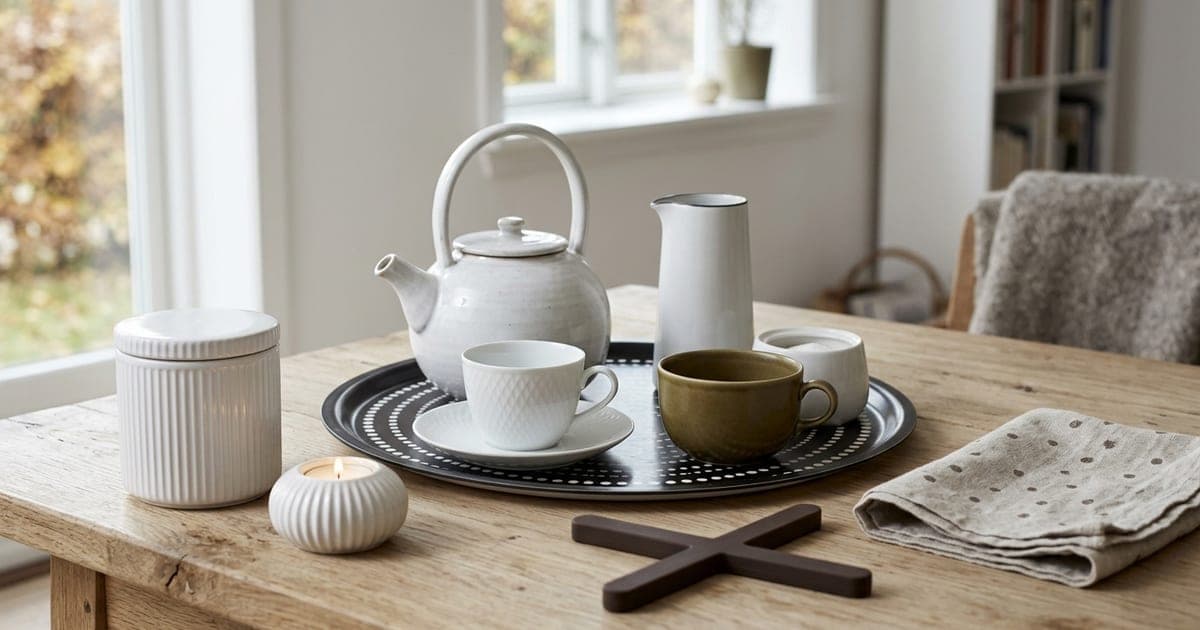
Coffee gets the attention in the Nordic countries, and it has earned it. But coffee belongs to the morning and to the meeting. The hour that needs rescuing in October is the one after four, when the light behind the window turns grey and dinner is still a long way off. That hour belongs to tea: a pot made properly, carried to the chair nearest the lamp, and drunk slowly enough that the dark outside stops being an event.
Very little is needed for it. A pot that holds heat, a cup worth holding, somewhere to set the pot down, and one small flame to give the table a centre. Ten pieces follow in the order you reach for them, from the jar the leaves live in to the cloth you dry the pot with. All ten are in stock in the UK, Germany, Norway and Denmark, and every one of them can be compared on price on ScandiDeals.
⸻
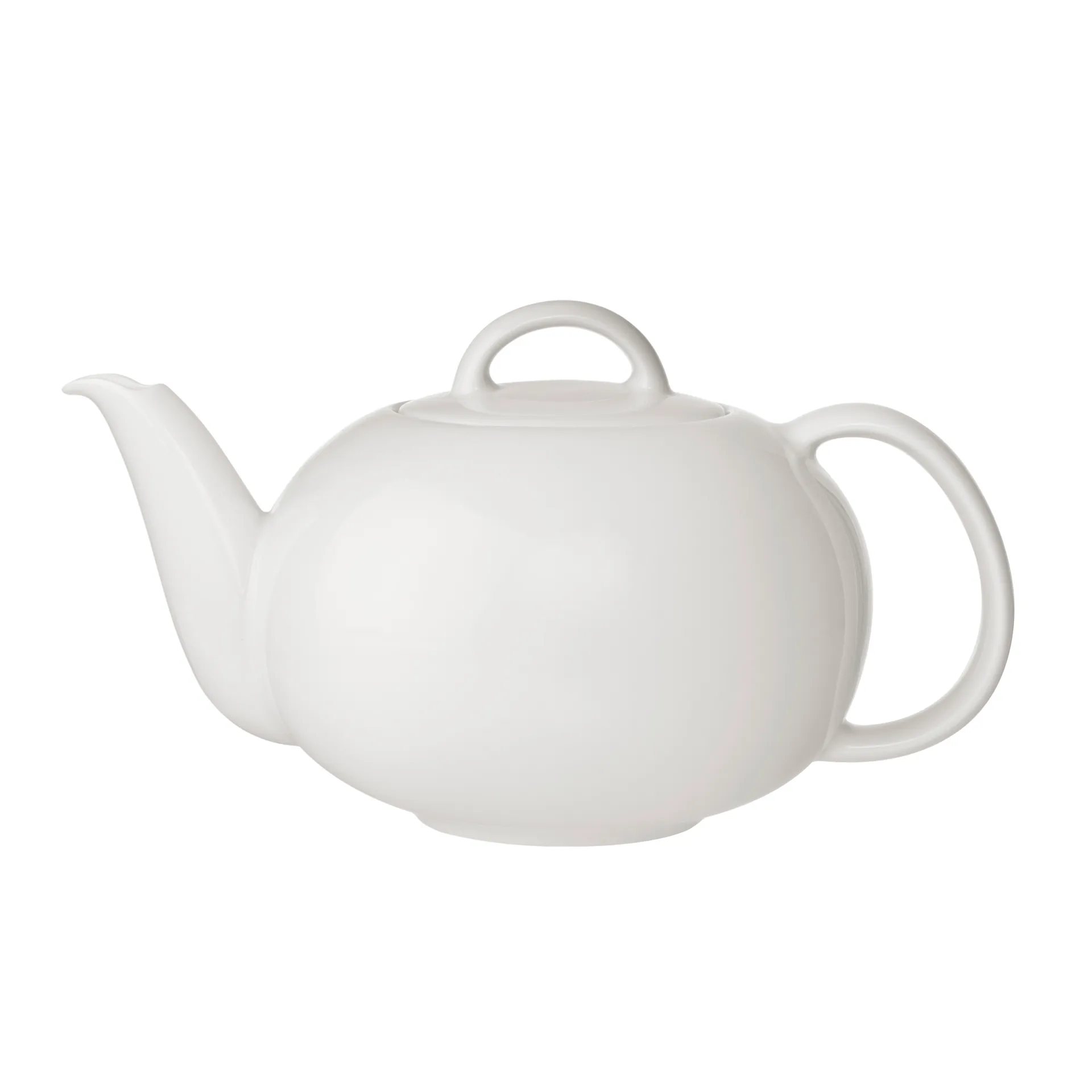
Heikki Orvola drew the 24h range for Arabia in 1996, and the name was the brief: pieces for all twenty-four hours of the day rather than for the back of the cupboard. The 24h teapot holds 1.2 litres, which is three generous cups and a top-up for whoever stays. The body is a plain white sphere, the spout short and slightly upturned, the handle a high loop that keeps your knuckles away from the heat. Round pots lose heat more slowly than angular ones, which is the whole argument for this shape.
⸻
Loose tea keeps badly in the bag it came in. The Swedish Grace storage jar is the middle size at 0.8 litres, a straight white cylinder ribbed from base to rim, with a flat lid carrying the same fine vertical relief. The glaze is called Snö, snow, and it reads as exactly that on an open shelf. It takes a full packet of leaves with room for a spoon, and because nothing about it says tea, it ends the winter holding biscuits.

⸻
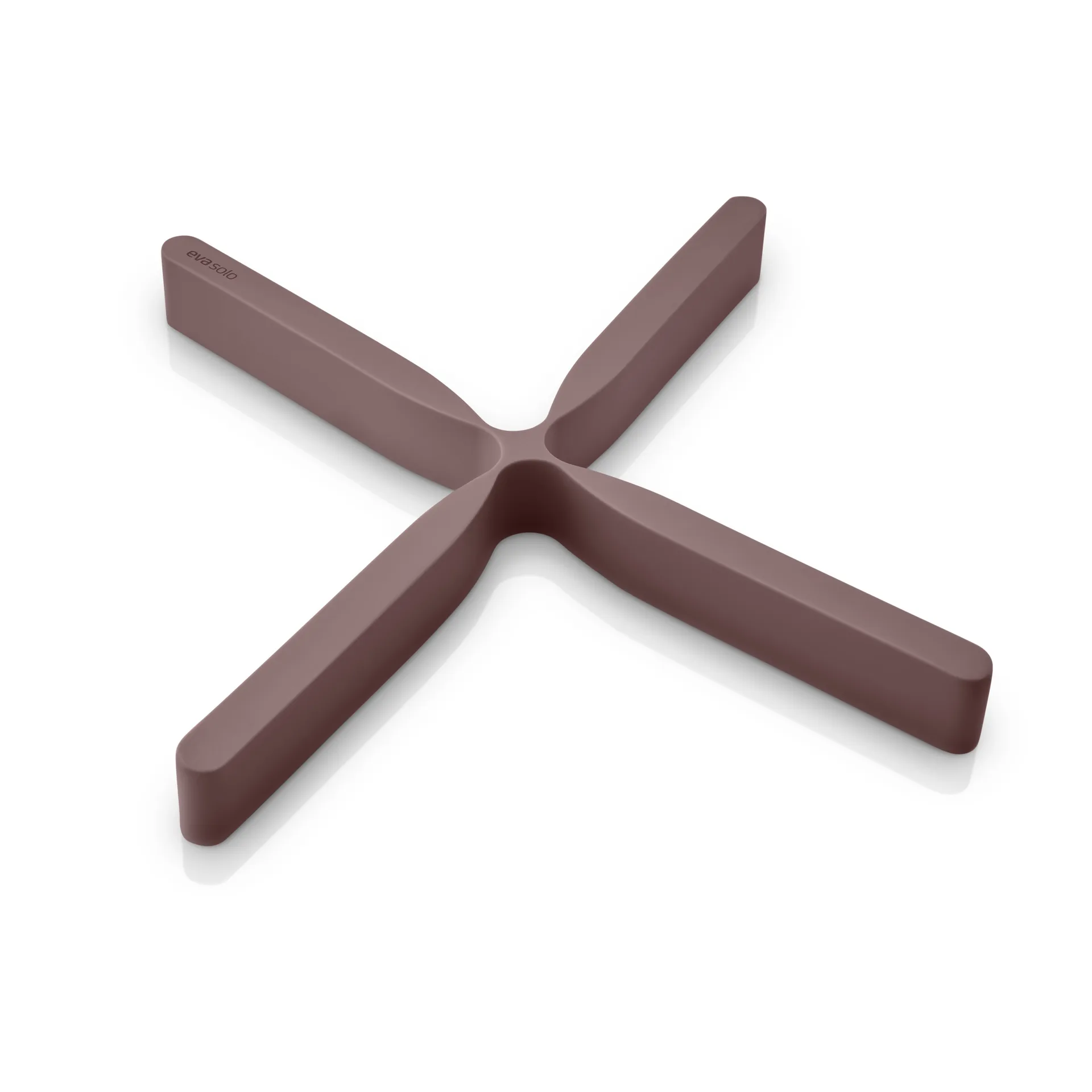
A full pot has to land somewhere, and a tablecloth is not it. The Flex trivet is two flexible bars crossed at the centre in a muted vintage brown, 21 centimetres across the span. The arms pivot, so the cross opens wide under a casserole and closes to a single line that slides into a drawer. Under a teapot it keeps the heat off the table and stays where it is put when the pot is lifted.
⸻
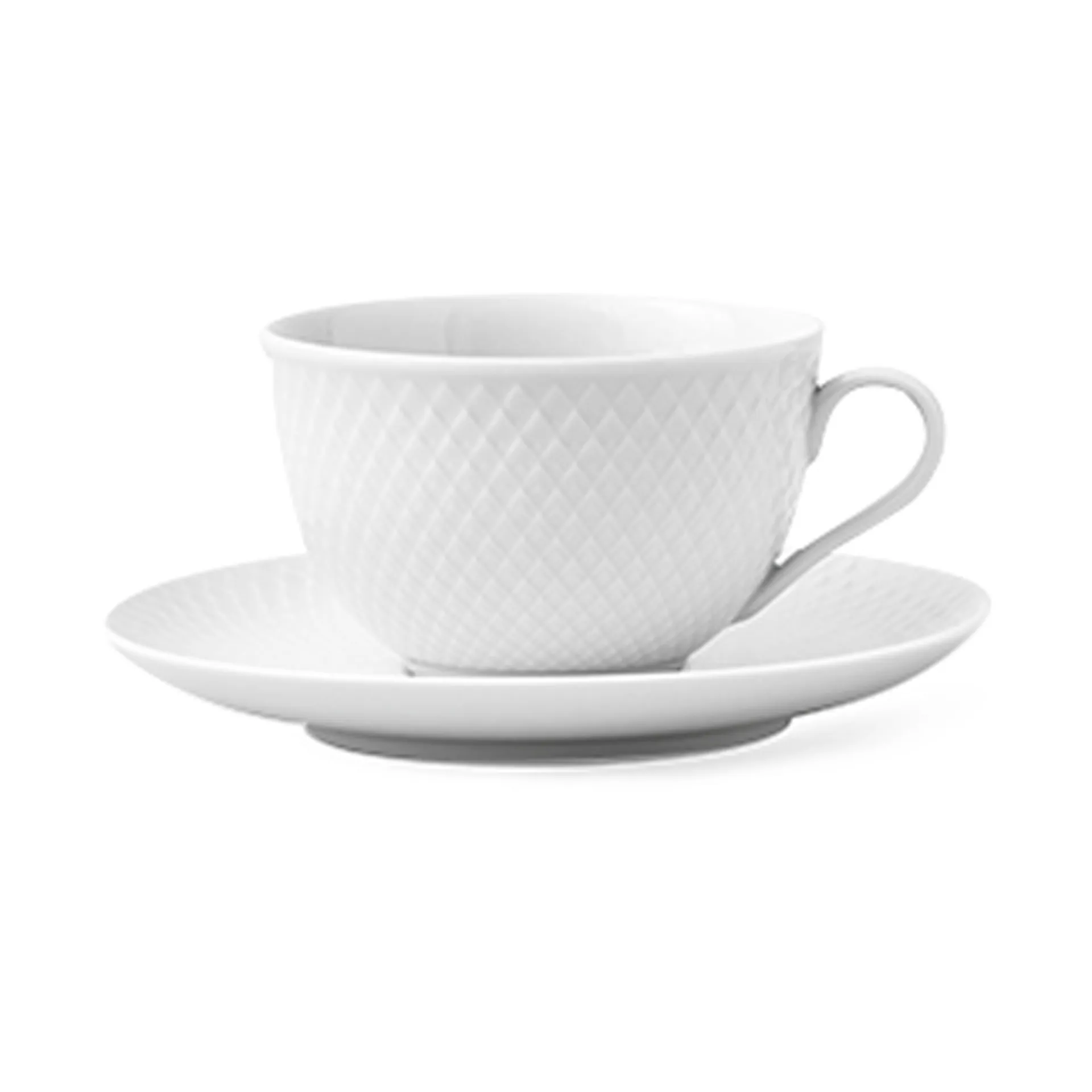
Some afternoons want a saucer. The Rhombe tea cup is Danish porcelain in plain white, 24 centilitres, the wall cut into a grid of small diamonds that catch the light without adding a single colour. The handle is a flat, narrow loop that sits against the finger rather than under it. A saucer still earns its place in October: it holds the teaspoon and catches the drip from the pot.
⸻
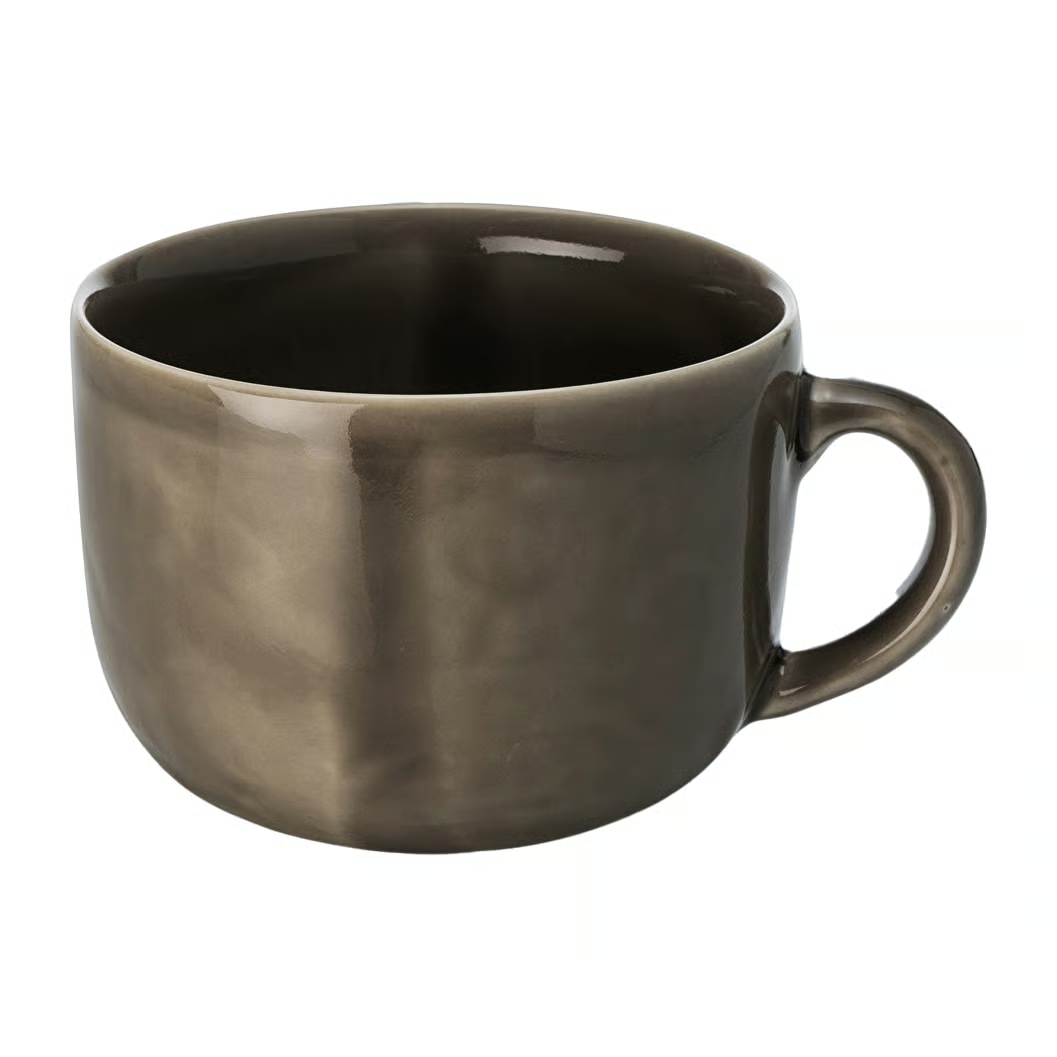
The other kind of afternoon wants one big cup and no ceremony. The Svelte tea cup holds 40 centilitres, wide and low rather than tall, with a small handle you hook a finger through and a glaze in a deep olive that turns almost brown where the light runs across it. The width cools the tea quickly, and the cup sits steadily on a sofa arm. It is the one to reach for when the pot is for you alone.
⸻
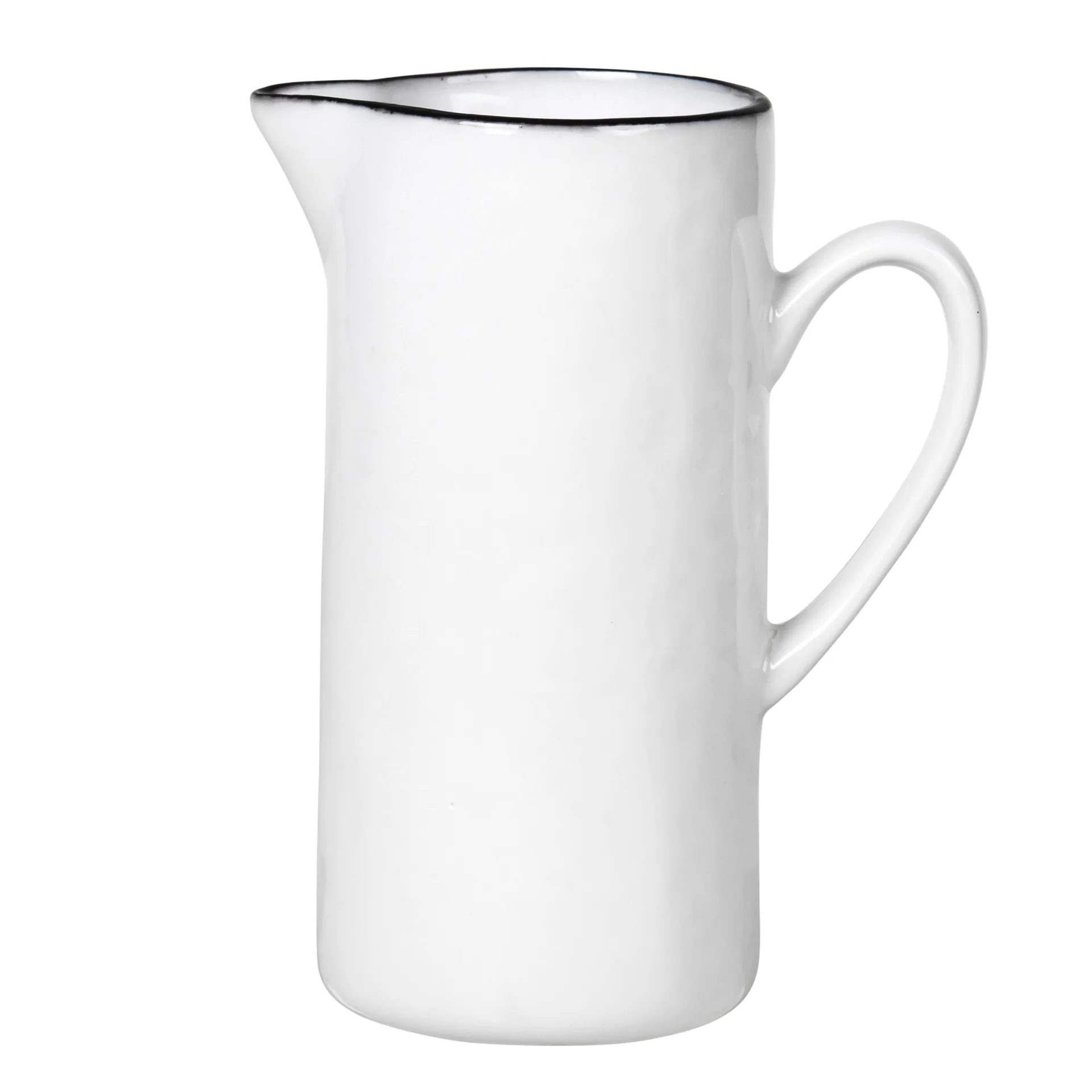
Milk out of the carton undoes a carefully made pot. The Salt milk jug is tall and narrow, 40 centilitres, glazed an uneven off-white with a thin dark line drawn along the rim and down the lip of the spout. That line is all the decoration there is, and enough to tie the jug to a dark tray. The handle stands clear of the body, so it stays cool when the jug is filled with warm milk for a late pot.
⸻
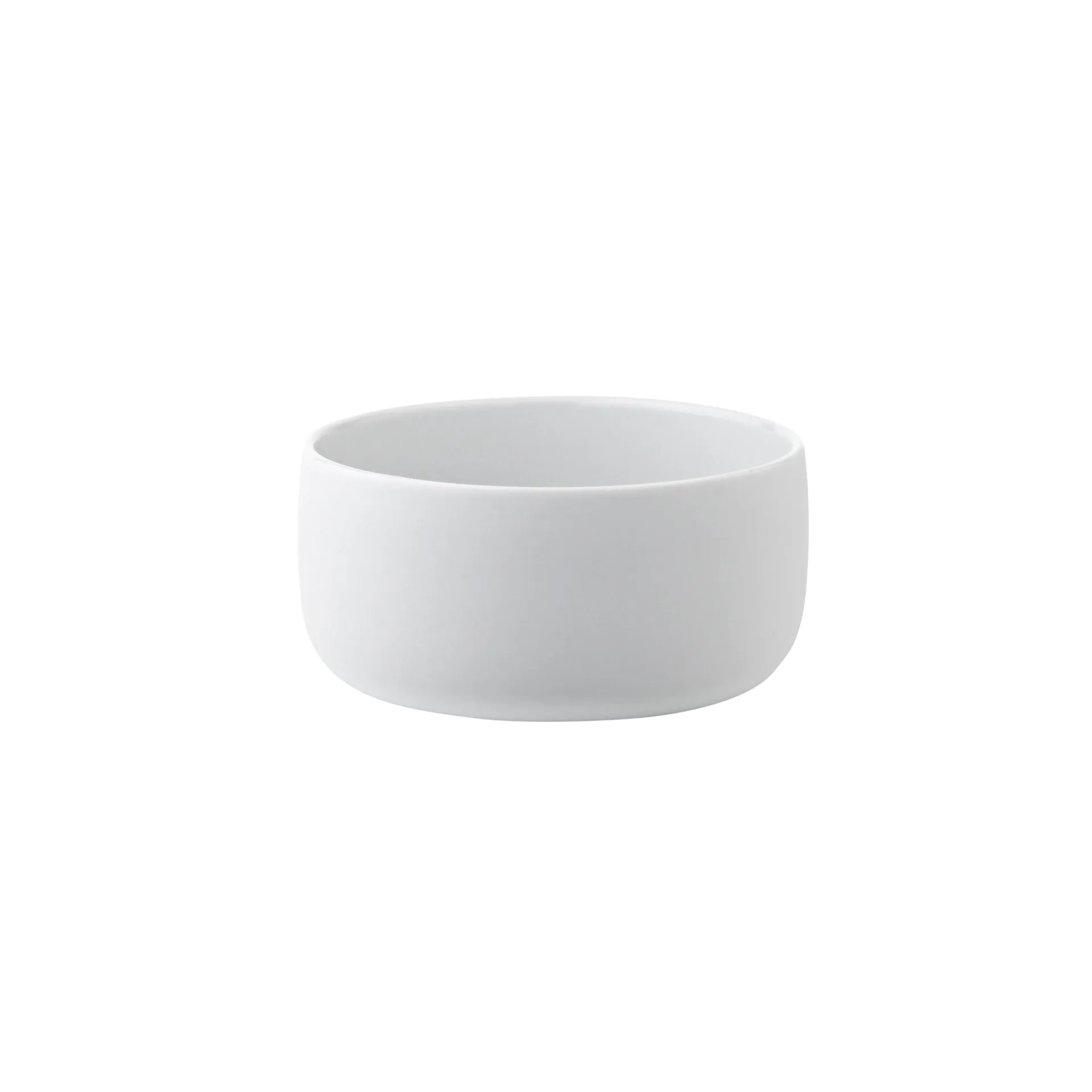
The Foster sugar bowl is a low white bowl with softly rounded sides and a clean straight rim, and no lid to lose. Open is the right answer for a bowl that is used every day: the spoon goes in and out without a free hand. It is small enough to sit between two cups without crowding them, and on afternoons when nobody takes sugar it moves to the kitchen window with salt flakes in it.
⸻
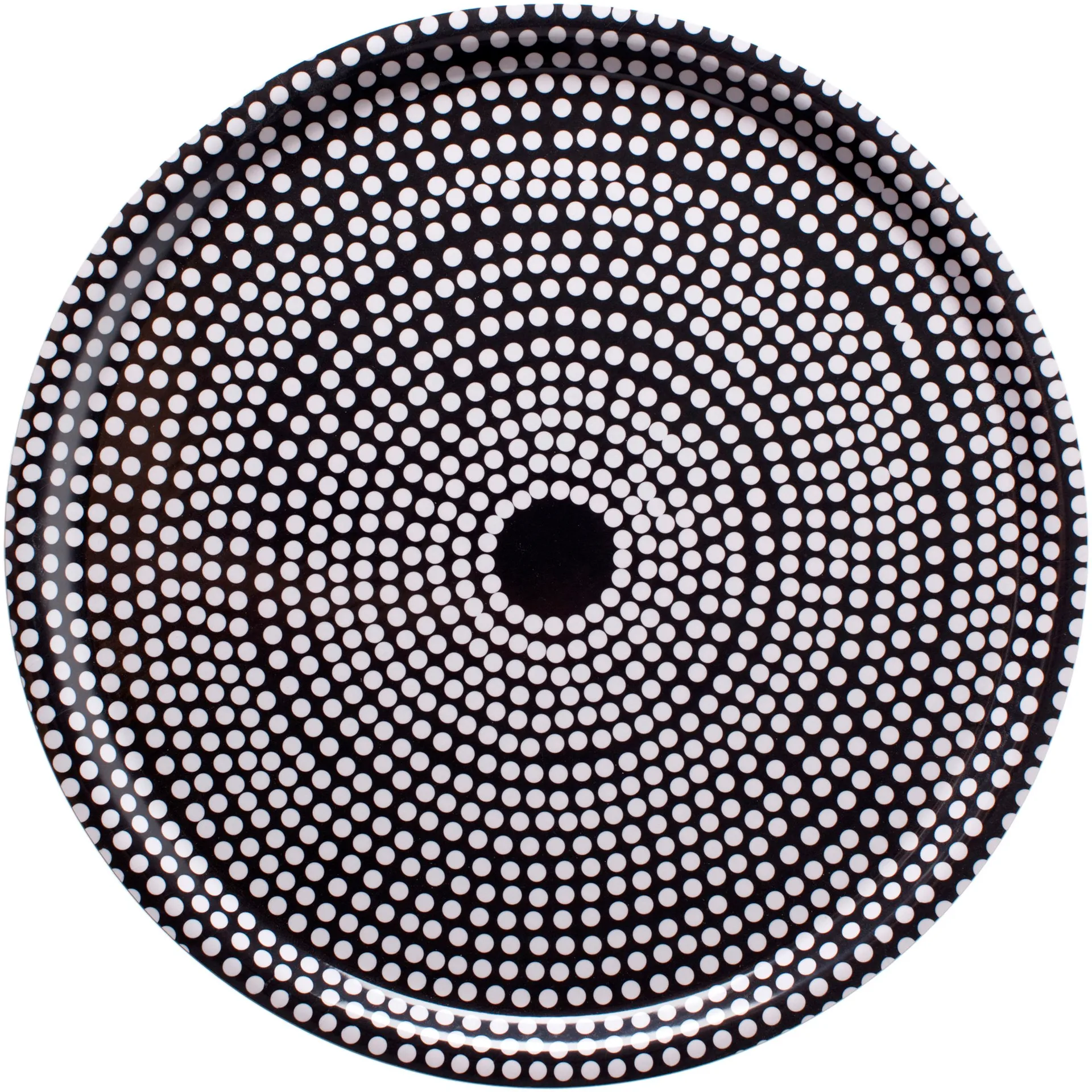
Tea is better away from the table it was made on. The Fokus tray is round and black, printed with rings of small white dots that tighten towards a single dot at the centre, so the eye lands where the pot goes. A round tray turns in the hand when two cups and a jug go through a doorway. Set it down on an ottoman and the afternoon has a table it did not have before.
⸻
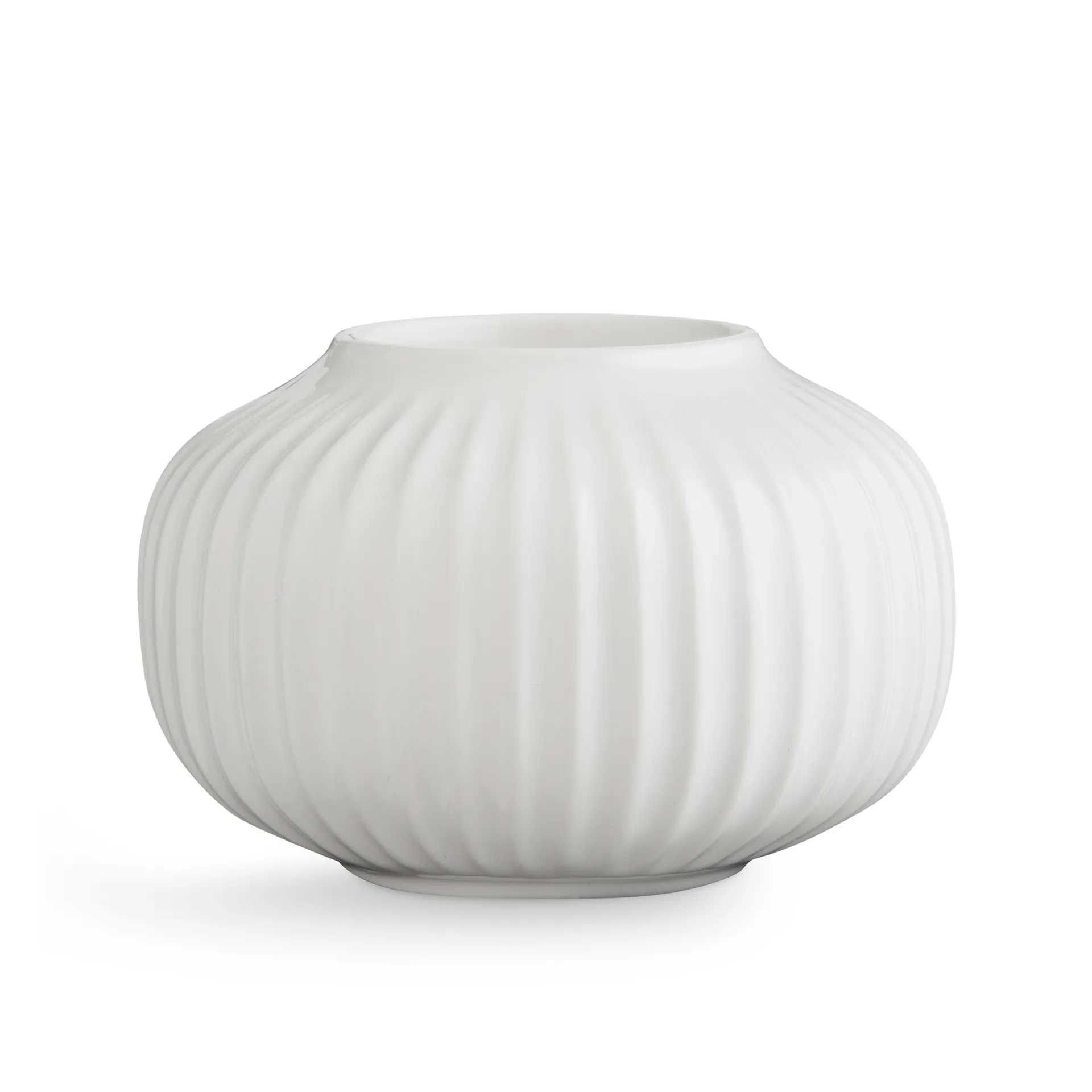
By half past four a lamp alone is not enough. The Hammershøi tea light holder is a squat white vessel, wider than it is tall, its surface cut into the deep vertical grooves that run through the range. A tea light sunk inside it throws light up through the ribs rather than out across the room, which is the difference between a candle and a glare. The medium size is the useful one, small enough to stand beside the pot.
⸻
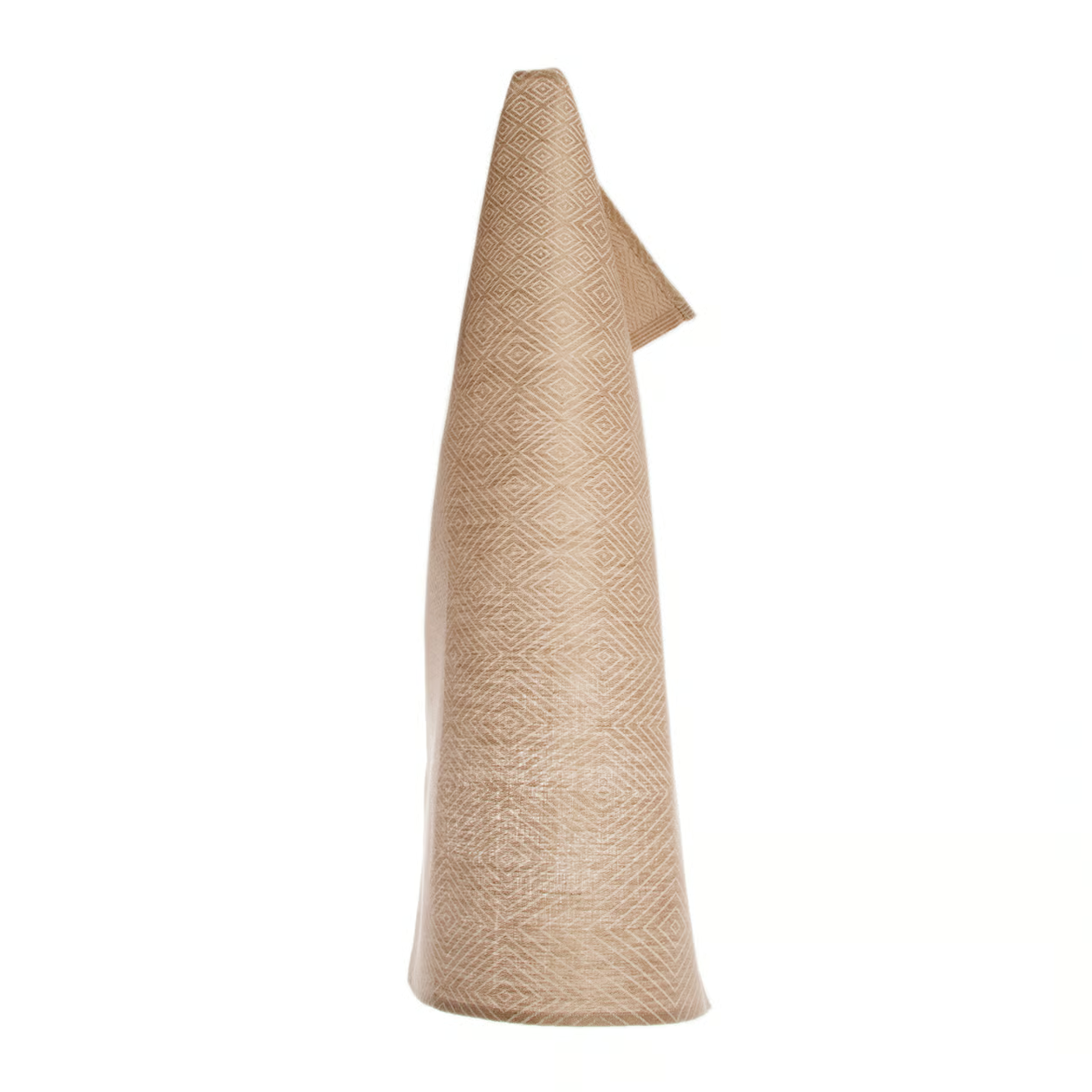
The last piece is the one that gets used most. The goose eye tea towel is woven in the old diamond twill that gives the pattern its name, left unbleached so the colour is the natural oatmeal of the yarn rather than a dye. The weave is what matters: the raised diamonds give the cloth grip, so it dries a pot and a row of cups instead of pushing the water around. A loop is sewn into one corner for the hook by the sink.
⸻
None of these ten pieces is clever. A pot, a jar, a trivet, two cups, a jug, a bowl, a tray, a holder for one candle and a cloth: the same short list a Nordic kitchen has kept for a century, in white, black and olive, with the decoration pressed into the surface rather than painted on top. That restraint is practical rather than austere: nothing here competes with anything else, so pieces bought years apart still sit together on a tray.
Buy the pot first, then the cup you want in your hands at four o'clock, and let the rest arrive when it is needed. The afternoon these things are for is not an occasion, which is exactly why the objects should be good. Prices move week to week and differ between the four countries; compare them on ScandiDeals before the dark afternoons set in.
Plain plates, one pattern, a bowl big enough for the whole meal and glass that catches candlelight: 10 Nordic pieces for the autumn dinner table.
Read More →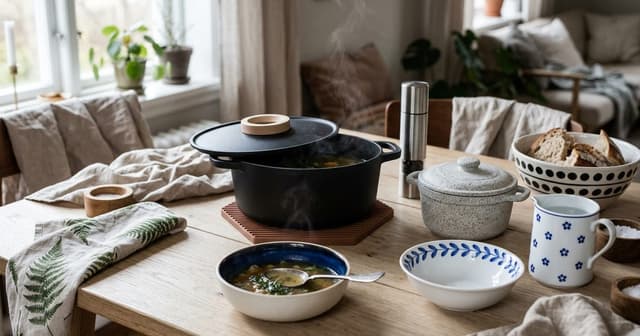
Soup is what the Nordic kitchen does with October. Ten pieces, from an oval cast-iron pot to a fern-printed tea towel, for the weeks of one-pot cooking.
Read More →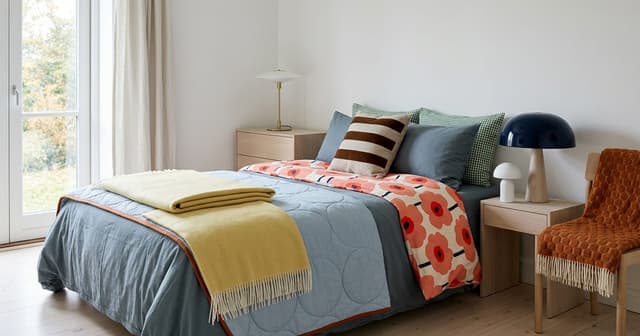
October is when the Nordic bedroom changes shift: heavier layers, warmer wool, smaller pools of light. Ten pieces for the months when mornings start in the dark.
Read More →