
Apron Weather: 10 Nordic Pieces for the Cooking Season
In late October the oven goes back on and the kitchen starts working again. Ten Nordic pieces for the cooking season: three aprons, four tea towels and the things that handle heat.
Read More →The last job of the evening, now done in the dark. Ten Nordic pieces for the sink: a birch brush, a loofah pad, a soap dish that lets the bar drain.
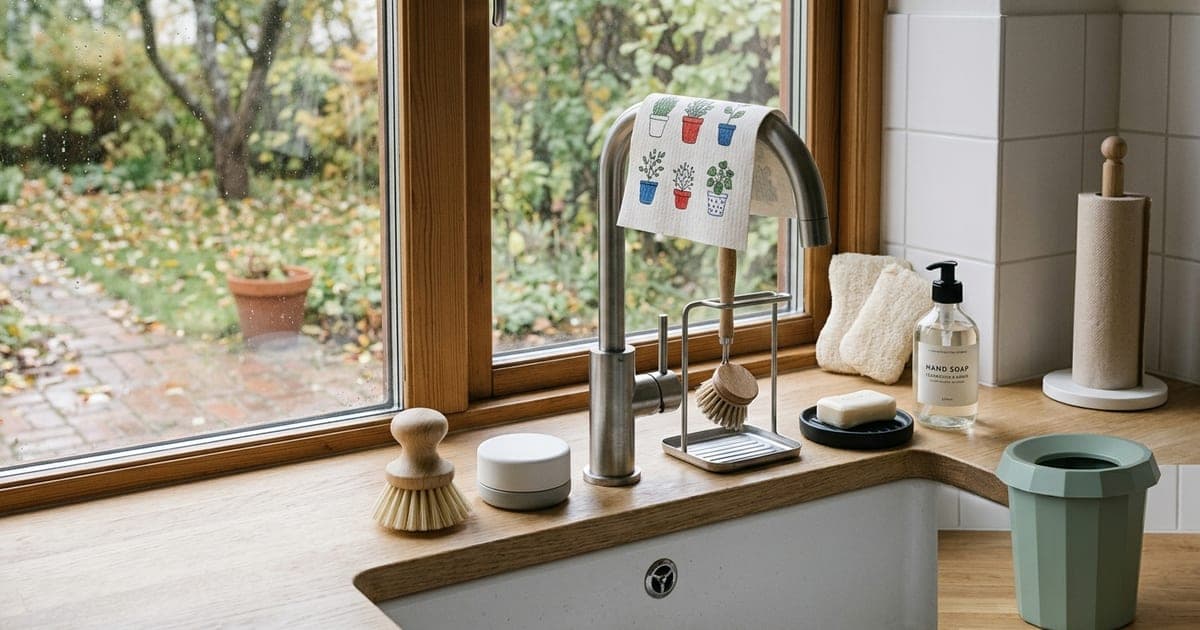
By the middle of October the washing-up happens in the dark. The window over the sink stops being a window at about five o'clock and turns into a mirror, and the ten minutes after dinner become the quietest part of the day: warm water, a radio somewhere behind you, the pans going back on their shelf.
That is why the tools stay out. The brush stands by the tap, the cloth hangs over the mixer, the soap sits where a wet hand can reach it. Left in the open all winter they have to be worth looking at, and they have to dry out between uses, which is most of what separates a good one from a cheap one. Ten pieces below, all in stock in the UK, Germany, Norway and Denmark, all comparable on price on ScandiDeals.
⸻
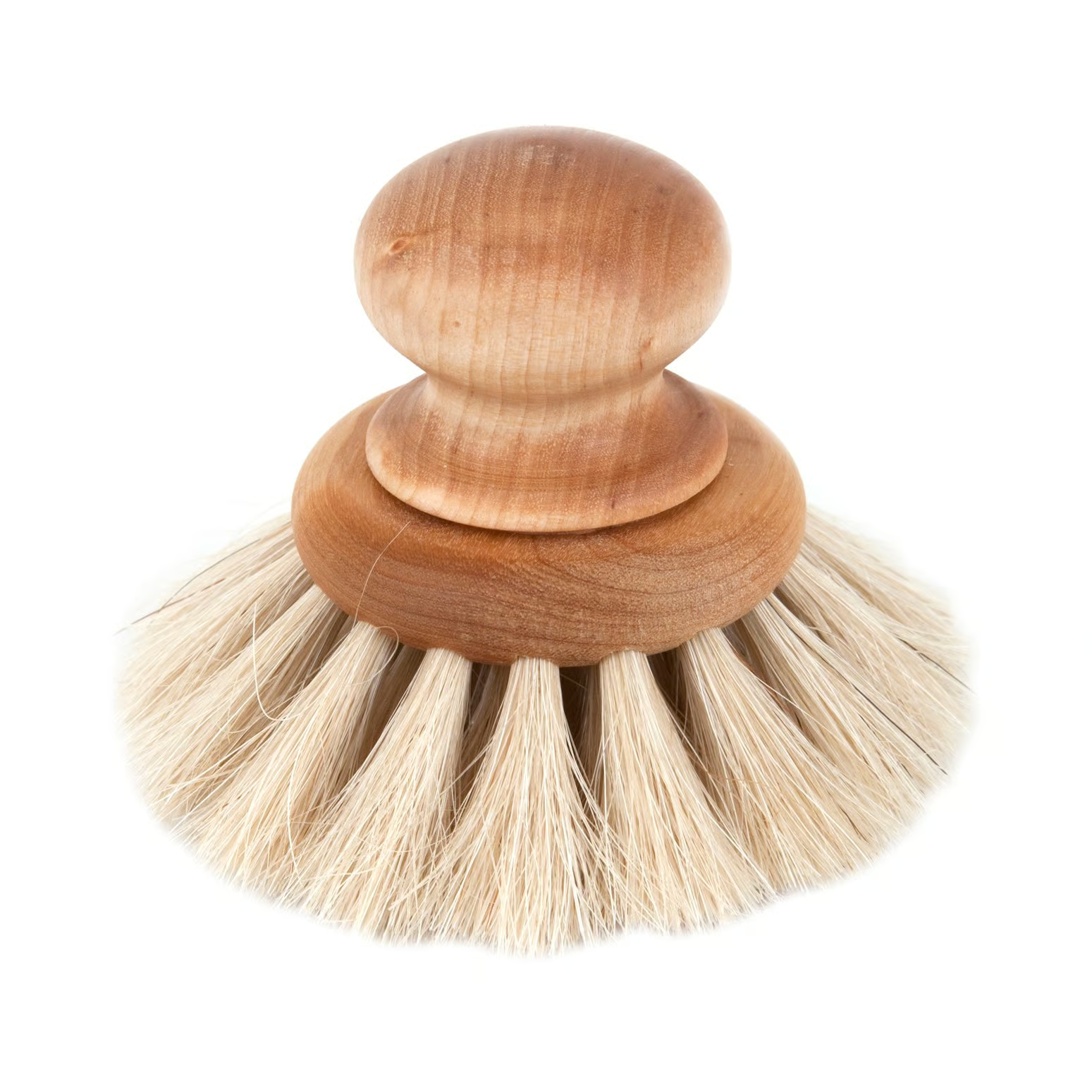
A brush with no handle, just a turned birch knob that sits in the palm like a door pull. The bristles fan out below it in a pale skirt, soft enough for glass and stiff enough for a roasting tin, and the wood is oil-treated so a daily soaking does not raise the grain. You push with the heel of your hand rather than the wrist, which is why this shape has outlasted most handled brushes in Swedish kitchens. The round dish brush is the piece the rest is arranged around.
⸻
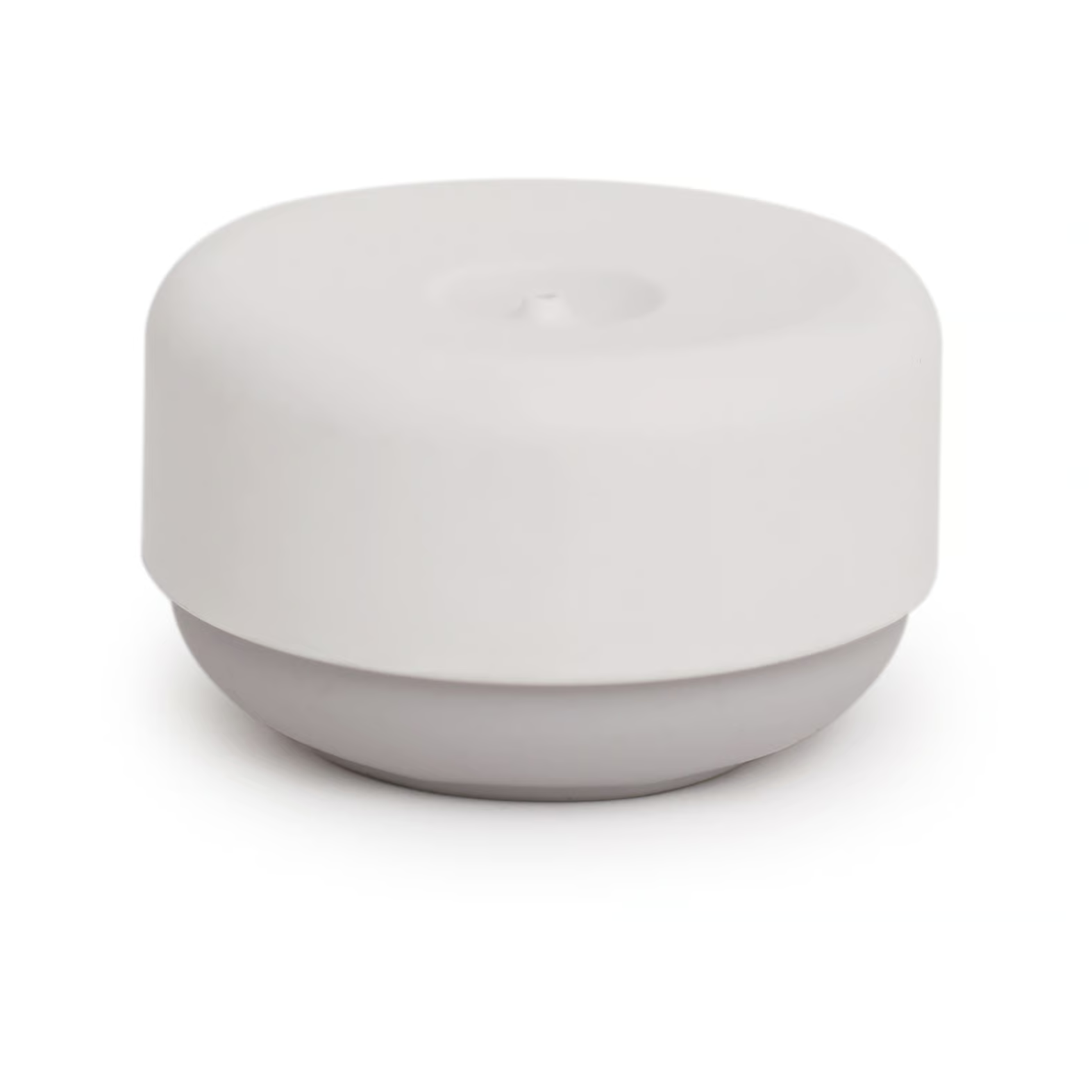
A squat white puck on a light grey foot, no taller than a jar lid. Press the brush down onto the plate in the middle and it gives up a dose of washing-up liquid; lift it and the dispenser closes. One hand does the whole thing, so the bottle with the garish label can go under the sink and stay there. The base grips the worktop rather than skating across it. The Do-Dish dispenser is a small problem well solved.
⸻
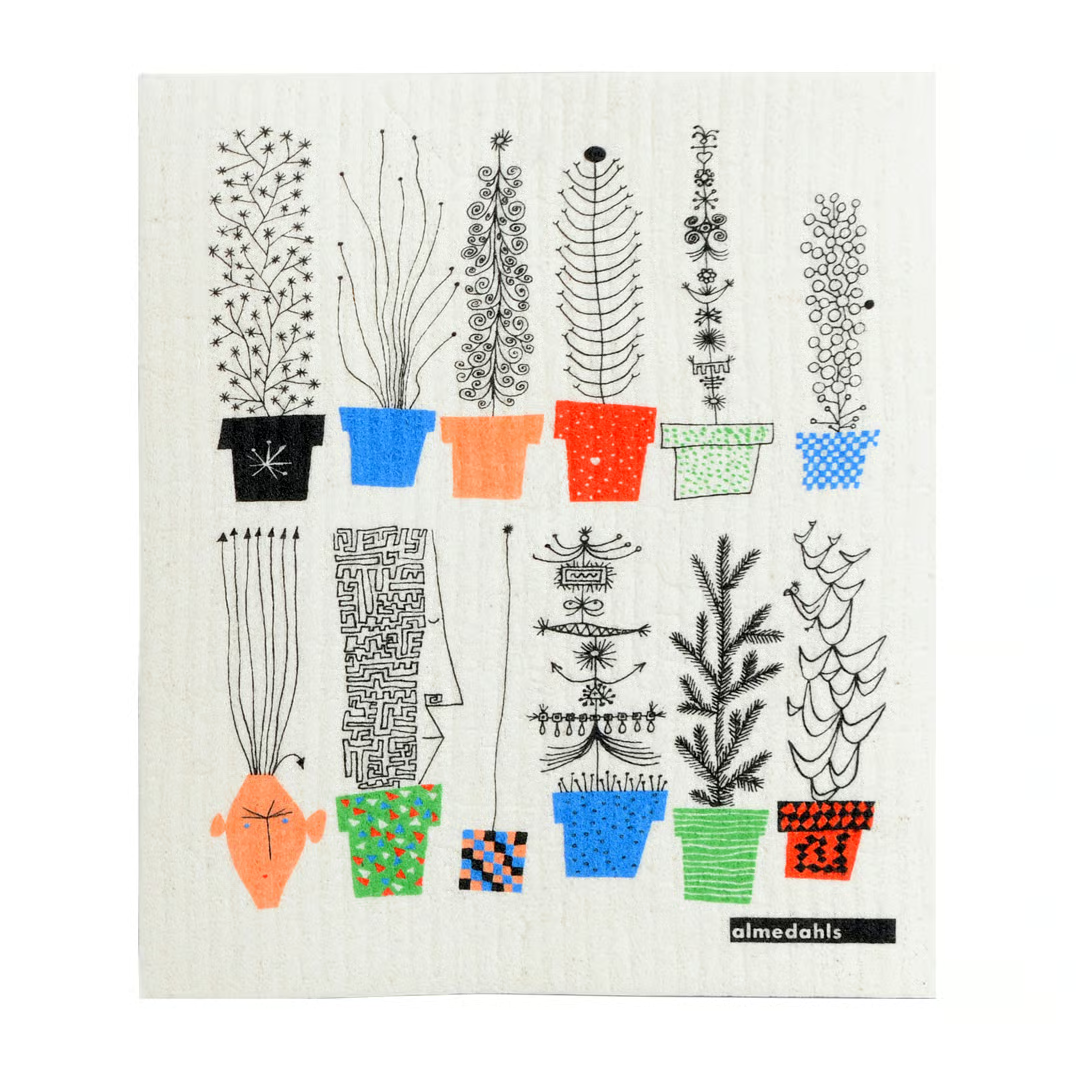
The Swedish sponge cloth is a habit worth catching: cellulose and cotton, stiff as card when dry, soft and thirsty the moment it meets water. This one measures 18 by 20 centimetres and carries a whole shelf of houseplants drawn in fine black line, their pots blocked in red, blue, orange, green and black. It wrings out almost dry and goes in the wash with the tea towels. The flower shelf dish cloth is the cheapest colour in the kitchen.
⸻
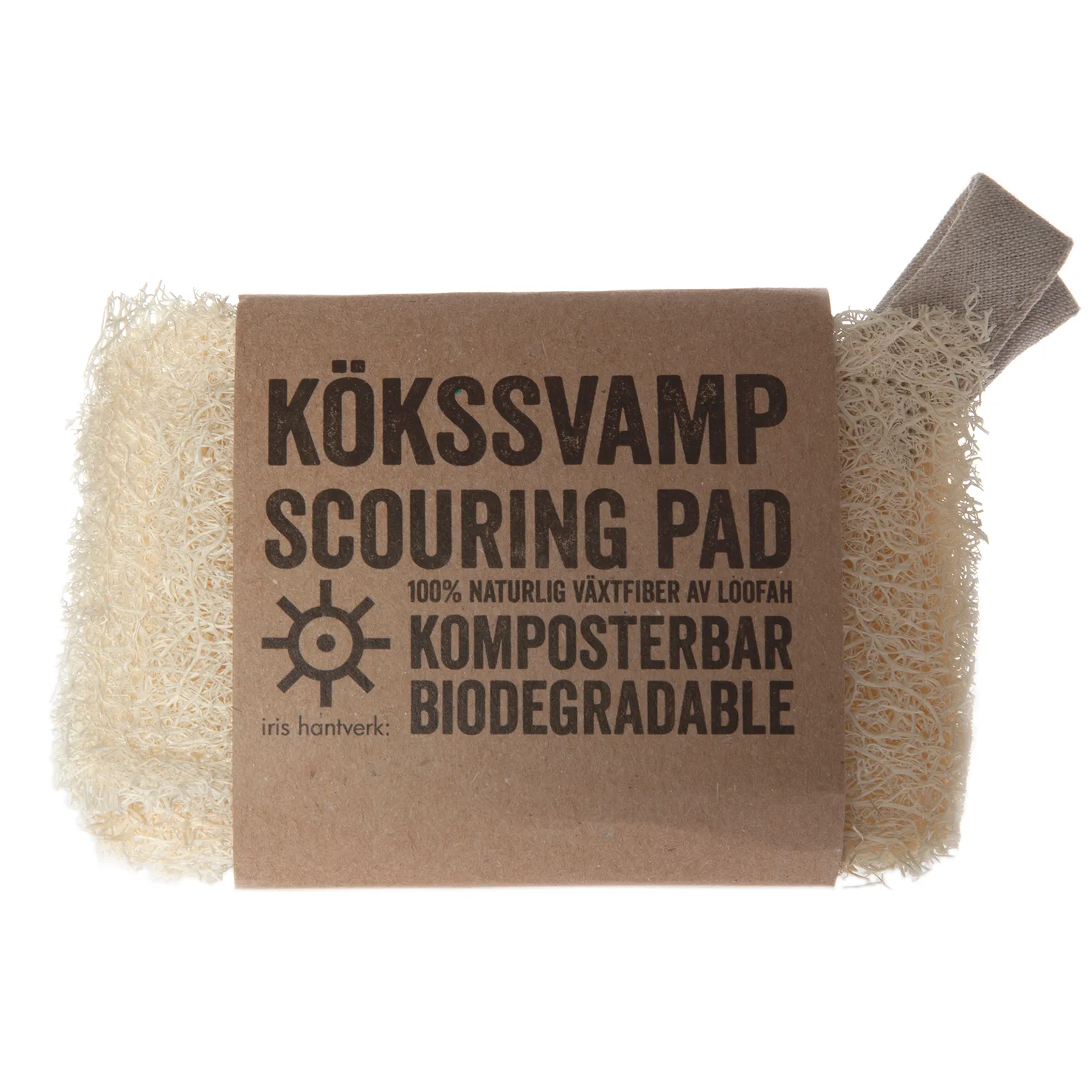
Loofah is a gourd: grow it, dry it, cut it, and you have a scourer with an open mesh that rinses itself clean. These come two to a pack, pale and coarse, with a grey tape loop so the pad hangs up instead of sitting in a puddle behind the tap. Wet it and it softens; leave it and it goes hard and stays sweet. When it gives up it goes on the compost. The loofah pads replace the green plastic one.
⸻
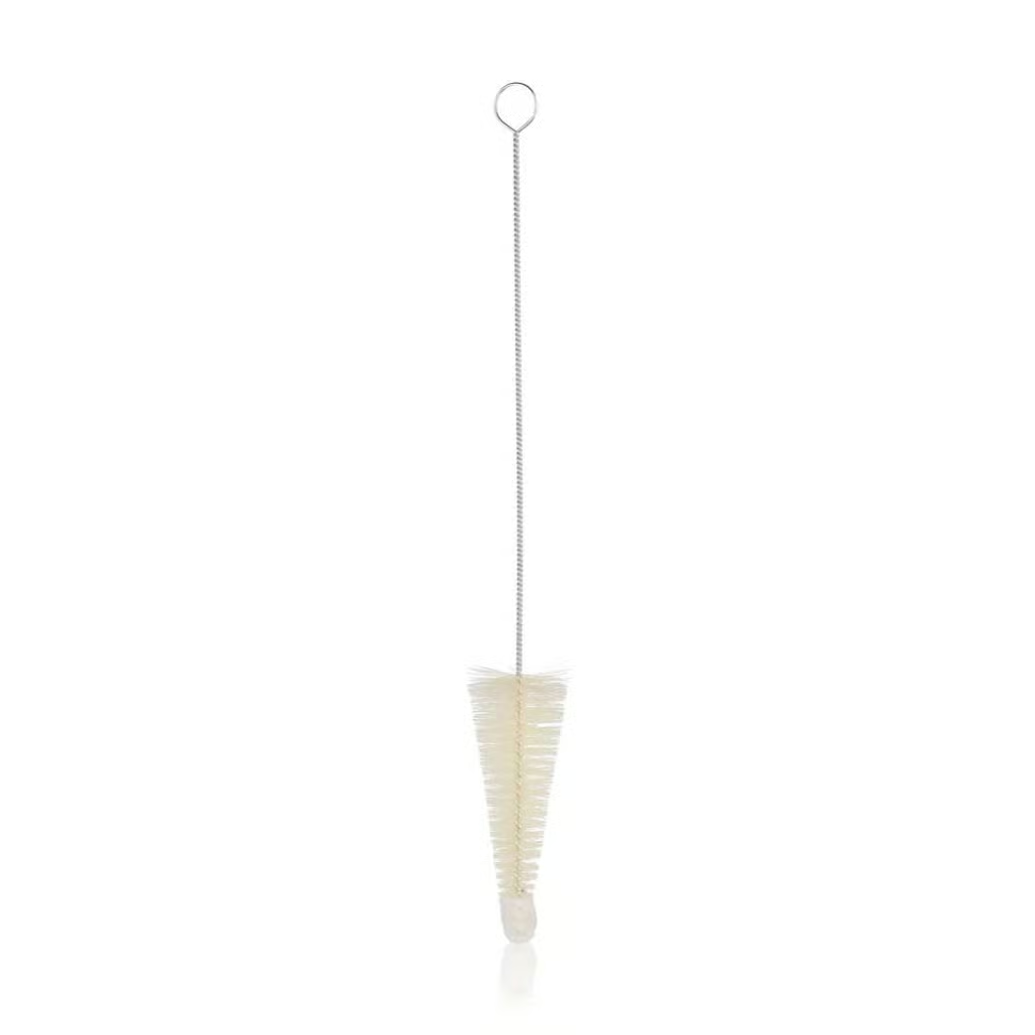
Every kitchen reaches the point where the thing in the sink is taller than your hand. Humdakin's answer is the old one done properly: a long twisted steel stem, a tapered head of pale bristle, a loop at the top to hang it from. It goes down a water bottle, a carafe, a vase with a green ring in it, and the flask that came back from Sunday's walk. The bottle brush does what nothing else does.
⸻
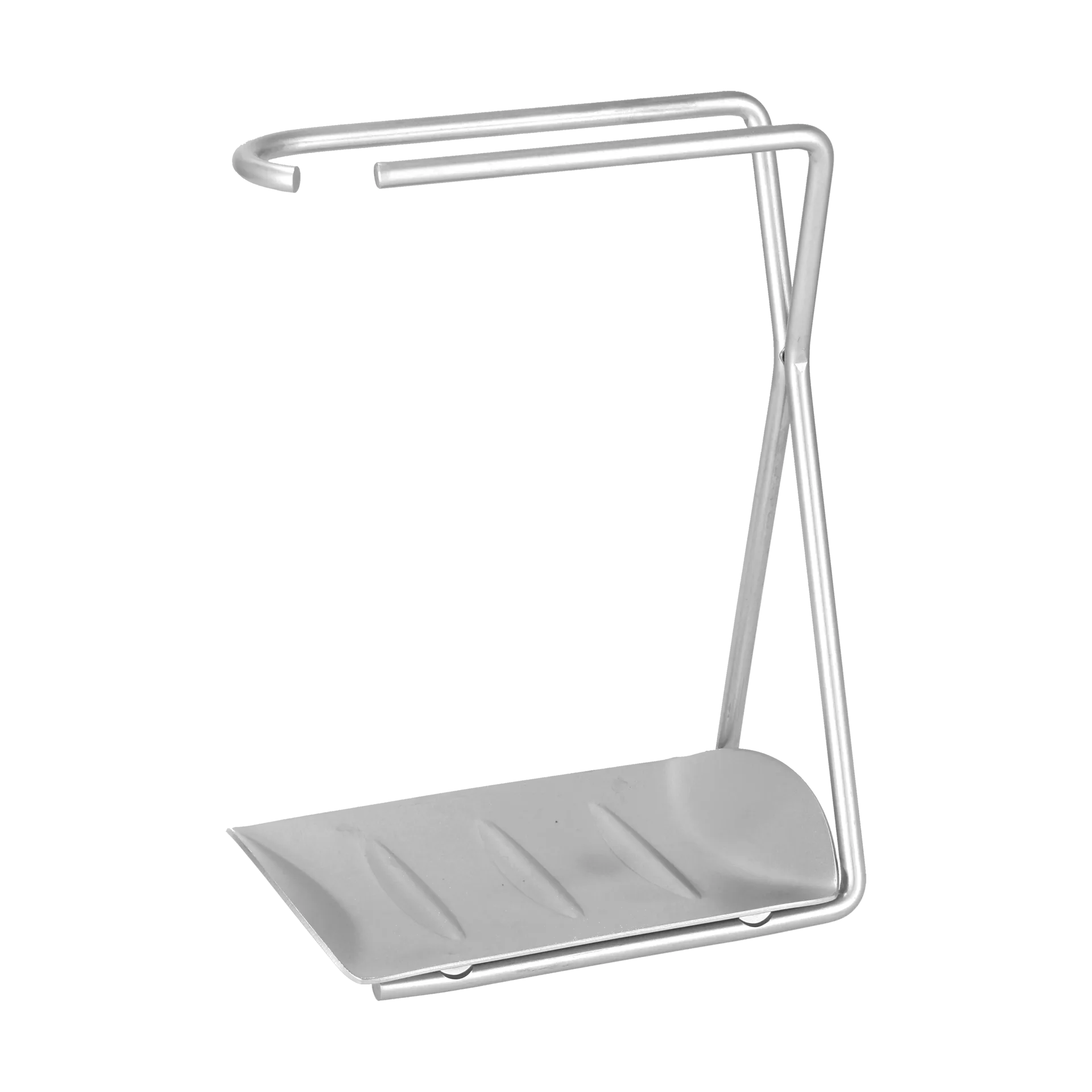
A wet brush left flat on the worktop makes a grey ring within a week. This is the fix: a bent stainless steel frame with an open rail at the top to hang the brush and the cloth over, and a shallow ribbed tray beneath to take the drips. Air gets all the way round both, the water runs to the front of the tray, and once a week you tip it out. The Rosendahl stand keeps the sink edge dry.
⸻
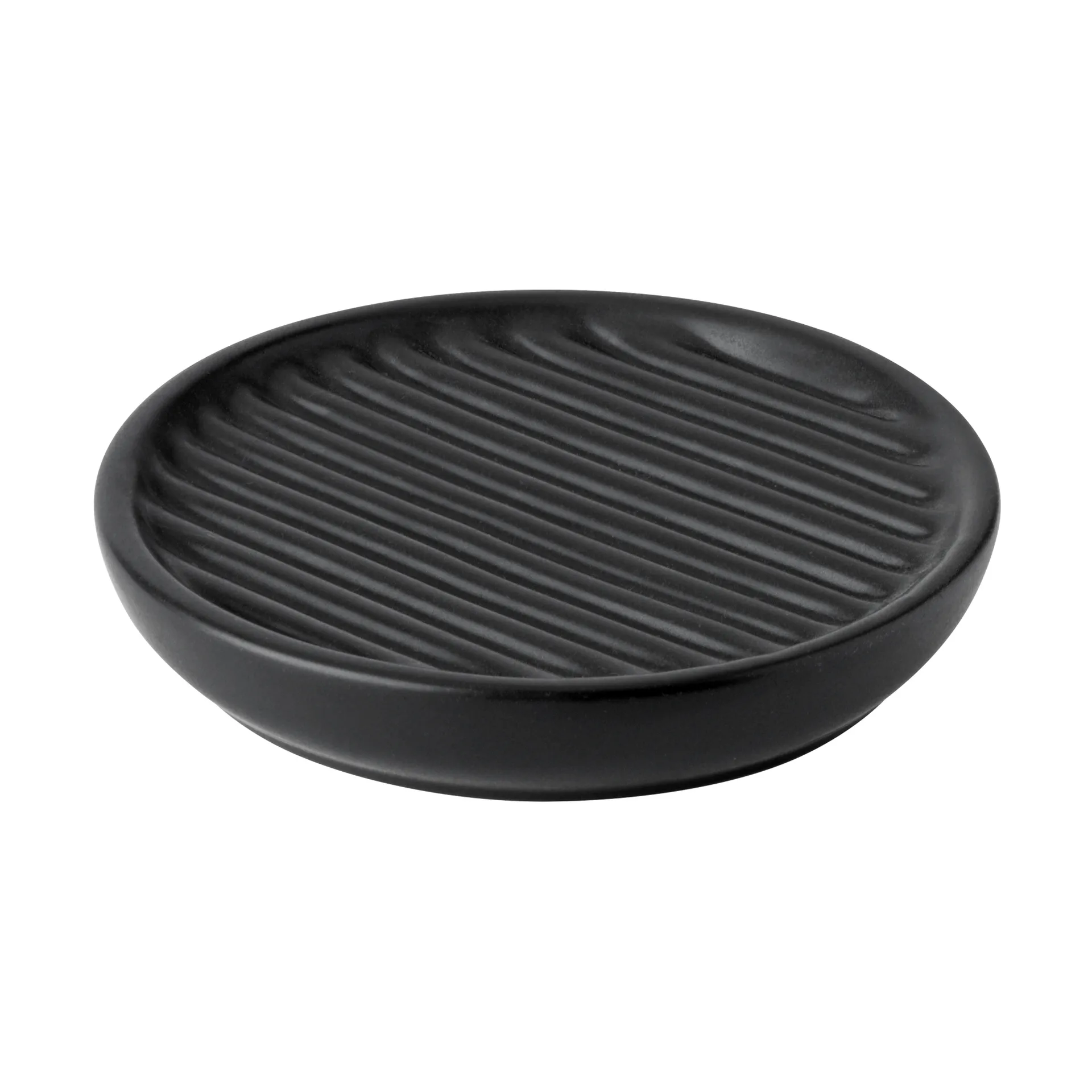
Matt black, round, eleven centimetres across, with a well cut into parallel ridges so the bar rests on the high points and the water runs off between them. That single detail is the difference between a bar of soap and a grey paste stuck to a saucer. The matt glaze takes fingerprints without showing them, which matters for something handled with wet hands several times a day. The Fjord soap dish will also hold a sponge.
⸻
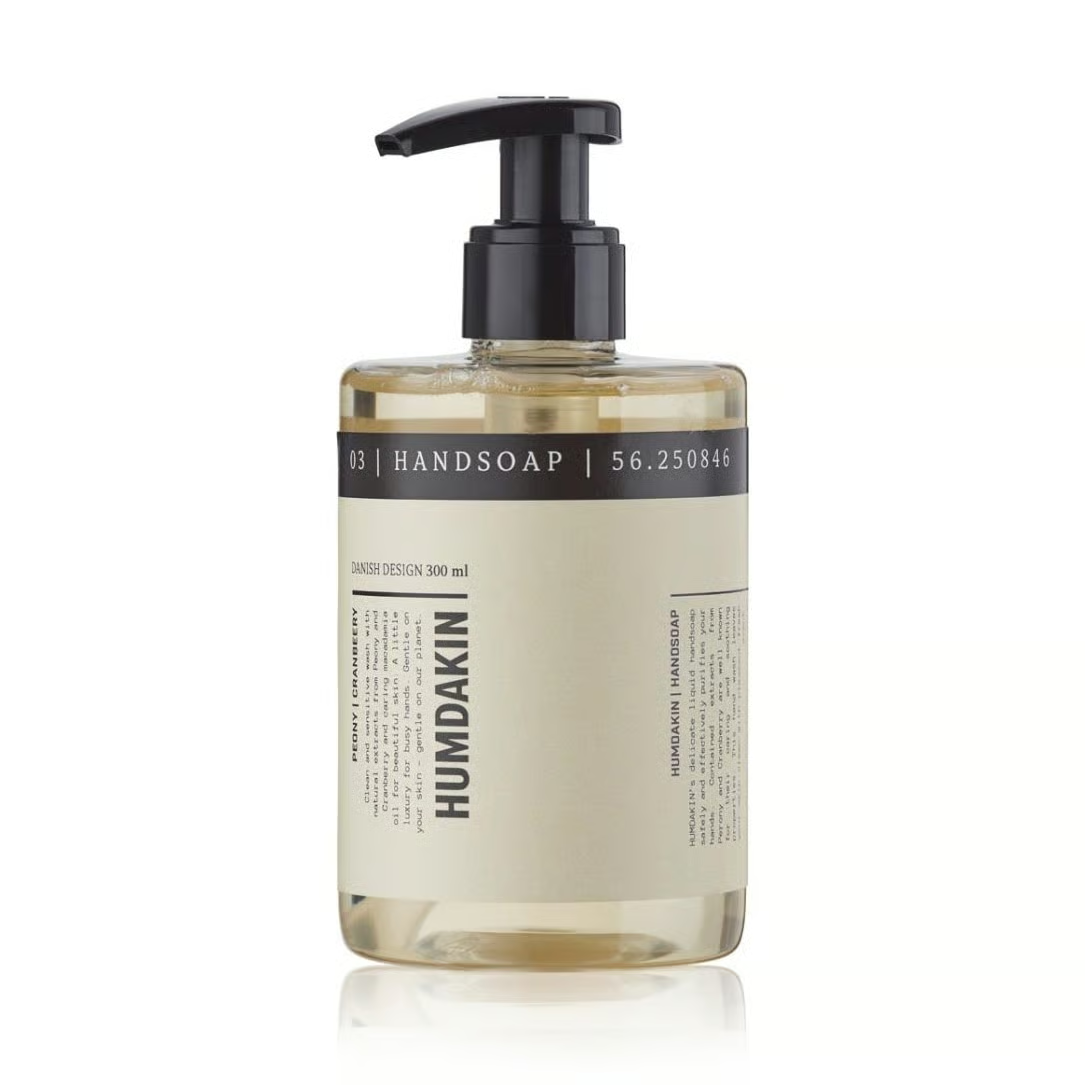
Washing-up water and cold wind do the same thing to skin, and October supplies both. This is a 300 millilitre pump scented with peony and cranberry, with macadamia oil in it for the drying that follows. The bottle is clear, the pump is black, and the label is printed like a chemist's ledger — which is the point, since it has to stand on the open worktop beside the brush. The Humdakin hand soap is for the hands, not the plates.
⸻
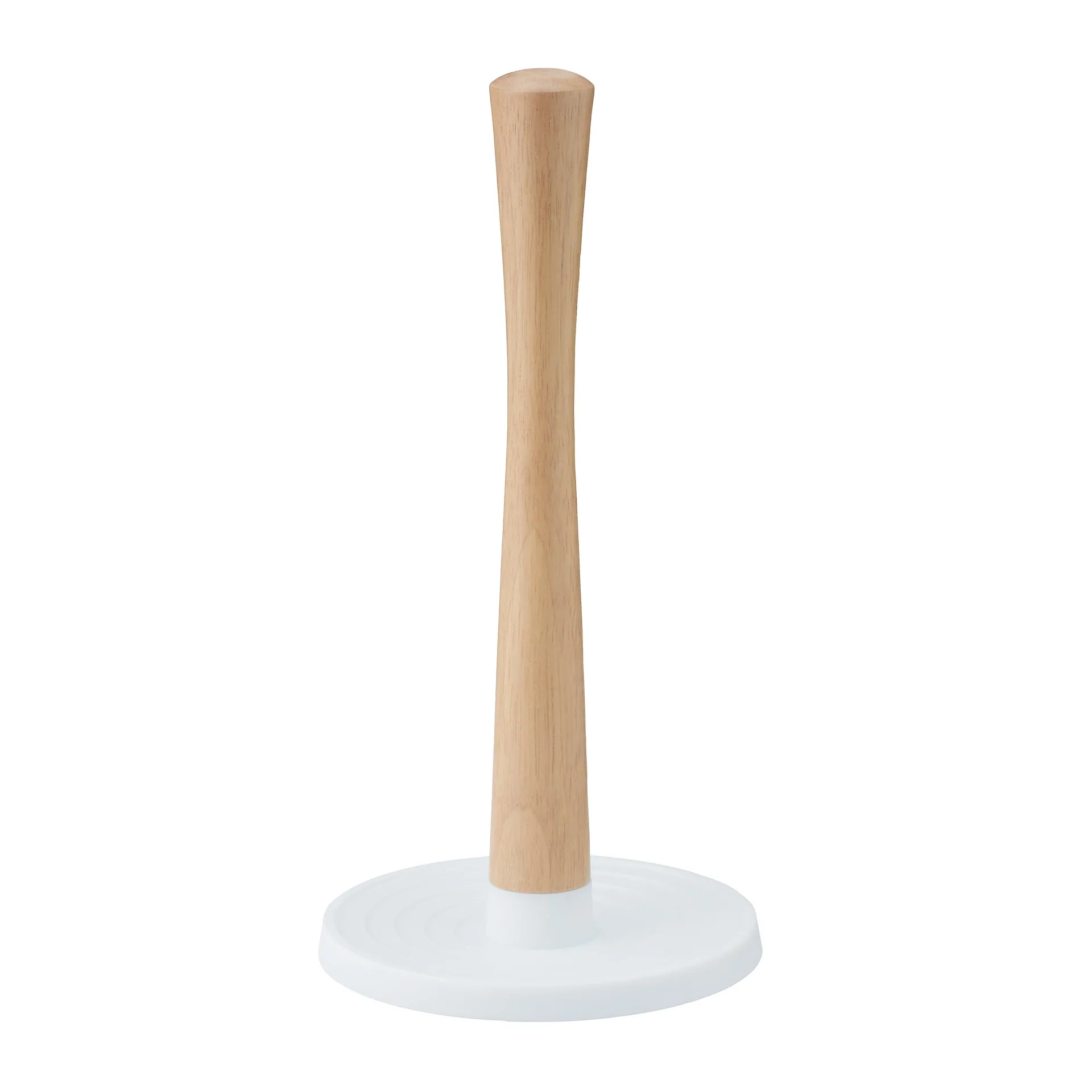
A turned post of pale wood, waisted in the middle like a skittle, standing on a round white base with concentric rings machined into it. The weight is all in the foot, so the roll turns and tears without the whole thing walking across the worktop. It takes the footprint of a side plate and reads as an object rather than as equipment, which is what you want from something that lives in the open. The Roll-It holder ends the search for the roll.
⸻
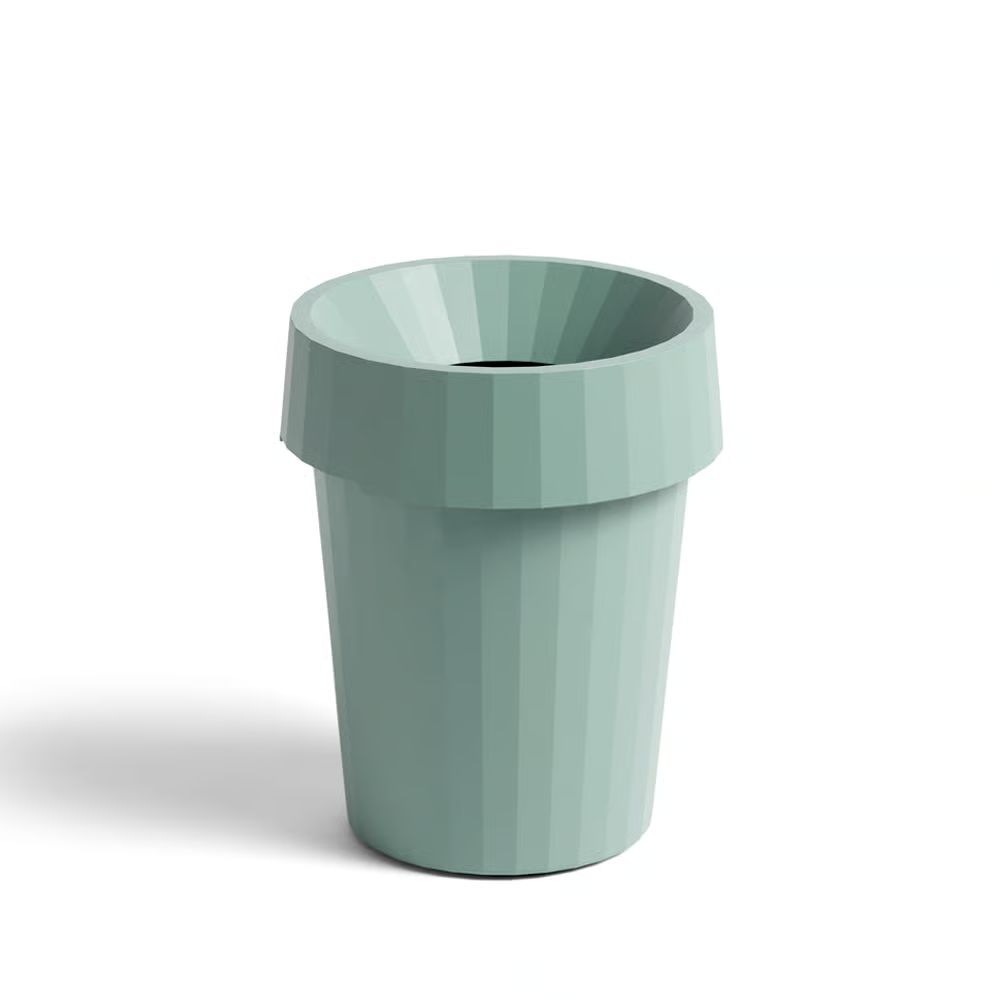
Fourteen litres, dusty green, with faceted sides that catch the light in narrow vertical stripes. The clever part is the collar: a wide ring that drops over the rim, grips the bag and hides every centimetre of it, so the bin reads as a plant pot rather than as a bin with a liner hanging out. Keep it at the end of the worktop for packaging and peelings on their way out. The Shade bin is the last stop in the room.
⸻
None of this is sentimental about chores. The sink is used more often than any other metre of the house, and the things kept there are replaced more often than anything else: the plastic scourer, the brush whose handle splits, the cloth that smells by Thursday. A birch brush, a loofah pad and a steel stand that lets both dry out break that cycle for the price of two or three rounds of the cheap version.
Choose two or three, not ten. A brush that fits your hand, somewhere for it to drain and a soap you do not mind looking at will do more for the last ten minutes of the evening than a cupboard of gadgets. All ten are in stock in the UK, Germany, Norway and Denmark, and prices across the Nordic shops move week by week, so compare them on ScandiDeals first.
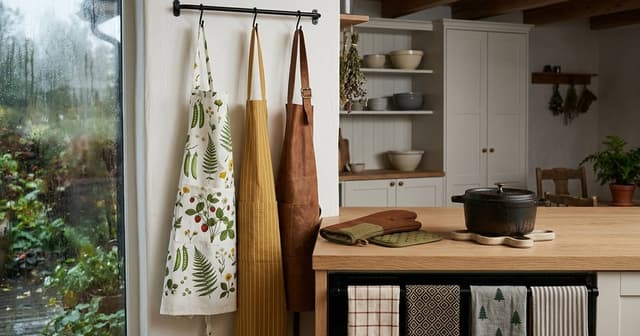
In late October the oven goes back on and the kitchen starts working again. Ten Nordic pieces for the cooking season: three aprons, four tea towels and the things that handle heat.
Read More →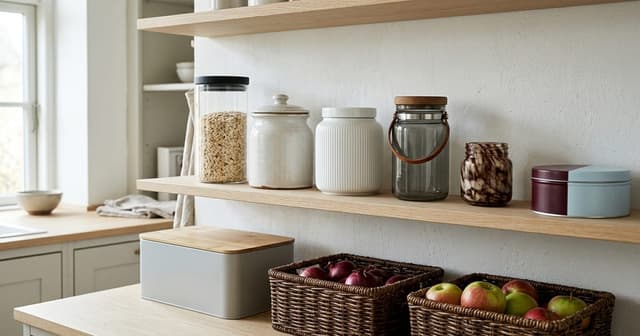
October is when the Nordic kitchen fills up: flour, oats, jam, bread. Ten jars, tins, baskets and tools that keep a winter store in order and in sight.
Read More →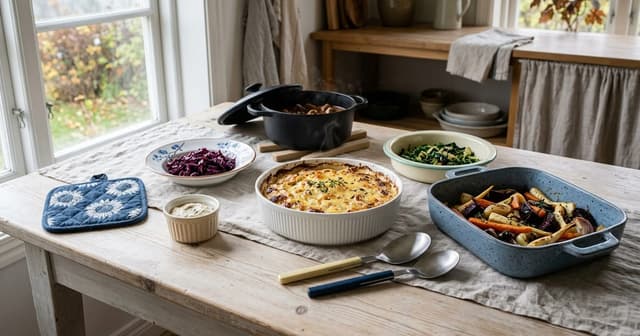
In October the oven goes back on and stays on until spring. Ten Nordic dishes, a cast iron pot, and the pieces that get them to the table.
Read More →