
Soup Season: 10 Nordic Pieces for the One-Pot Kitchen
Soup is what the Nordic kitchen does with October. Ten pieces, from an oval cast-iron pot to a fern-printed tea towel, for the weeks of one-pot cooking.
Read More →October is when the Nordic kitchen fills up: flour, oats, jam, bread. Ten jars, tins, baskets and tools that keep a winter store in order and in sight.
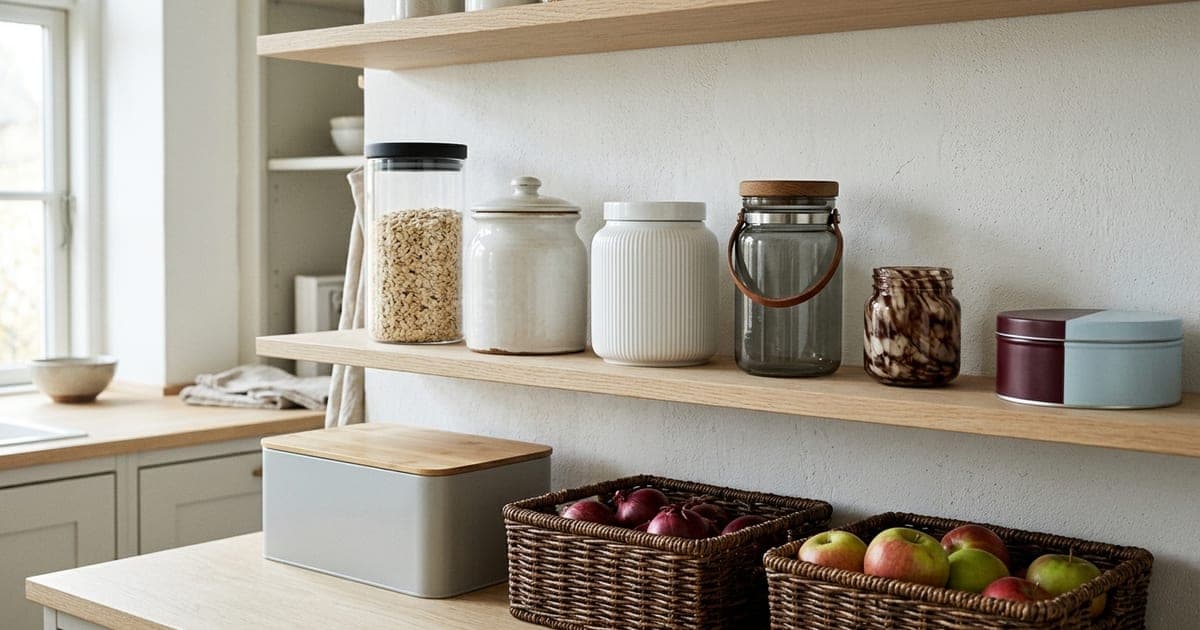
The Nordic autumn ends in a cupboard. Berries picked in September come back as jam in October, the oven goes on again after a summer off, and somebody buys flour in a bag that would have looked absurd in June. By the time the clocks change, a Nordic kitchen is carrying a few months of weight it was not carrying in August, and the question stops being what to cook and becomes where to put it all.
A pantry is rarely a room. It is a shelf, the inside of a cupboard door, a corner of the worktop quietly given over. What makes one work is what makes any Nordic storage work: containers you can see into or recognise at a glance, lids that close properly, and nothing that has to be hidden because it is ugly. These ten pieces earn their shelf. All are in stock in the UK, Germany, Norway and Denmark, and every one can be compared on price on ScandiDeals.
⸻
Start with glass, because the thing that goes wrong in a pantry is forgetting. The Grand Cru jar holds 1.5 litres in a tall, straight-sided cylinder with a black lid that closes flat against the rim. Narrow rather than squat, three or four stand in a row without crowding, and a jar of oats or pasta reads as a level from across the kitchen. Fill it, label nothing, and you still know when it is nearly empty.

⸻
ERNST makes the plain version of most things, and this is the plain version of a canister. The 19 centimetre jar is glazed stoneware in a natural white, a straight cylinder on a soft foot with a flat-domed lid that settles into a shallow rim rather than perching on top. Opaque, so it takes the things that do not look like anything: bicarbonate, stock cubes, the end of a bag of brown sugar.

⸻
Swedish Grace is Rörstrand's quietest famous surface: a close vertical relief pressed into white porcelain, like frost forming up a windowpane, so the piece catches light without anything being printed on it. The large jar takes 1.3 litres. In a kitchen otherwise running on glass and steel, a single piece of white porcelain gives the eye somewhere to rest. Put tea in it, or sugar, or nothing at all.

⸻
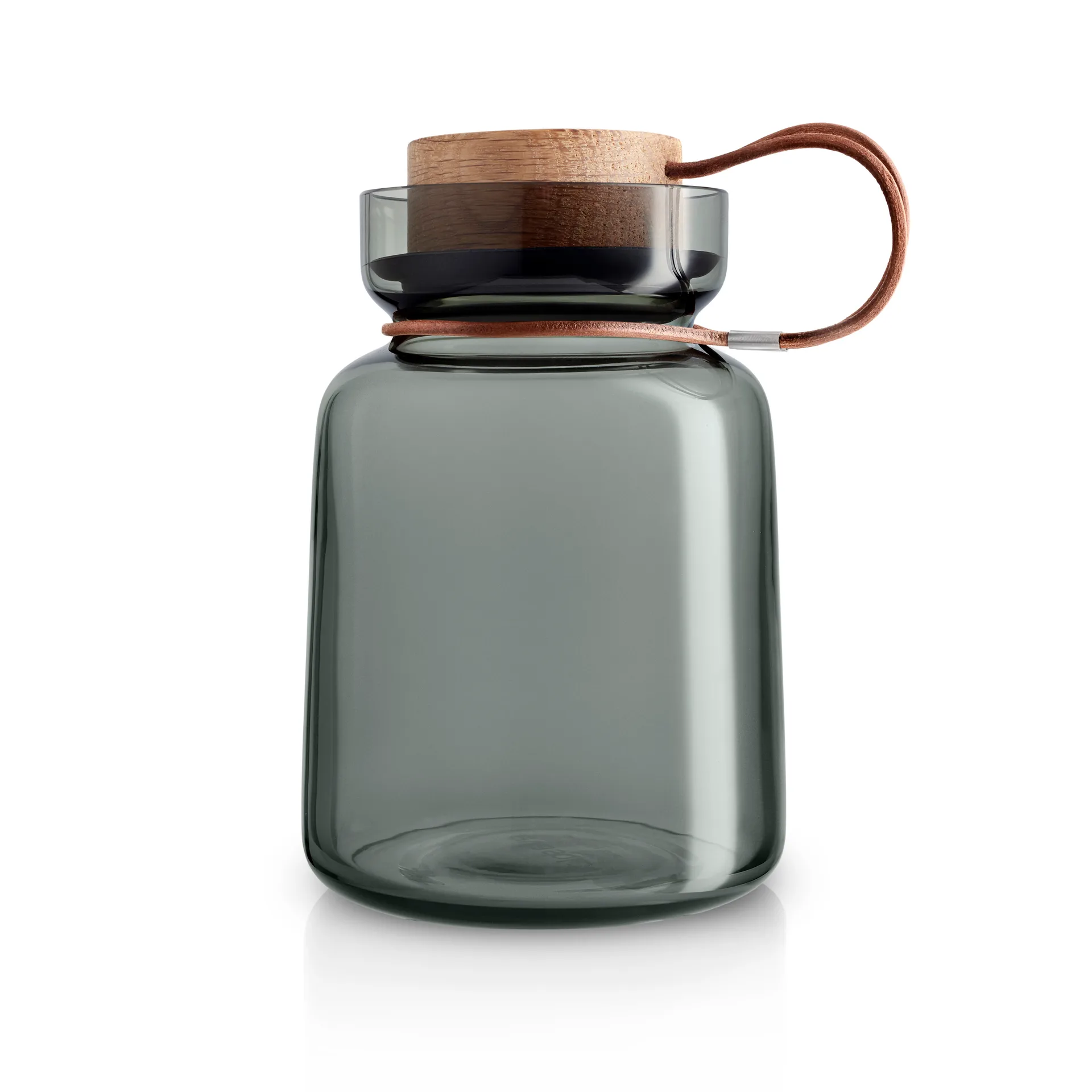
This is the one guests pick up. The Silhouette jar is a litre of smoke-grey glass with a shoulder that pulls in to a short neck, a turned wooden lid, and a leather strap looped through a collar so the jar can hang from a hook or simply be lifted by it. The tint lets you read the level without quite reading the contents, which flatters almonds and dried apricots alike. Danish, and the piece on the shelf doing the most work for the eye.
⸻
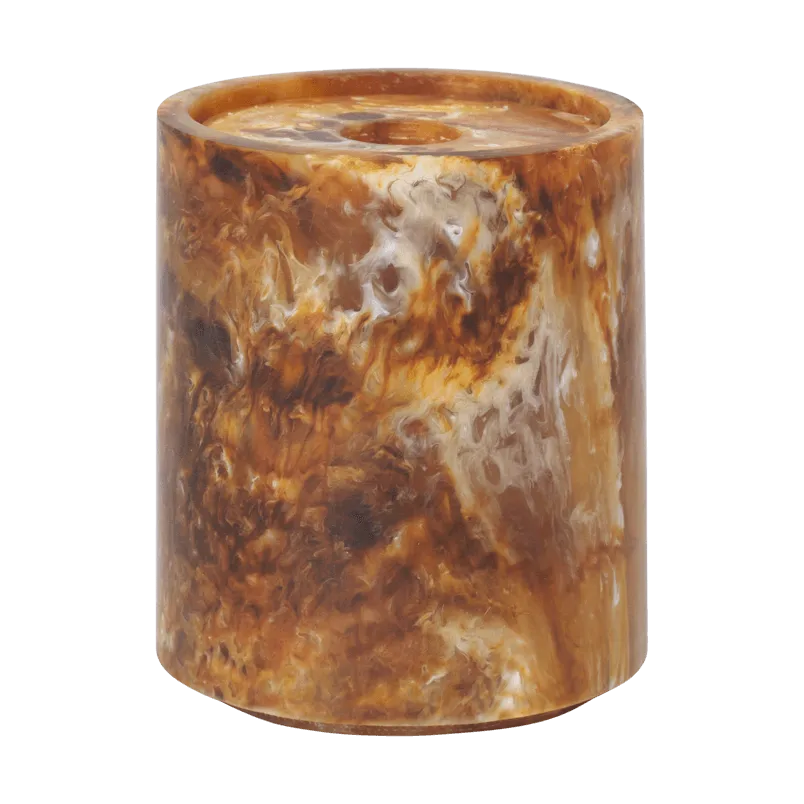
Eight centimetres across and barely nine high, the Mist jar is the size of something you reach for daily rather than weekly. Sugar Kelp is a marbled brown and cream glass, swirled through the material instead of printed on it. Flaky salt, peppercorns, a week's worth of coffee. It belongs beside the hob rather than in a cupboard, and because the pattern is in the glass it goes on looking like itself long after a label would have worn away.
⸻
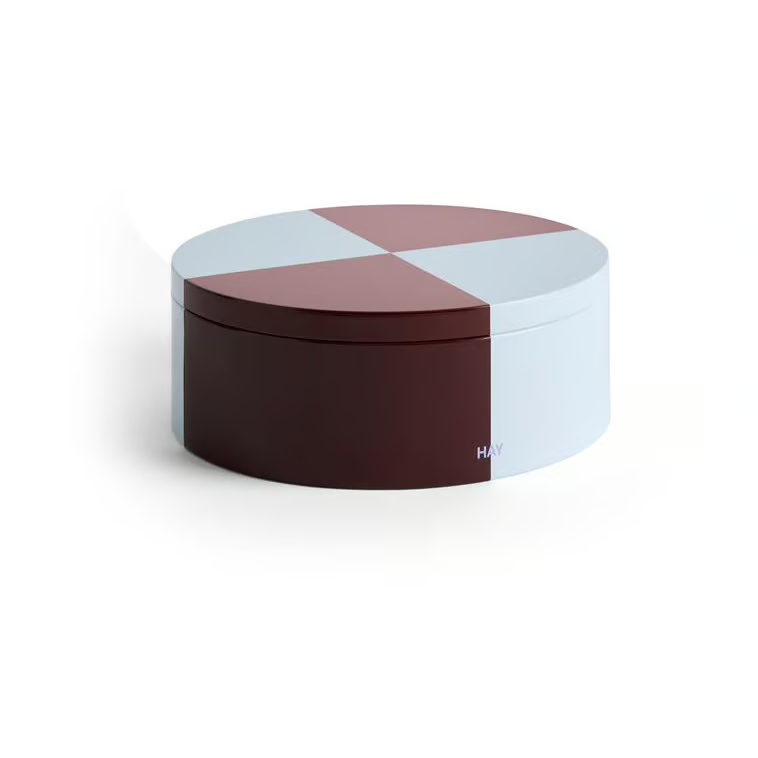
HAY's tins do the least of anything here and get opened the most. The round one is a shallow painted steel container quartered in burgundy and ice blue, lid and base each split between the two colours, so the join lands differently every time you set it down. Tins take what jars handle badly: tea bags, vanilla pods, the small paper packets of yeast and spice that collect at the back of a drawer.
⸻
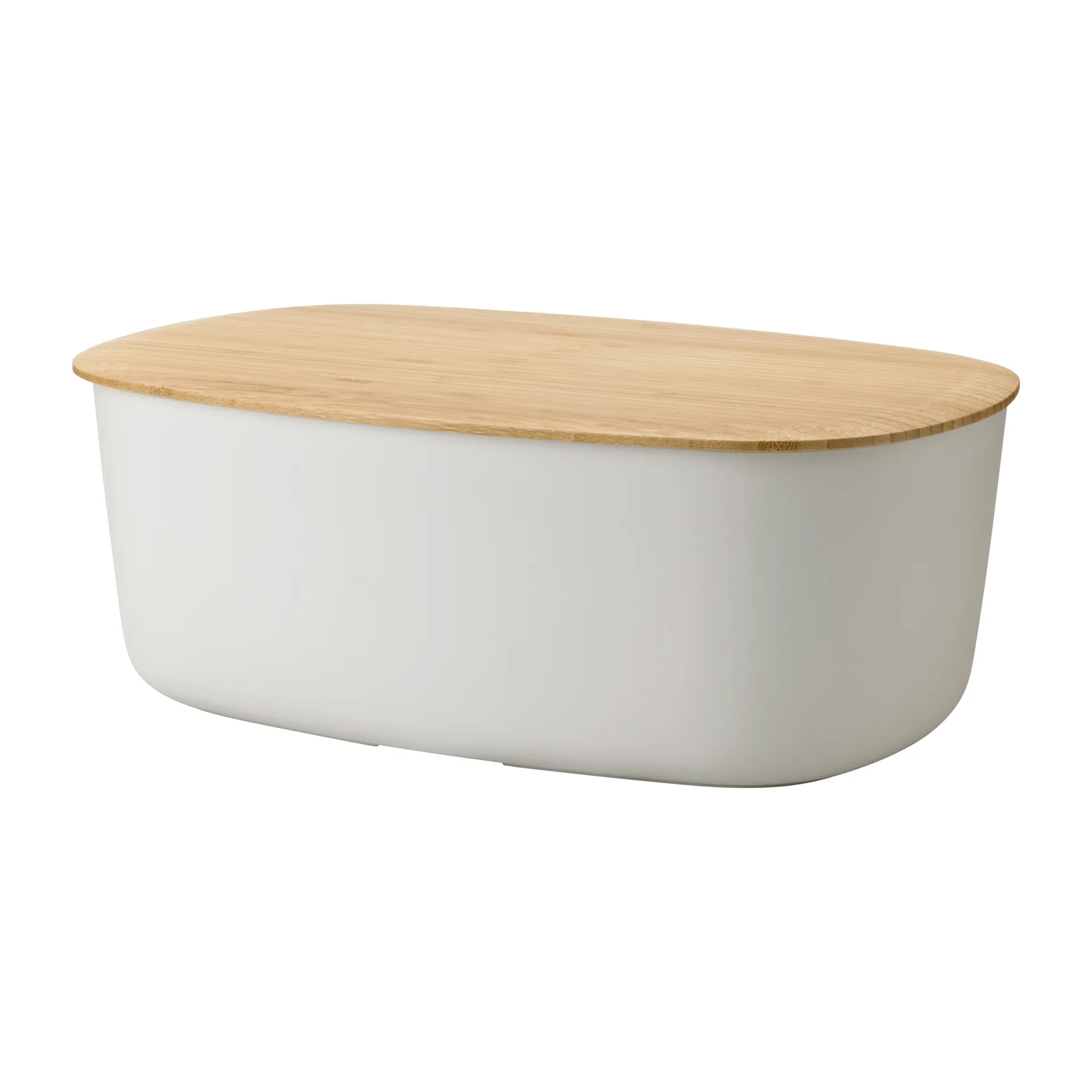
Bread goes stale faster in a cold kitchen than people expect, and the bag it came in is not the answer. BOX-IT is a light grey box, 22.5 by 34.5 centimetres, with a bamboo lid that lifts off and works as a cutting board, so the loaf is sliced on the thing that was covering it. RIG-TIG is Stelton's practical arm and it shows here: the box is the right size for one loaf and no bigger.
⸻
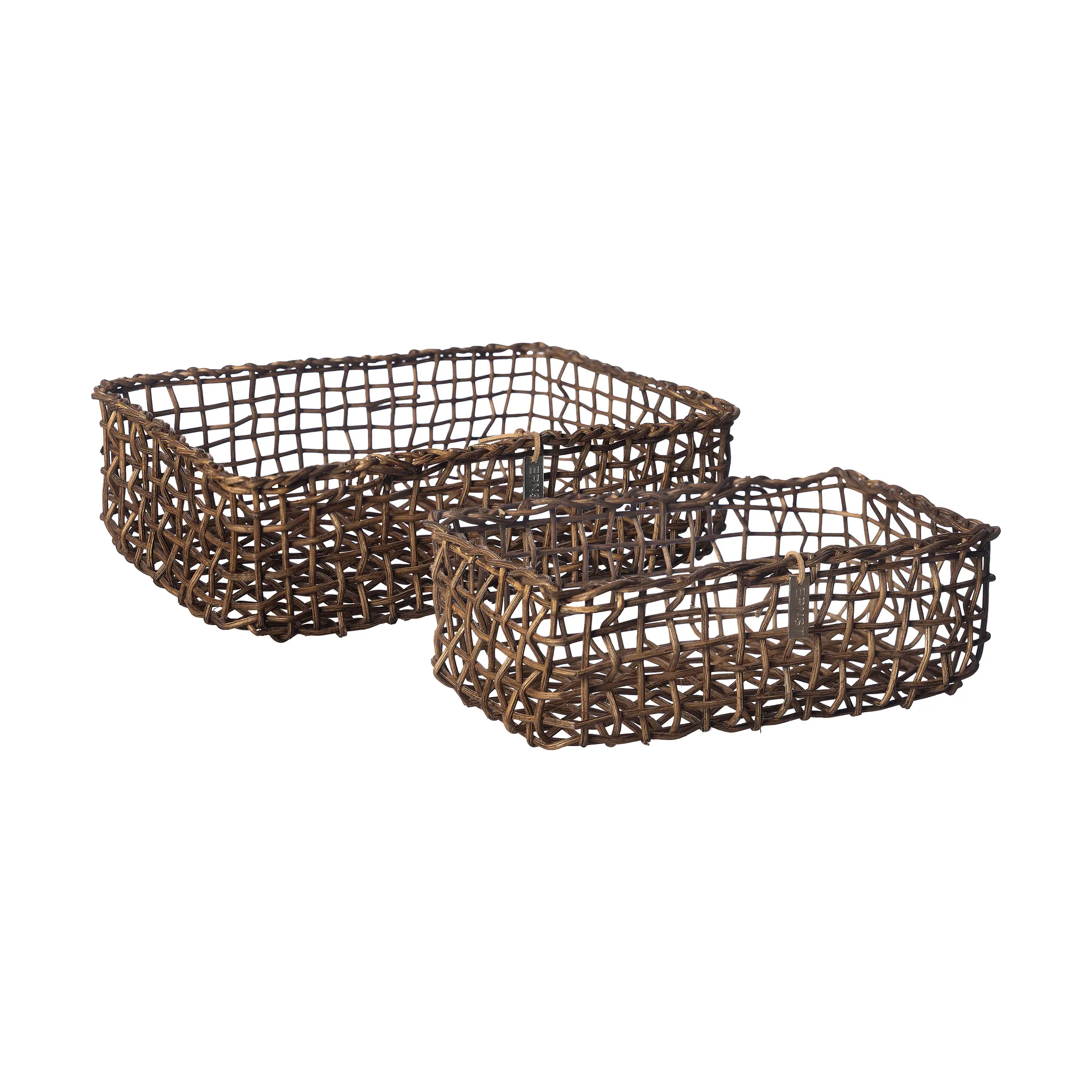
Not everything wants a lid. Onions, garlic, potatoes and the last of the apples all keep longer in the dark with air moving round them, which is what this pair of rectangular baskets is for. They are woven in a dark brown with a deliberately open weave, loose enough to see through, and the smaller sits inside the larger when only one is in use. Woven storage is the oldest idea on this list and still the right one for anything that sprouts.
⸻
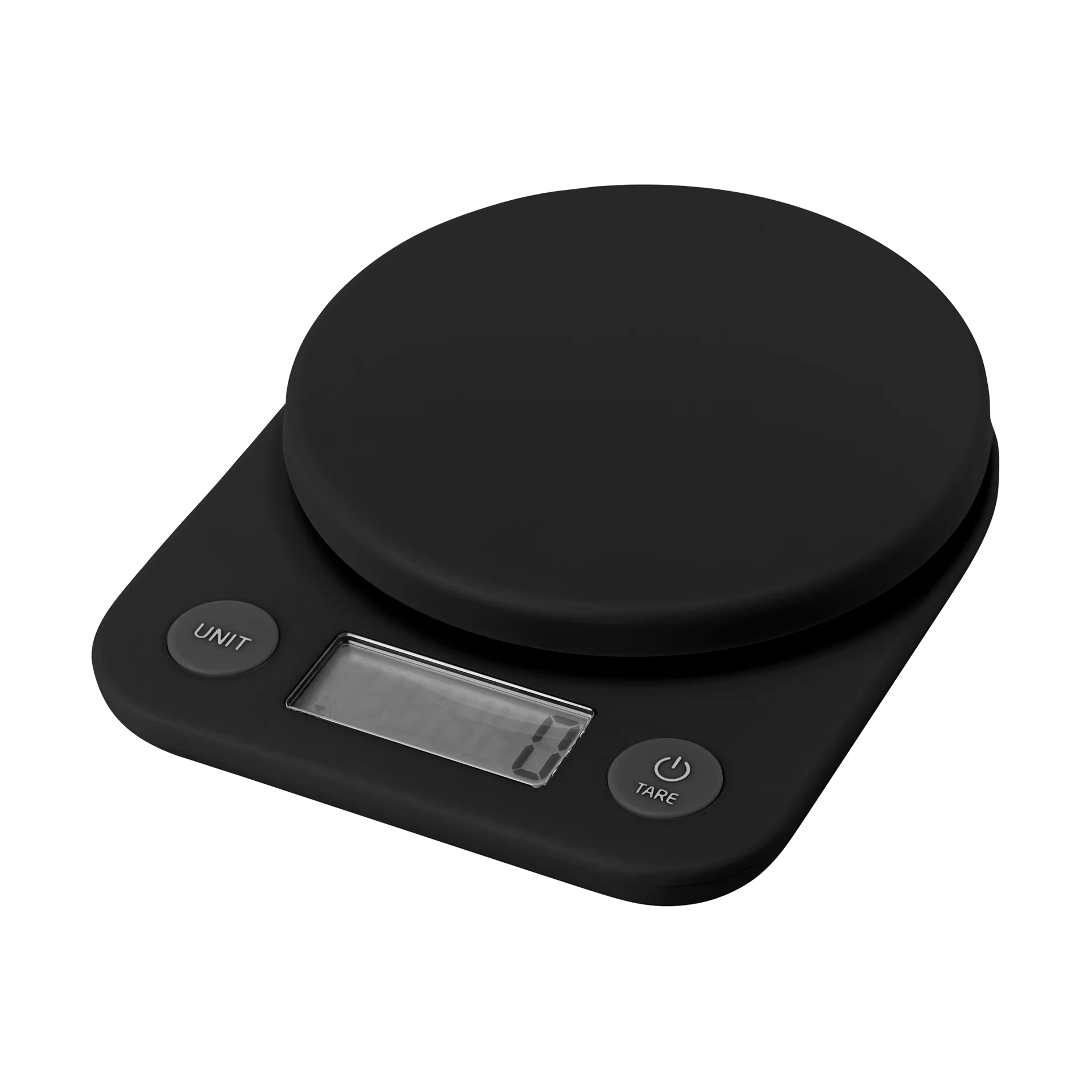
Autumn is the season scales stop being optional. The FOODIE is a flat black rectangle with a round weighing platform, a small display and two buttons, unit and tare, which is the entire interface. The tare button is the one that matters: set the bowl down, zero it, add flour, zero it, add oats. One bowl, nothing to wash, no arithmetic.
⸻
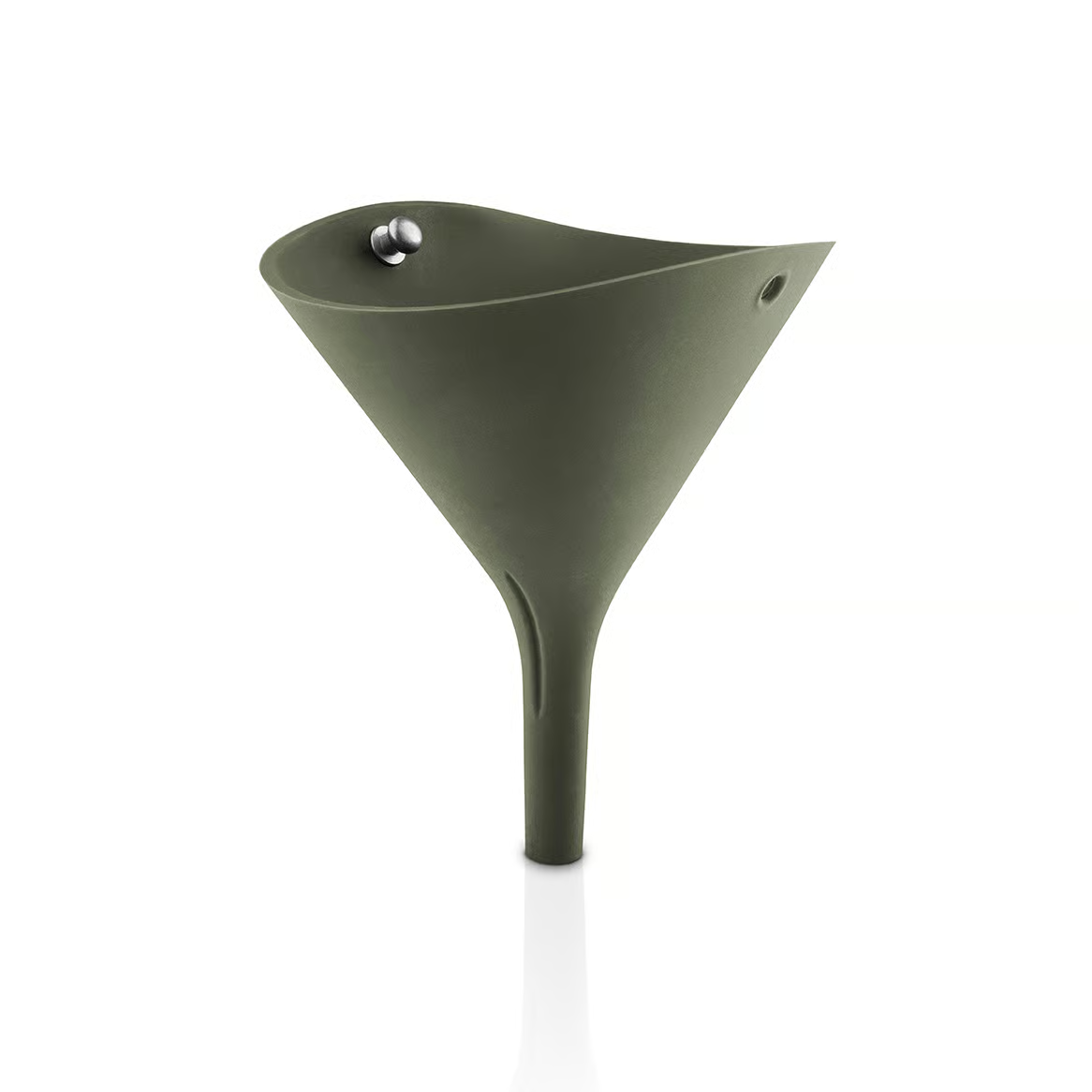
The last piece is the one nobody puts on a list and everybody wants in October. The Green Tool funnel is a soft green cone with a drawn-out pouring lip and a small metal loop at the rim for hanging, and it folds down flat when you have finished with it. Decanting a kilo bag into three jars without one is how a worktop ends up with rice in the grout.
⸻
A pantry is not a project. It assembles itself out of pieces bought one at a time, over years, and the ones that survive are the ones that were right to begin with: a jar you can see through, a lid that actually closes, a basket that lets the onions breathe. Nothing here is due for replacement in three years, which is the only honest argument for buying the better version once.
Begin with two jars and the funnel, fill them, and let the kitchen tell you what it is short of next. When you do buy, the same piece sells at noticeably different prices across the Nordic shops, so it is worth a minute to check: every product in this guide can be compared across the shops on ScandiDeals.
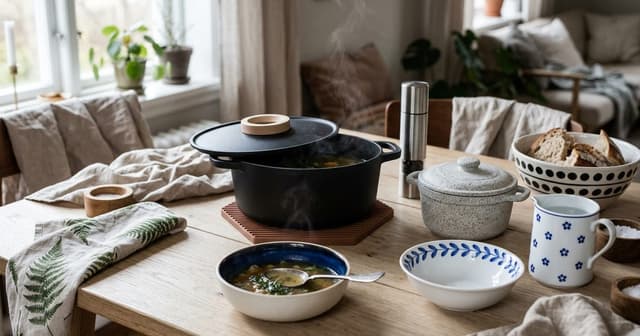
Soup is what the Nordic kitchen does with October. Ten pieces, from an oval cast-iron pot to a fern-printed tea towel, for the weeks of one-pot cooking.
Read More →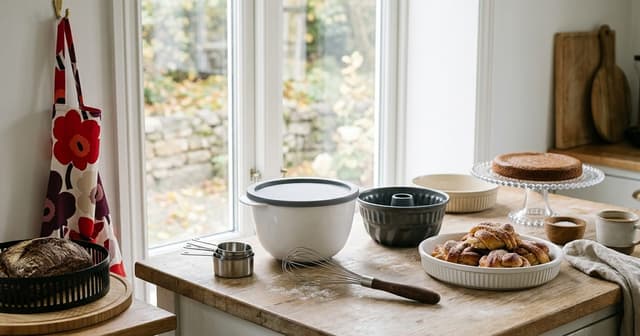
Baking turns seasonal the week the light starts going. Ten Nordic pieces, from a Danish mixing bowl to a dewdrop cake stand, for a kitchen that smells of cardamom.
Read More →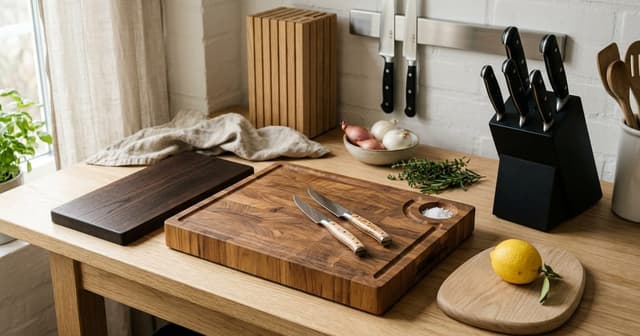
A sharp blade and a board that can take it change the cooking more than any gadget. Ten Nordic pieces for chopping, storing and keeping an edge.
Read More →