
Oven Season: 10 Nordic Dishes for Slow Autumn Cooking
In October the oven goes back on and stays on until spring. Ten Nordic dishes, a cast iron pot, and the pieces that get them to the table.
Read More →October fills the vegetable drawer with things that grew in the dark. Ten Nordic kitchen tools for scrubbing, peeling, grating and mashing them.
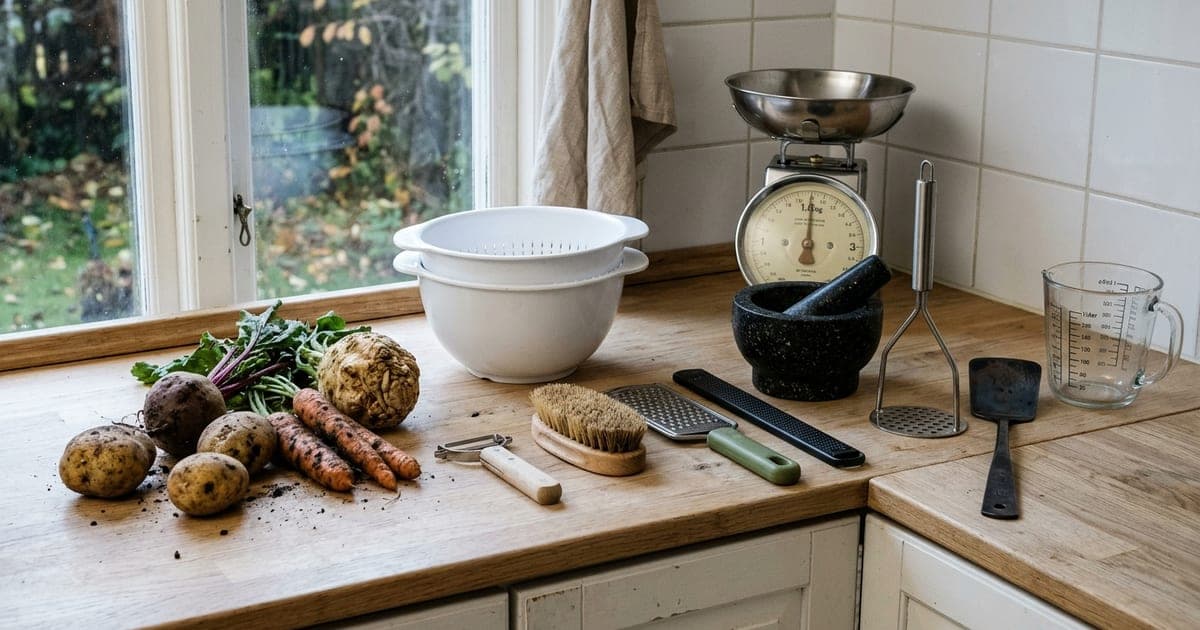
The vegetables change character in October. The soft things go — the last tomatoes, the beans, the salad that wilted on the way home — and in come the ones that grew in the dark: potatoes, carrots, swede, celeriac, beetroot, parsnip. They keep for months in a cold cupboard and arrive needing work before they are food.
That work is done with small tools, and small tools are where a kitchen quietly fails. A peeler that skates, a grater nothing will clean, a masher that leaves the corners lumpy: each adds a minute to a job you will do three hundred times before spring. The ten below are plain and made to be picked up daily. All ten are in stock in the UK, Germany, Norway and Denmark, so you can compare prices on ScandiDeals before the first big pot of soup.
⸻
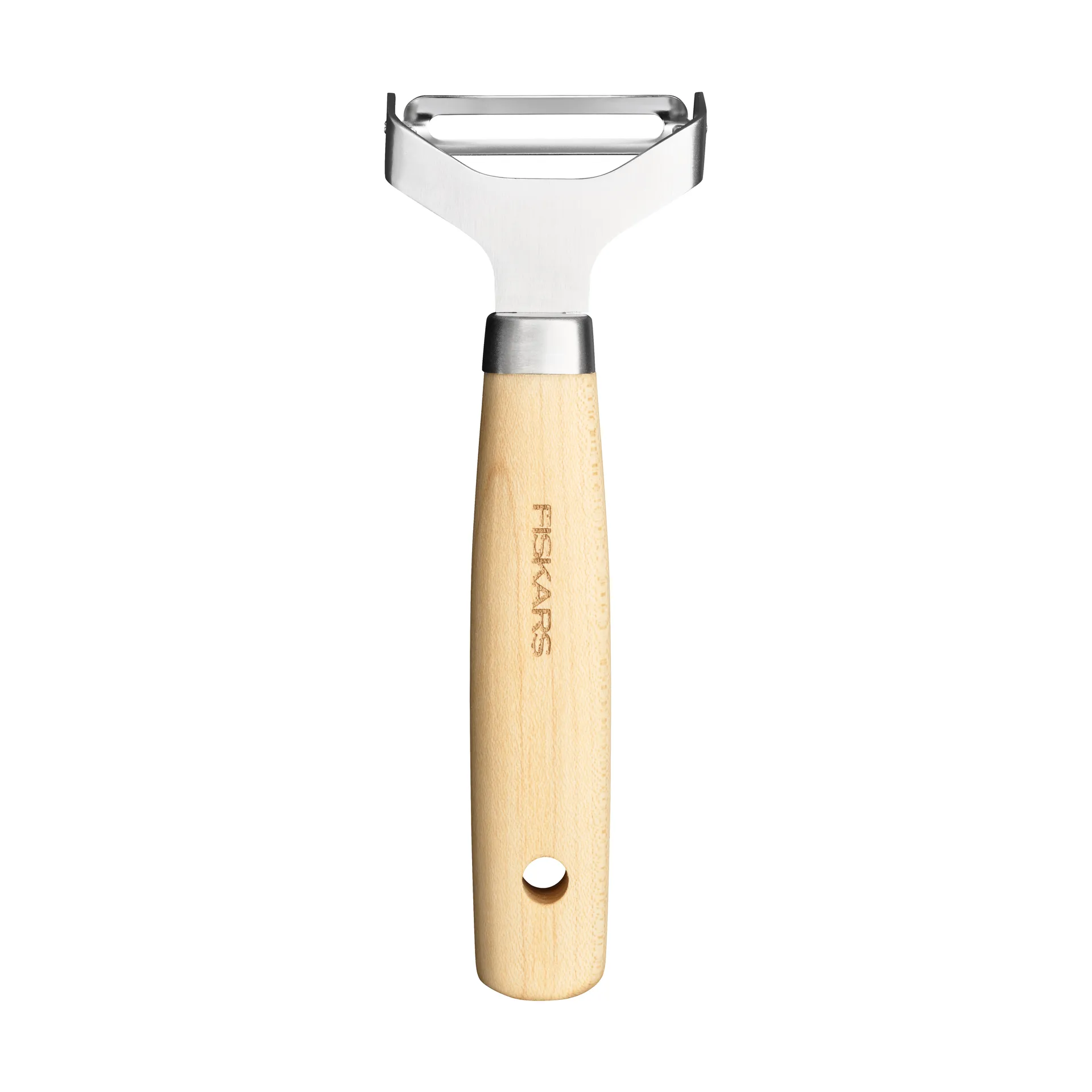
A Y-shaped peeler with a flat pale-wood handle and a blade mounted so it rocks as it travels. That movement is the difference on a winter vegetable: a fixed blade skates off the ridges of a parsnip and cuts a flat into a carrot, where a swivelling one follows the surface and lifts a strip the full length. A hole through the handle hangs it on a hook rather than blunting it in a drawer. The Folken peeler stays light in the hand through a whole box of roots.
⸻
An oval back cut from beech, the name stamped across it, and pale bristles hard enough to take mud off a celeriac without the skin as well. Half of what comes home from a market stall in October should never meet a peeler: new potatoes, young carrots, anything whose skin is the best part. It needs ten seconds under a cold tap with something firmer than a thumb. The Kockums vegetable brush sits on the edge of the sink and dries between jobs.

⸻
White melamine, a litre and a half, with a pouring lip, a thumb grip opposite it and a ring in the base that holds it still on a wet worktop. A colander of the same size drops into the rim. The pair covers the first stage of a root supper: everything goes in the colander, the colander in the bowl; you rinse, lift and tip the grit away. The Margrethe bowl and colander then does the mixing too, which is one object instead of three.

⸻
A flat blade of coarse stainless teeth in a moss-green frame, the handle running straight out in line with it so it can be held across a bowl and worked down. Coarse is the right cut for the season: rösti, celeriac for remoulade, beetroot for a loaf. Fine teeth reduce a potato to starch and water; these leave shreds with something to chew. The Green Tool grater rinses properly clean under a tap, which no box grater has ever managed.

⸻
Thirty-three centimetres of narrow rasp on a black handle, fine enough to take the surface off a nutmeg or a piece of horseradish as dust rather than shreds. This is the second grater, the one for things used by the spoonful: ginger into a soup, garlic into a dressing, hard cheese over whatever came out of the oven. GRATE-IT is also the tool that turns a dug-up horseradish root into a jar of sauce.

⸻
Black speckled granite, fourteen centimetres across, with a pestle of the same stone and the name cut into one side. Weight is the whole argument for stone: it stays where it is put, and the pestle comes down with enough mass behind it that juniper, caraway and coarse salt give up instead of being chased round the bowl. Autumn is spiced in whole seeds — a stock, a cure, a rub for pork. The Ernst mortar is heavy to lift down, which is the argument for leaving it out.

⸻
A stainless column with a ring at the top and a perforated disc at the foot, so the work is a straight push with an arm's weight behind it rather than a wire rocked through the pan. It reaches the corners of a pot, where mash stays lumpy, and stands on its own base instead of printing a wet ring on the hob. The Steely masher takes swede, celeriac and parsnip as well as potato, all stiffer work than they look.

⸻
Ash darkened all the way through by heat rather than stain, cut as a flat paddle with a square end and a long handle. The square end is the point of it: it reaches the corner of a pan and lifts the browned film off the bottom, where the flavour of a root soup sits. Wood will not scratch an enamelled pot, and the handle never gets too hot to hold. The Rå spatula asks for a hand wash and nothing else.

⸻
A clear jug with a litre scale down one face, ounces and cups down the others, a pointed spout and a handle wide enough for a cold finger. Autumn cooking measures more than summer does: stock for soup, brine for pickled red cabbage, batter for potato pancakes, syrup for the last plums. A printed scale read at eye level beats guessing down into a pan from above. The Mensura jug stacks with the smaller sizes and takes one shelf.

⸻
Polished aluminium, a round dial with a cream face, red kilogram figures and black hundred-gram marks, a deep steel pan on top and splayed feet to hold it steady. It carries five kilos and reads to about twenty grams, which covers a sack of potatoes and a batch of rye bread. It is the one piece here that costs real money, and the only one that still works in a power cut. The Bengt Ek scale is bought once.

⸻
None of this is cooking. It is the twenty minutes before cooking, the part nobody photographs: mud, peelings, a colander in the sink, a worktop wiped twice. Done with blunt, badly made things, it is the reason a box of carrots goes soft in the fridge. Done with a brush, a peeler that follows the shape and a bowl that stays put, a pot of soup stops being a project.
Buy for the decade rather than the week. Stone, beech, heat-treated ash, steel and aluminium take daily use and a hot sink without complaint, and most of this will outlast several kettles. When you know which tool your kitchen keeps failing at, compare what the shops in the UK, Germany, Norway and Denmark charge on ScandiDeals — the same small object rarely costs the same in two countries.
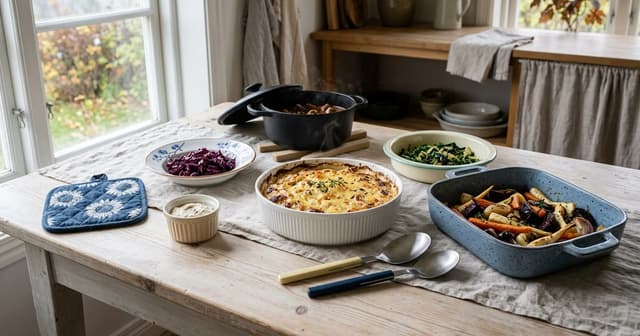
In October the oven goes back on and stays on until spring. Ten Nordic dishes, a cast iron pot, and the pieces that get them to the table.
Read More →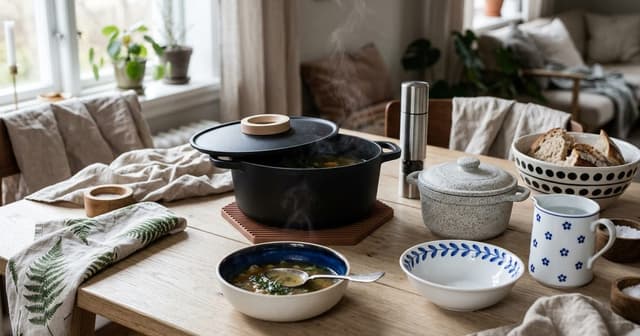
Soup is what the Nordic kitchen does with October. Ten pieces, from an oval cast-iron pot to a fern-printed tea towel, for the weeks of one-pot cooking.
Read More →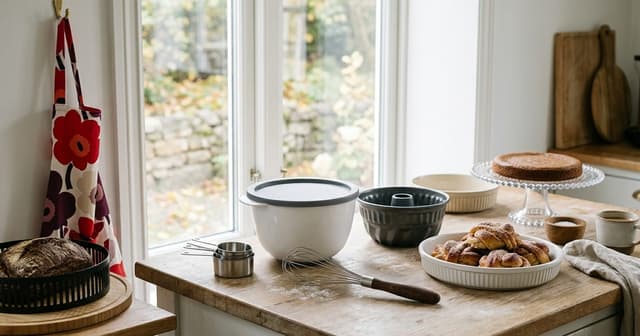
Baking turns seasonal the week the light starts going. Ten Nordic pieces, from a Danish mixing bowl to a dewdrop cake stand, for a kitchen that smells of cardamom.
Read More →