
Soup Season: 10 Nordic Pieces for the One-Pot Kitchen
Soup is what the Nordic kitchen does with October. Ten pieces, from an oval cast-iron pot to a fern-printed tea towel, for the weeks of one-pot cooking.
Read More →In October the oven goes back on and stays on until spring. Ten Nordic dishes, a cast iron pot, and the pieces that get them to the table.
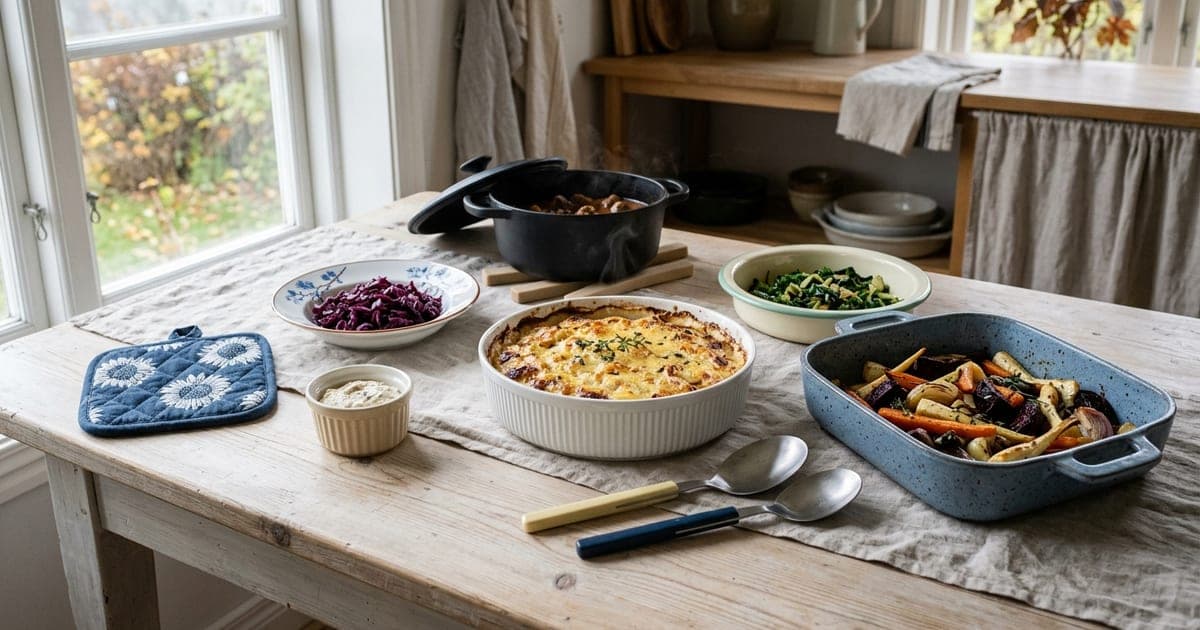
There is a week in October when the oven goes back on and stays on. Not for baking, which has a season of its own, but for supper: a tray of roots, a gratin in the middle of the table, something with a bone in it that wants two hours and no attention. In a cold country an oven does two jobs, and the second one is heating the kitchen.
What you cook it in matters more now than it does in July, because the dish goes straight from the oven to the table and sits there for the length of the meal. These ten pieces are built for that short journey: stoneware, porcelain, enamel and cast iron, with the holder, trivet and spoons that get the food across the room. All are in stock in the UK, Germany, Norway and Denmark, and every one can be compared on price on ScandiDeals.
⸻
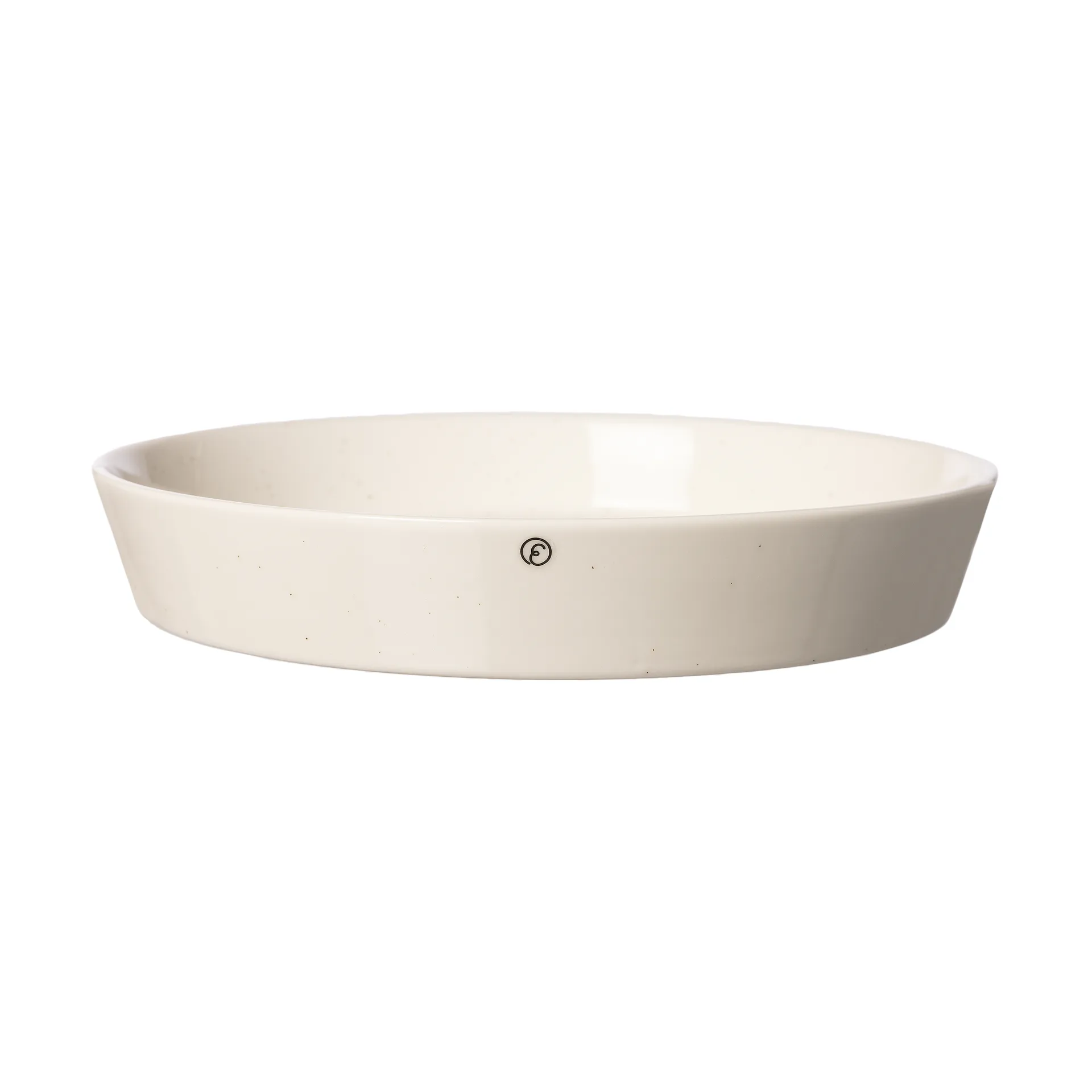
Buy the plain one first and it will be out twice a week. The Ernst dish is stoneware under a vanilla glaze, faintly speckled, the sides sloping out from a flat base with a small maker's stamp pressed into the outer wall. Twenty-eight centimetres across and shallow, which is the point: a shallow dish gives a gratin more surface to brown and less depth to heat through. Plain enough to sit under anything, including the things you did not plan.
⸻
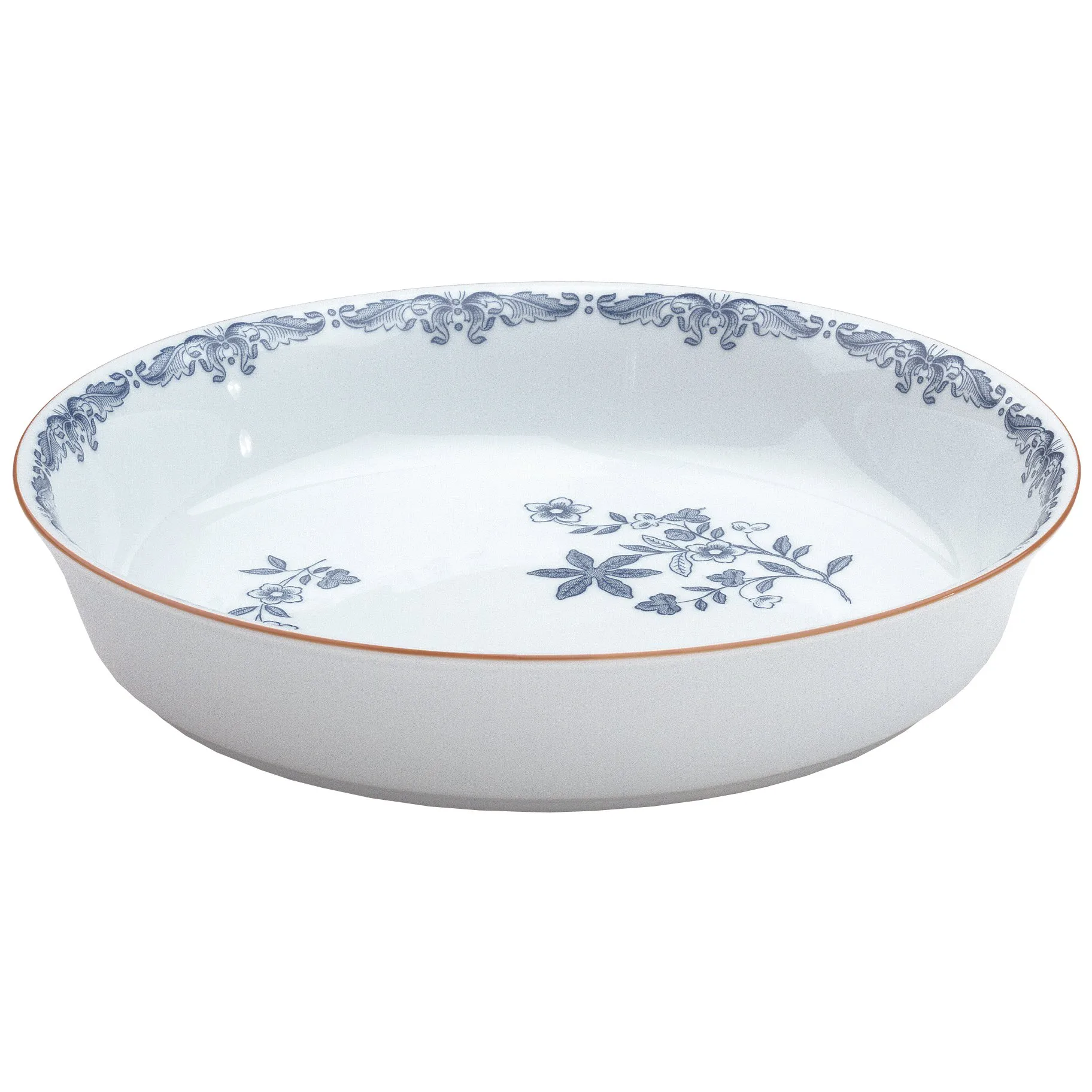
Ostindia is white porcelain carrying a blue print: a band of scrolling acanthus round the inside of the rim, a flowering branch across the base, a thin rust-orange line following the edge. The pattern is the argument for it. A plain dish looks best full; this one looks best half empty, when the branch begins to show through what is left of the potatoes. Twenty-eight centimetres round and deep enough for a gratin for four.
⸻
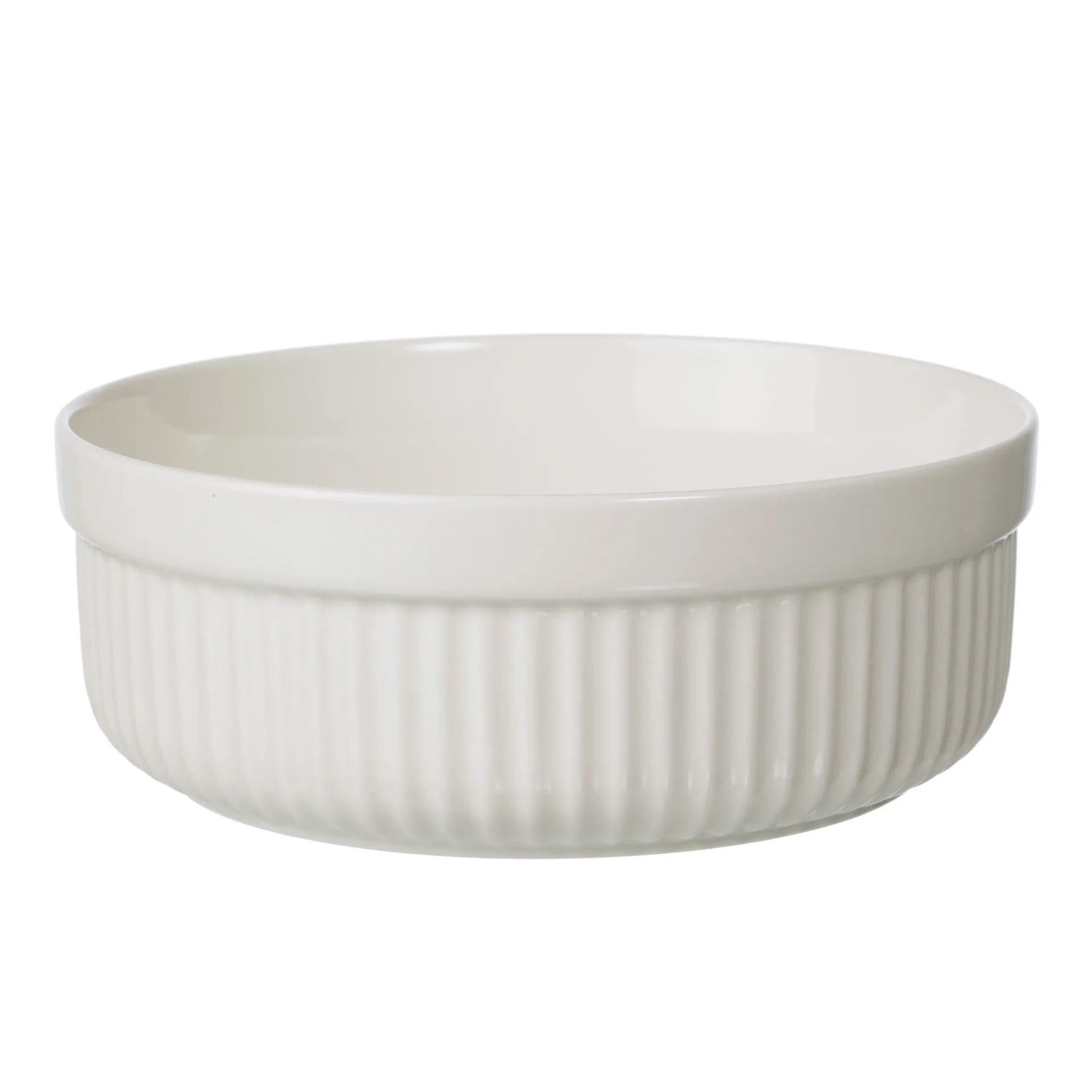
The name says what it is: uuni, oven; kokki, cook. Uunikokki is a straight-sided round dish in an off-white glaze, with a plain collar at the top and close vertical fluting down the lower two thirds, so it reads as a soufflé dish and behaves like one. One and a half litres is supper for two or a side dish for a table of six: creamed mushrooms, a small fish gratin, rice left to swell in a low oven.
⸻
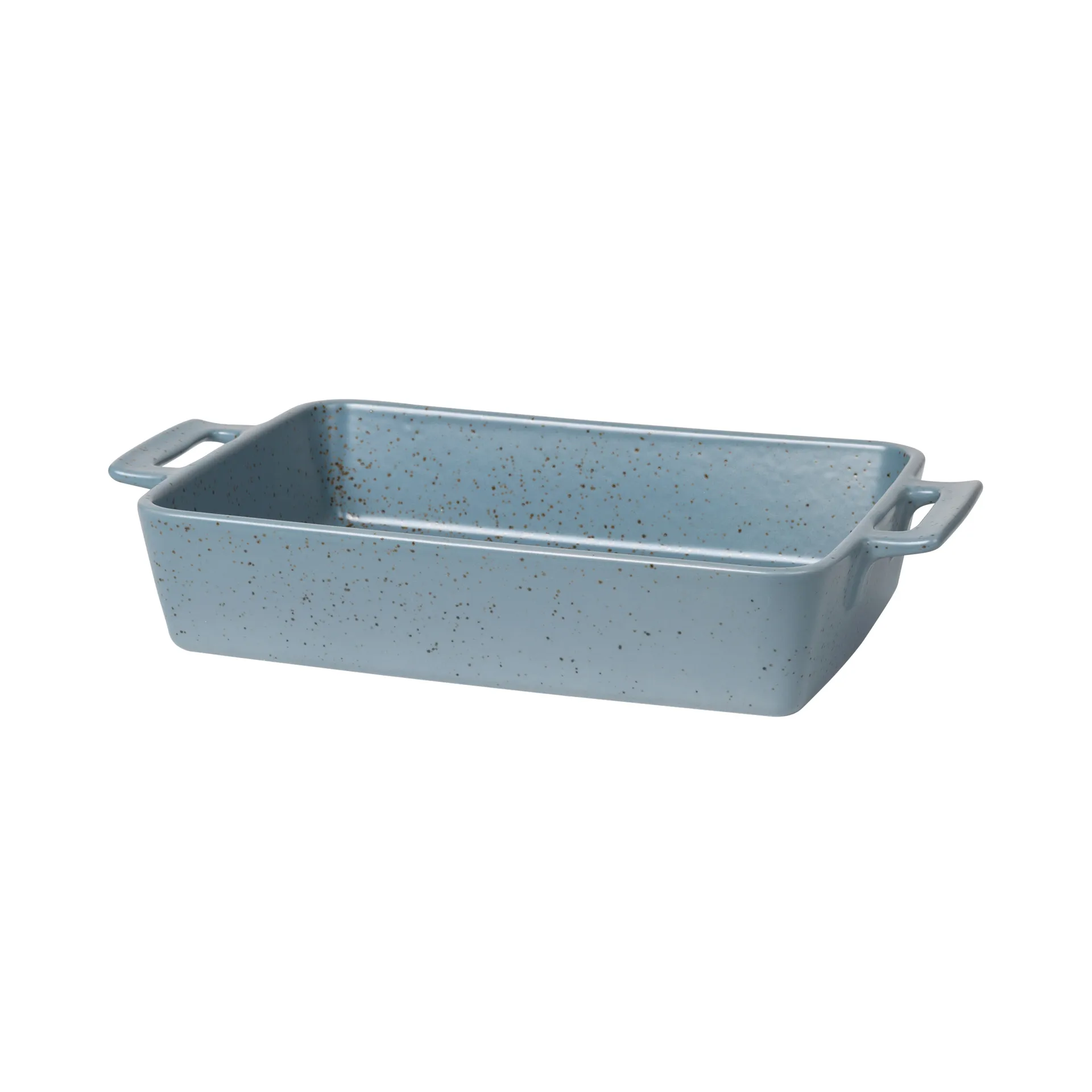
Hasle is a rectangle in dusty blue stoneware, freckled with iron spots that come up through the glaze, with a flat loop handle at each short end. The handles are the whole difference. Thirty-seven centimetres of hot dish is an awkward thing to lift off a shelf with a folded towel; two loops turn it into a deliberate two-handed movement. Lasagne, moussaka, a tray of roots under foil. The colour is cold, and what comes out of it is not.
⸻
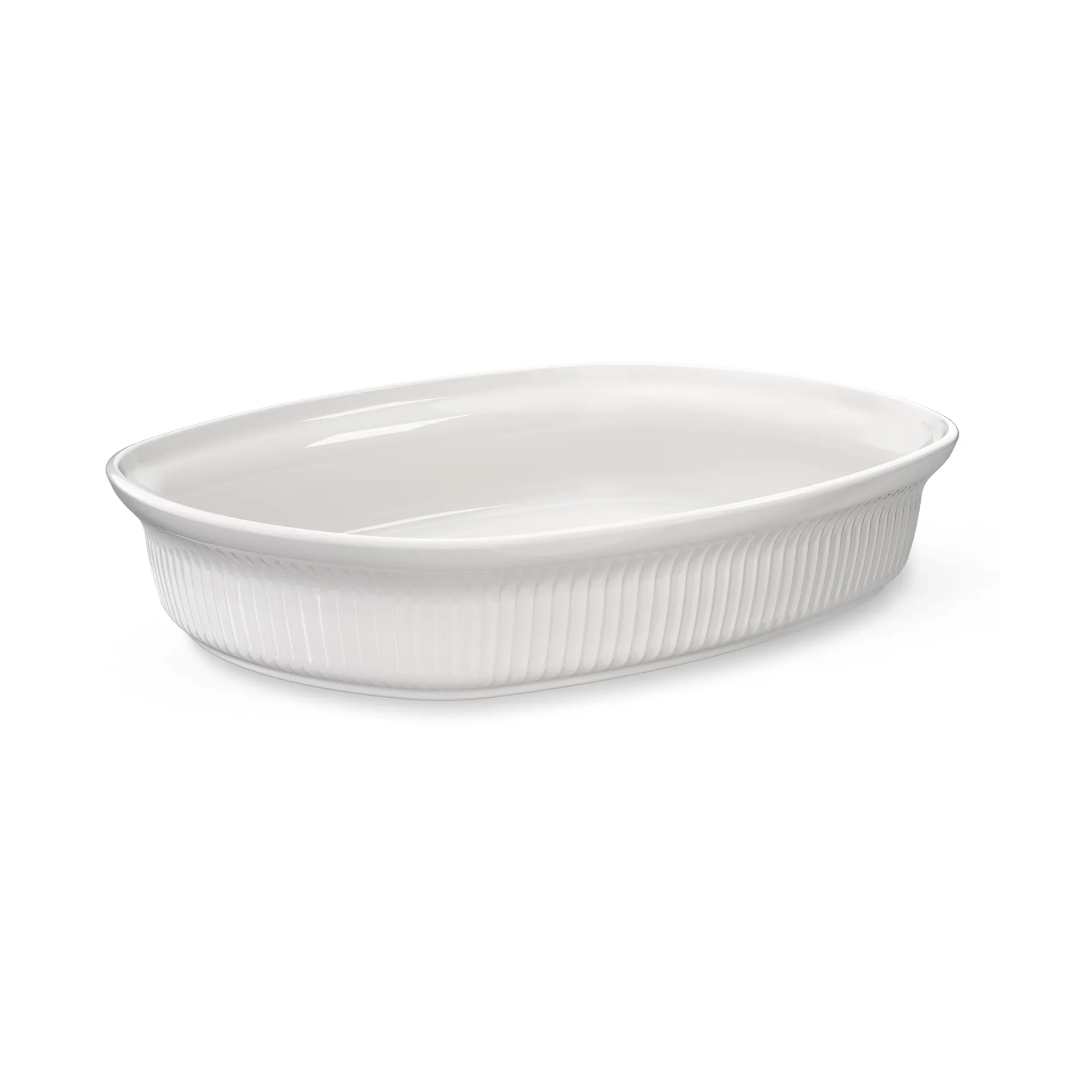
Nearly forty centimetres long, glossy white, with the fine vertical grooves that run through the whole Hammershøi range moulded into the outside and a smooth wall within. This dish is for meals that need planning: a chicken on a bed of roots, a tray bake for eight, the thing that goes in at four and comes out when people arrive. White takes browning well, which counts when the dish is also the serving plate.
⸻
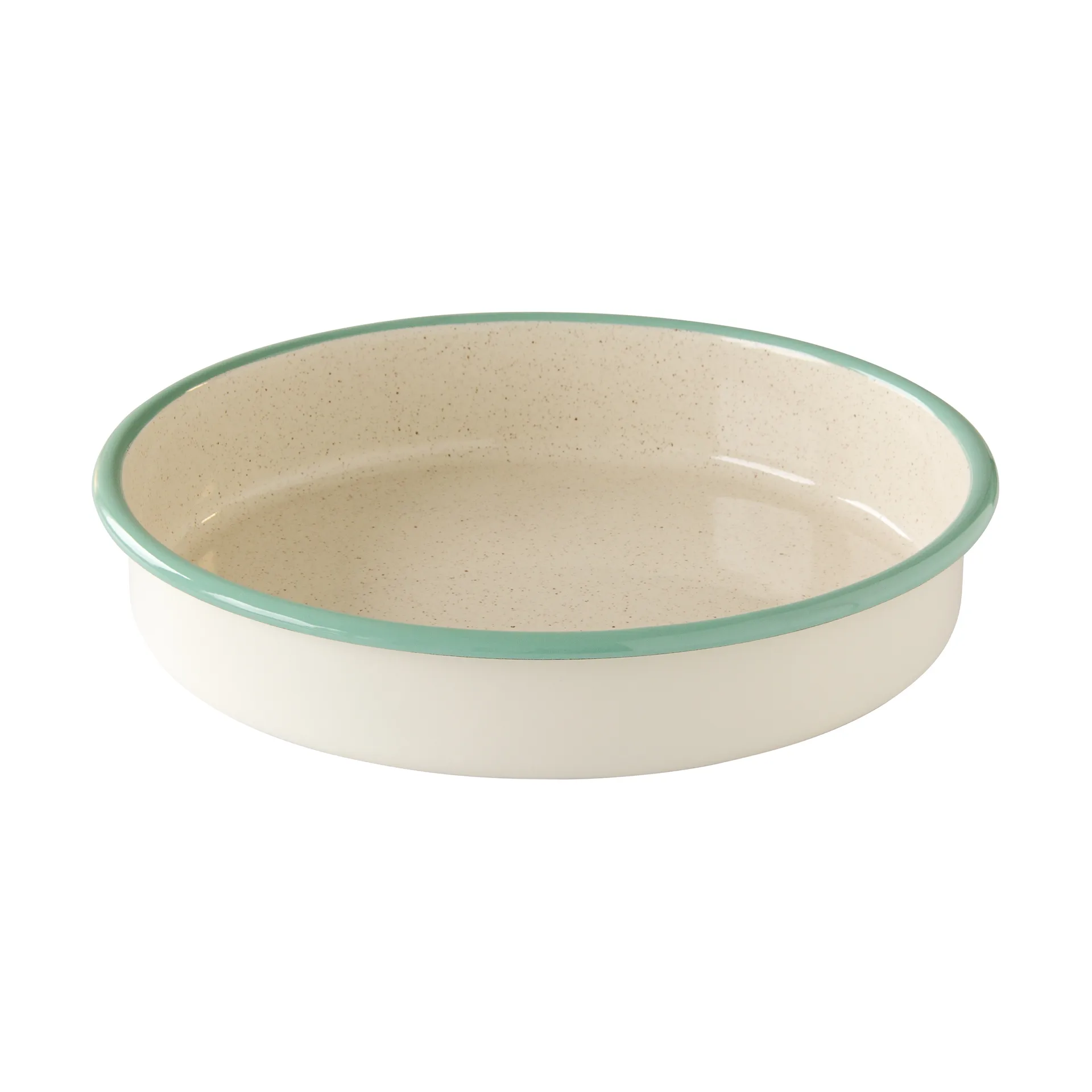
The Kockums dish is enamelled steel: cream outside, a speckled oatmeal glaze inside, and a rolled rim in pale mint green that does all of the decorating. Twenty-eight centimetres round and light in the hand, because the steel under the enamel is thin. It heats fast and cools fast, which suits a crumble or a baked pasta better than a four-hour braise, and it brings the air of a cabin kitchen into a flat.
⸻
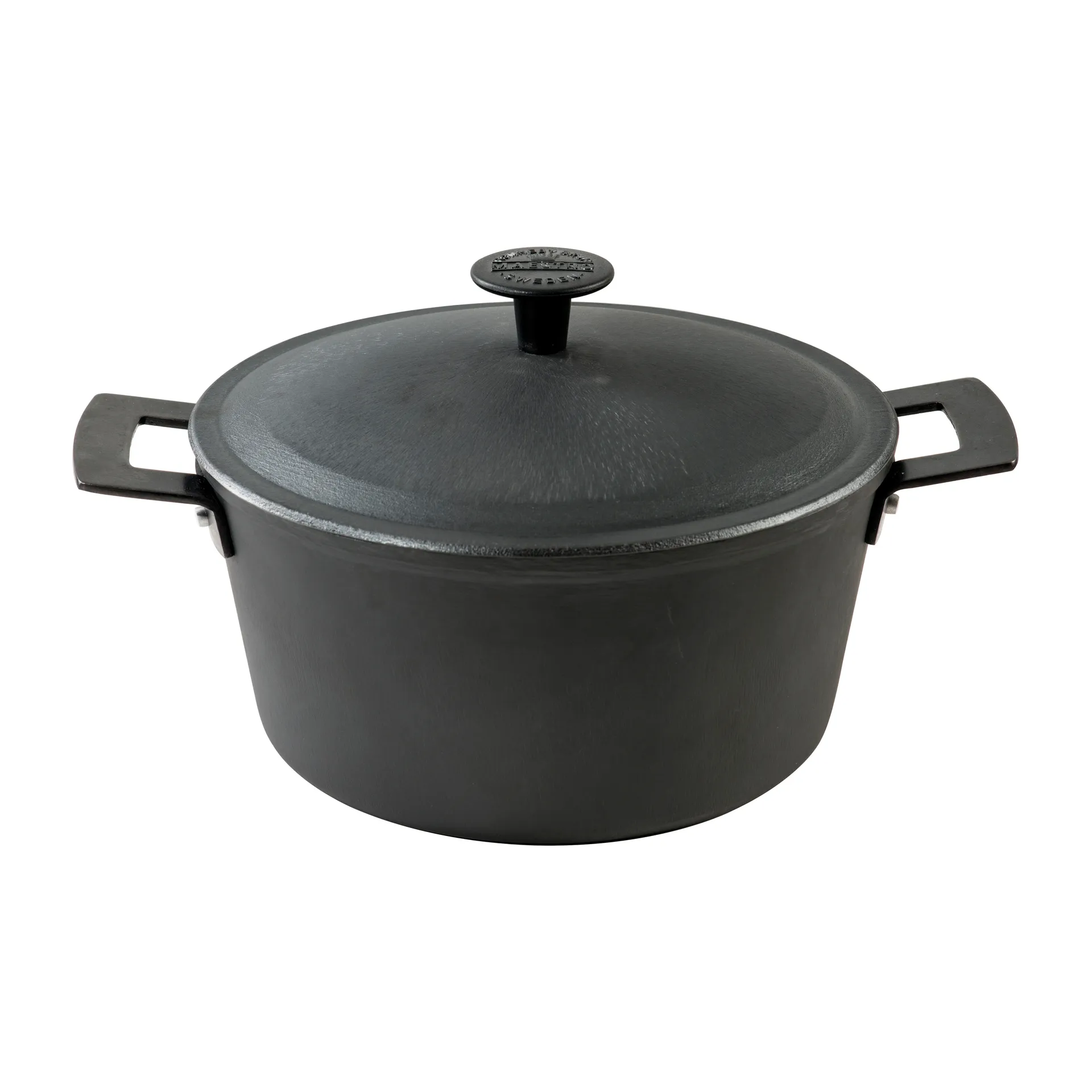
The four-litre pot is bare cast iron, matte and dark, with a domed lid, a cast knob and two flat open handles. Its name is the selling point: cast iron made thinner than tradition demands, so a full pot is still something you can move across the kitchen without planning the lift. Brown the meat on the hob, add the liquid, put the lid on and leave it low in the oven for two hours while the room warms up.
⸻
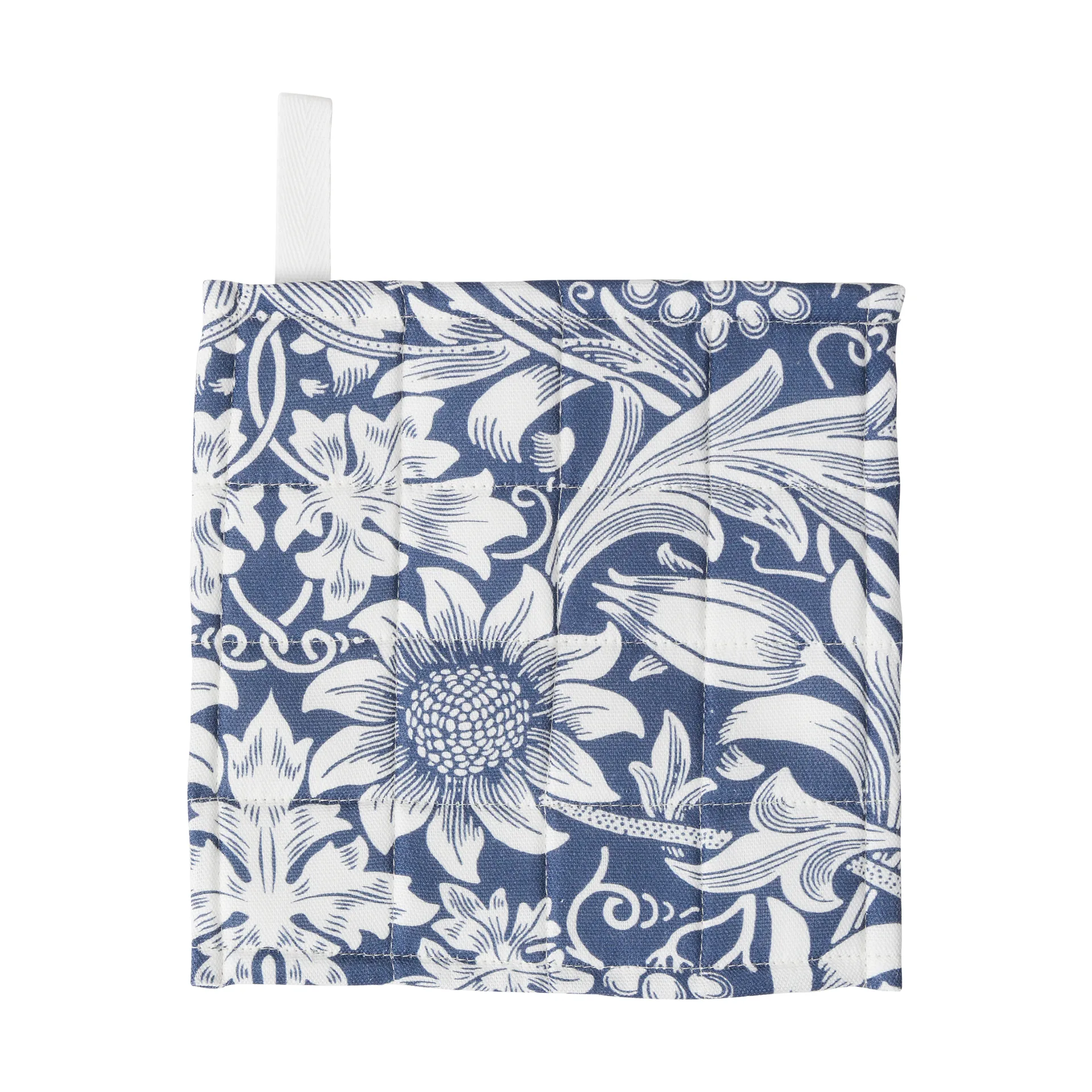
Not a glove but a flat quilted square, twenty by twenty centimetres, with a white cotton loop to hang it by. The Sunflower holder carries white sunflowers, buds and curling leaves drawn in close lines on dark denim blue, a pattern dense enough to absorb a winter of splashes. Klippan has been a mill since 1879. Hang this on the hook beside the oven rather than filing it in a drawer, and you will actually reach for it.
⸻
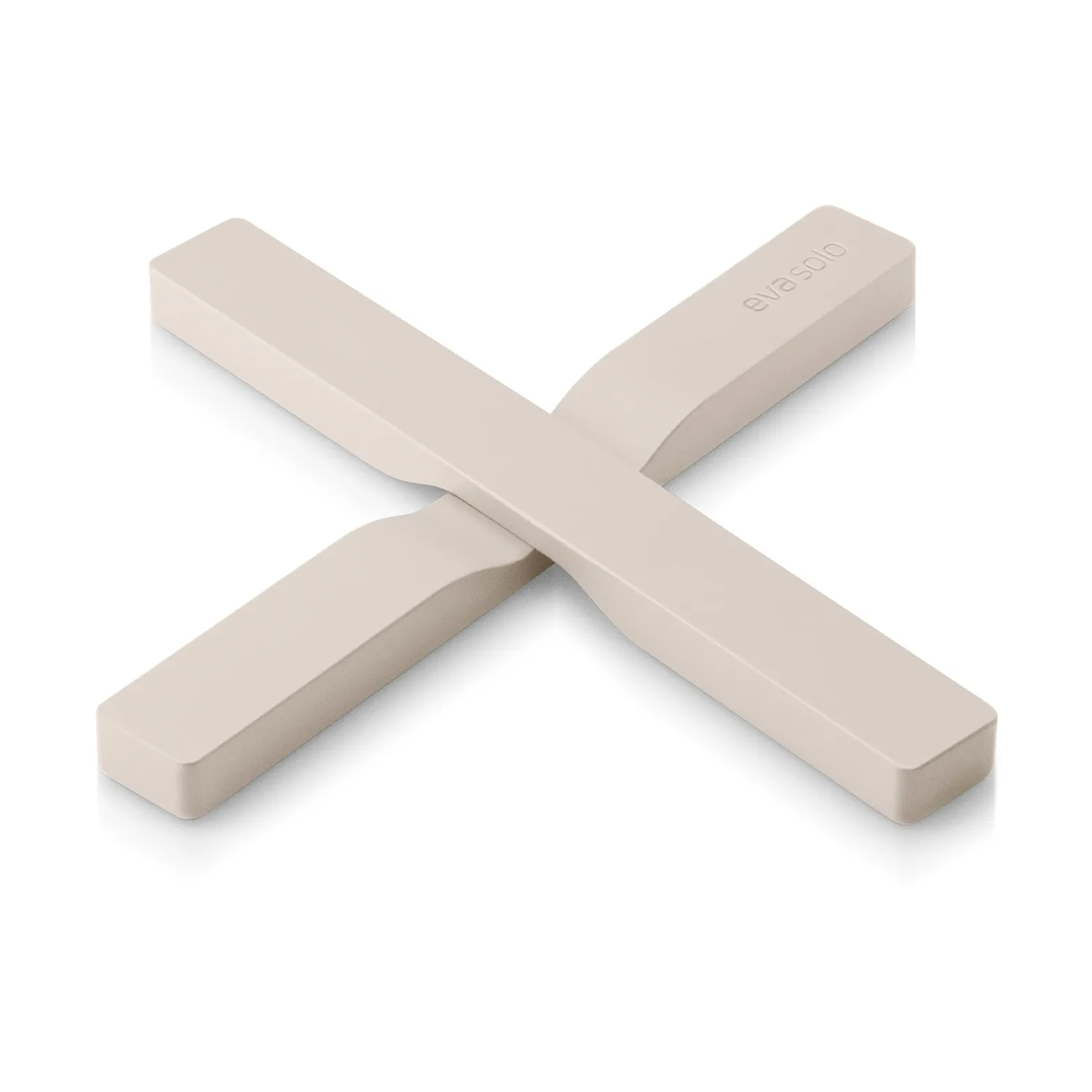
The trivet is two sand-coloured silicone bars that hold to one another with magnets: crossed into an X under a hot dish, clipped back together as a single bar for the drawer. Matte, soft, nothing in it to mark a wooden table. It takes a dish of any shape, which a round cork disc does not, and it does not sit on the table looking like safety equipment. Quiet design for a surface that gets something hot on it every evening.
⸻
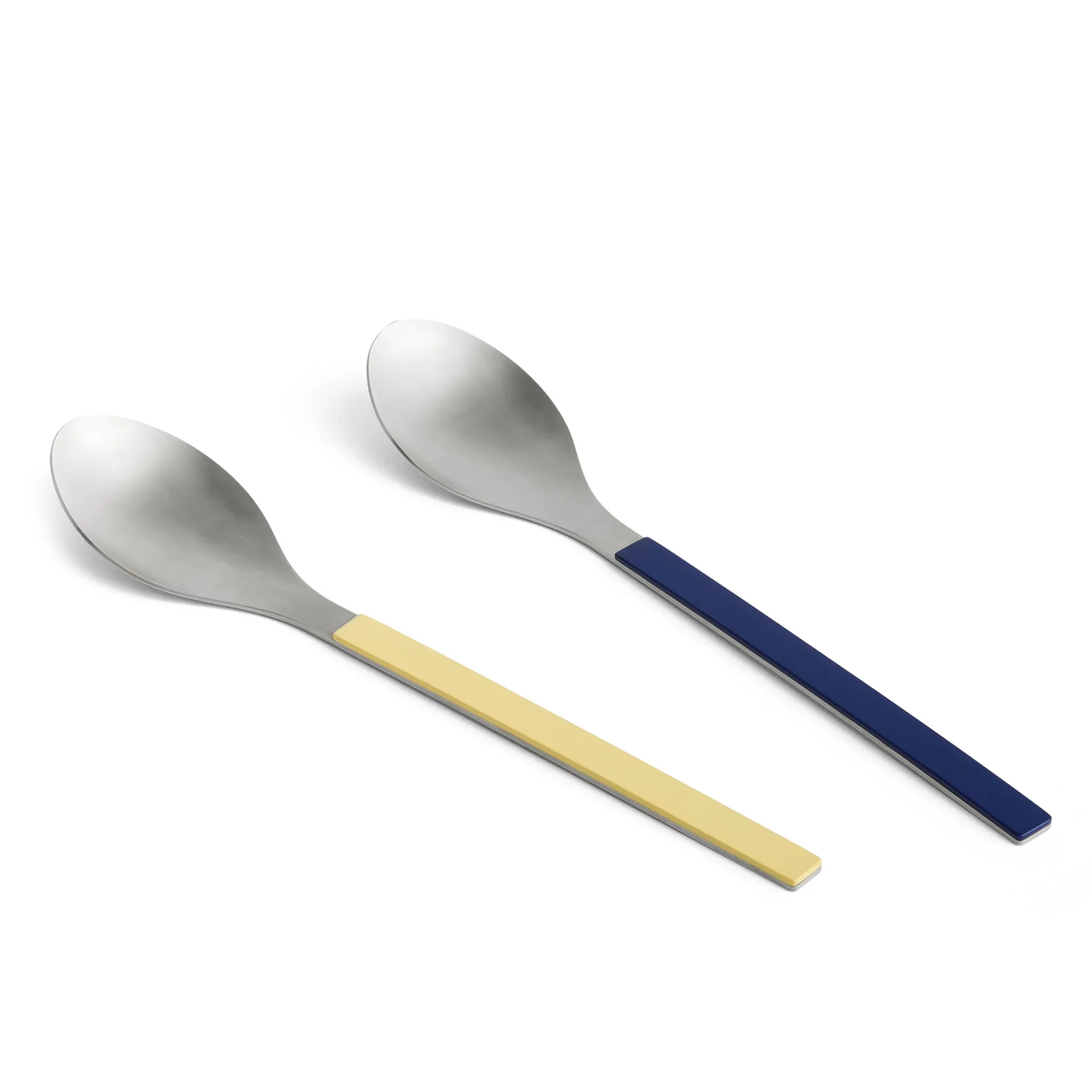
Two large spoons with brushed steel bowls and long flat handles, one lacquered pale yellow, the other dark blue. The MVS pair is the bit of colour in all this stoneware and iron. Serving spoons sound like an afterthought until you have served a baked dish with a tablespoon: these are long enough to reach the bottom of a deep dish without putting a knuckle on the rim, and wide enough to lift a square of gratin whole.
⸻
None of this is specialist equipment. A round dish, a rectangle, a deep one for two, a long one for eight and a pot with a lid cover nearly everything a Nordic kitchen cooks between now and April, and all of them are plain enough that nothing has to be hidden when the plates come out. Bought once, they stay. The dishes in most Nordic kitchens came from a parent's kitchen first, and still go in the oven every week.
Buy for the number you actually cook for rather than the number you hope to, and check the price before you order. The same dish can differ by a fair margin between the Nordic shops from one week to the next, which is what ScandiDeals is for: one search, every shop in your region, today's price.
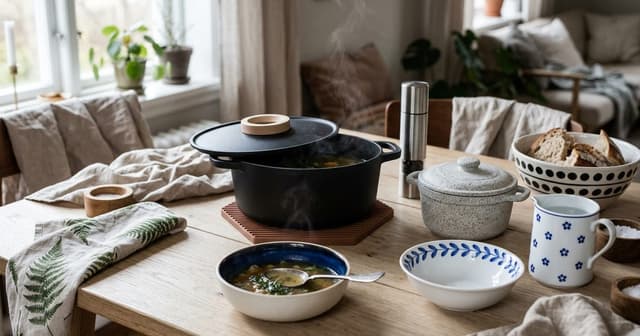
Soup is what the Nordic kitchen does with October. Ten pieces, from an oval cast-iron pot to a fern-printed tea towel, for the weeks of one-pot cooking.
Read More →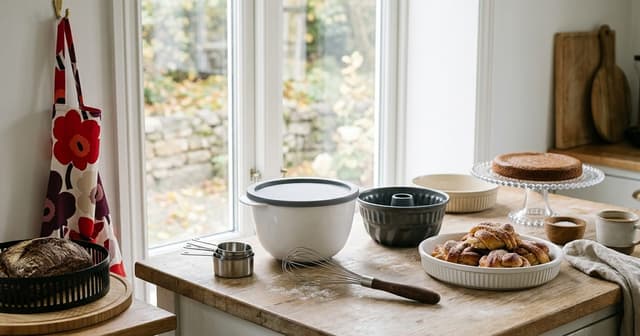
Baking turns seasonal the week the light starts going. Ten Nordic pieces, from a Danish mixing bowl to a dewdrop cake stand, for a kitchen that smells of cardamom.
Read More →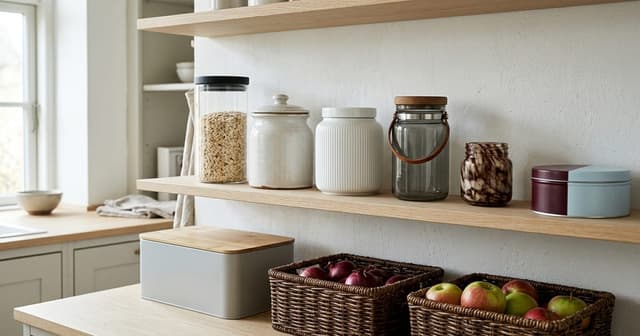
October is when the Nordic kitchen fills up: flour, oats, jam, bread. Ten jars, tins, baskets and tools that keep a winter store in order and in sight.
Read More →