
The Nordic Baking Season: 10 Pieces for Cardamom Weather
Baking turns seasonal the week the light starts going. Ten Nordic pieces, from a Danish mixing bowl to a dewdrop cake stand, for a kitchen that smells of cardamom.
Read More →Soup is what the Nordic kitchen does with October. Ten pieces, from an oval cast-iron pot to a fern-printed tea towel, for the weeks of one-pot cooking.
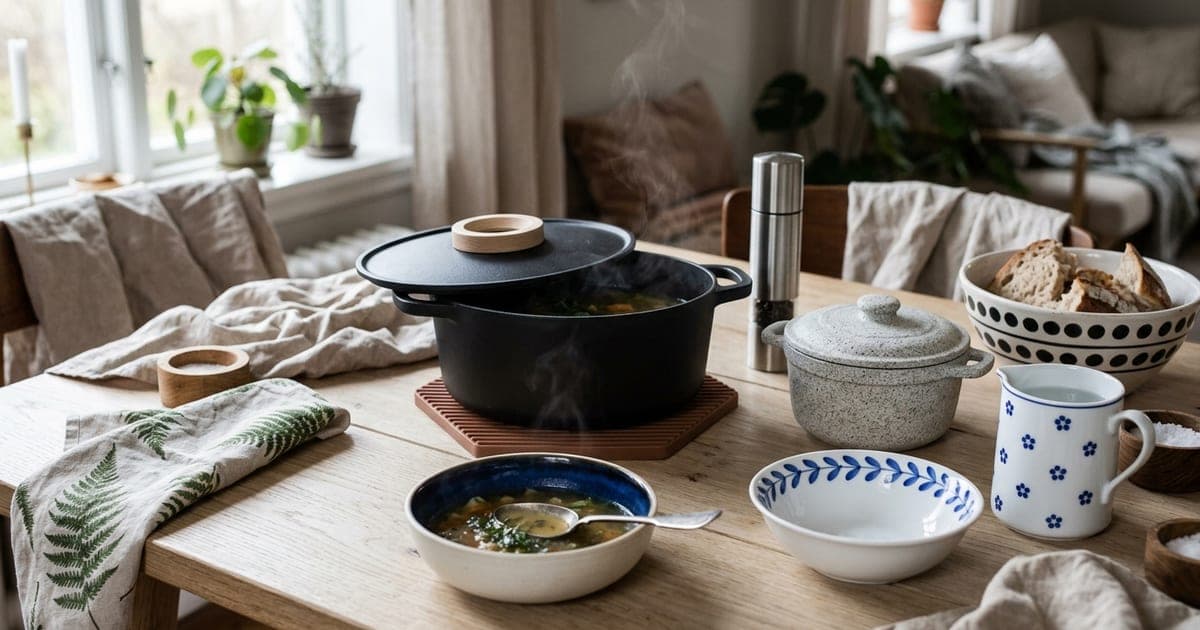
Soup is what the Nordic kitchen does with October. The root vegetables are in, the evening arrives before dinner does, and the sensible answer to both is a pot left on a low heat while the rest of the flat gets on with the day. Nothing about it is a project. A stock, whatever is in the drawer at the bottom of the fridge, bread, and a second helping for whoever comes in last.
The equipment is just as plain, and that is the appeal. One heavy pot, one smaller one, something to put them down on, a ladle with enough reach, and bowls that hold heat long enough to finish a conversation over. Ten pieces follow, in the order you reach for them, from the hob to the cloth you wipe the rim with. All ten are in stock and can be price-compared across the UK, Germany, Norway and Denmark on ScandiDeals.
⸻
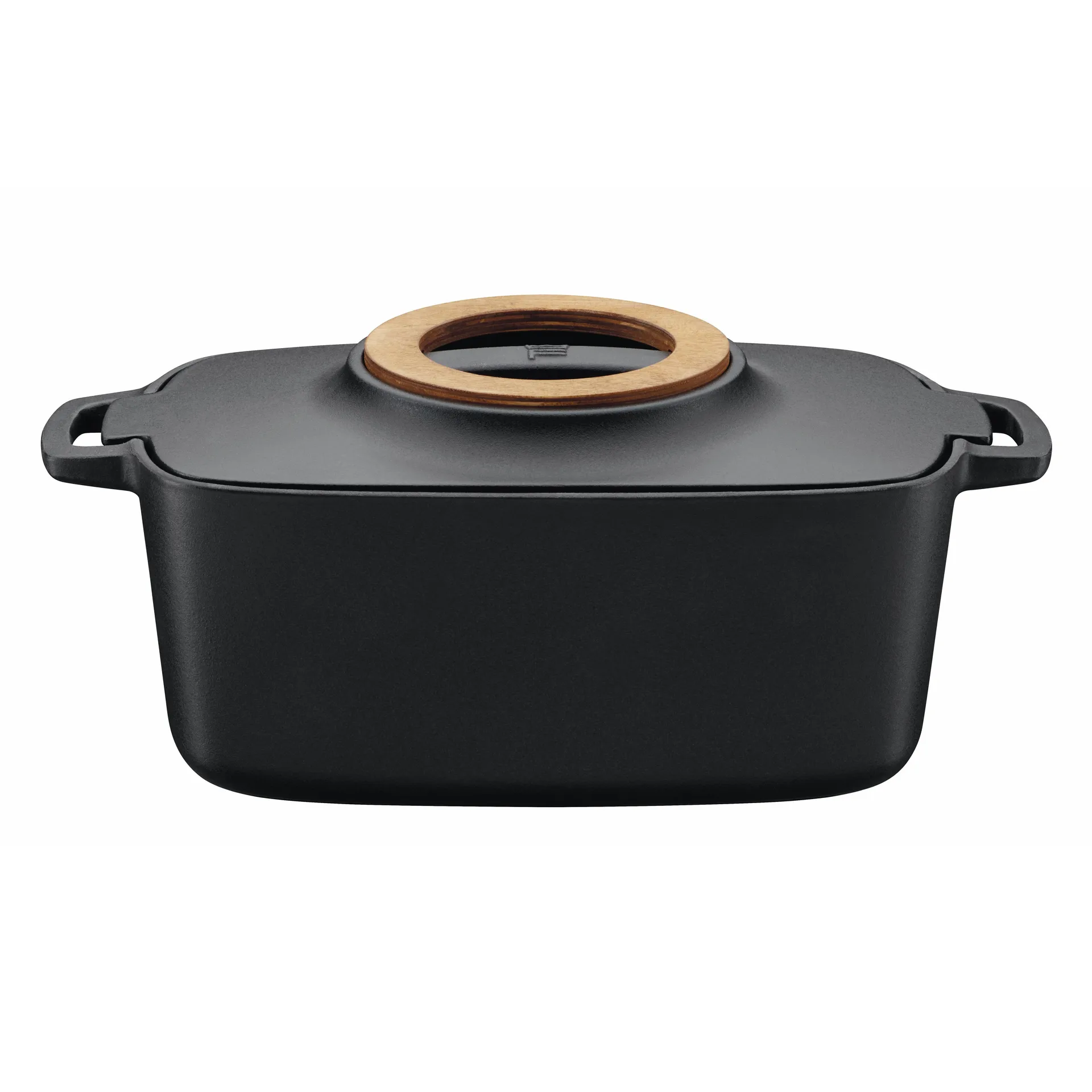
A soup kitchen begins with one heavy pot. The Norden casserole is oval cast iron in matte black, five litres, with two short cast handles and a flat lid centred on a ring of wood. The weight is the argument: cast iron takes its time to warm and then holds that heat, so a soup stays hot through second helpings. The oval takes a shank or a row of carrots end to end, and it moves from hob to oven to the middle of the table without being decanted.
⸻
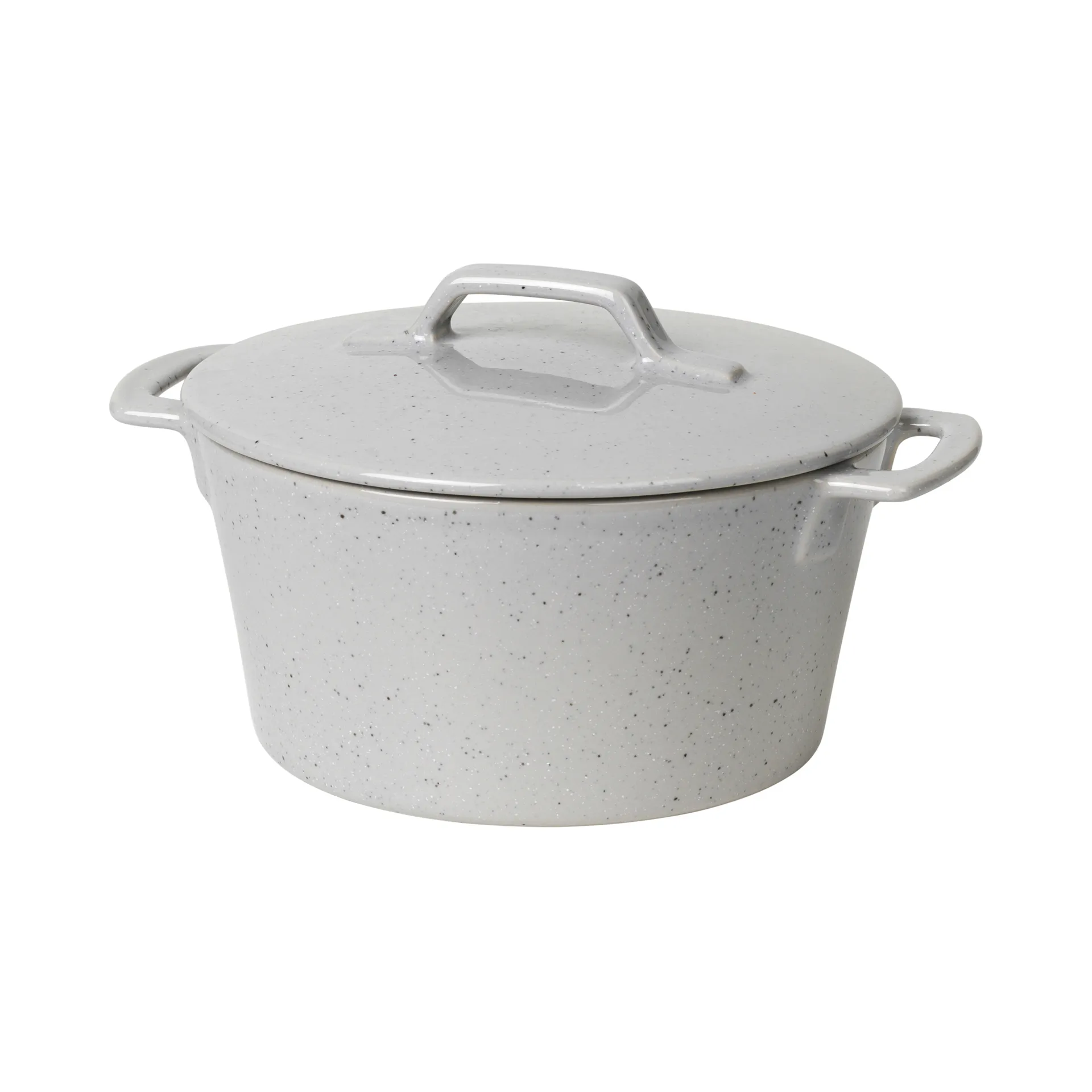
Not every evening needs five litres. The Hasle casserole is the weeknight size, 19 by 23.5 centimetres, round with a close-fitting lid and two small loops to lift it by. The surface is a pale grey flecked with darker grains, the light grey granite of its name, and calm enough on a table that nothing has to be decanted. Make soup for two on a Tuesday, leave the lid on, and what is left goes into the fridge in the pot it was cooked in.
⸻
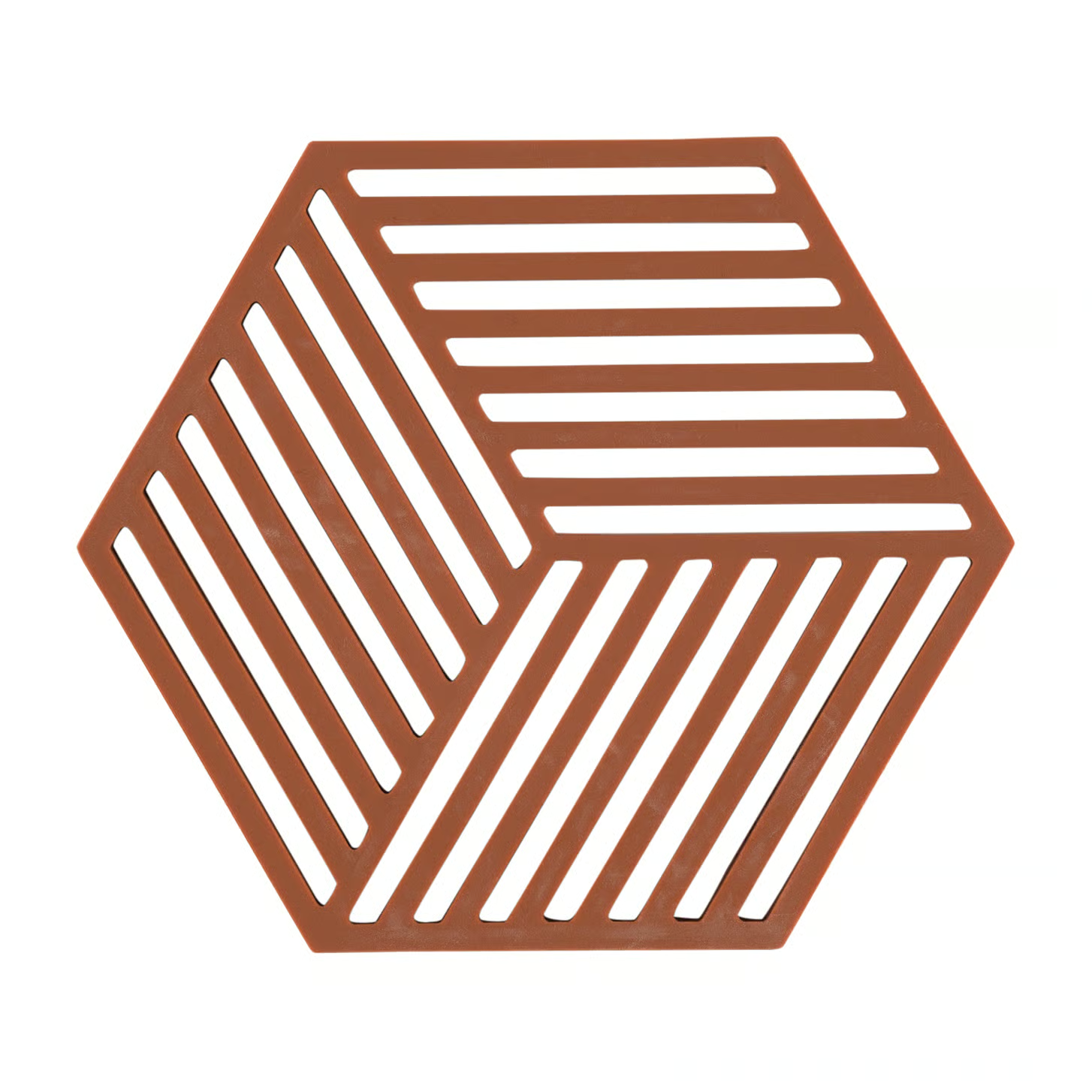
The pot has to land somewhere. The Hexagon trivet is a six-sided mat of ribbed silicone in terracotta brown, the ribs running in three directions so a hot base grips rather than slides. It is flexible enough to roll into a drawer and thick enough that the table underneath stays cool. Two of them tessellate along a long table, one under the pot and one under the dish beside it.
⸻
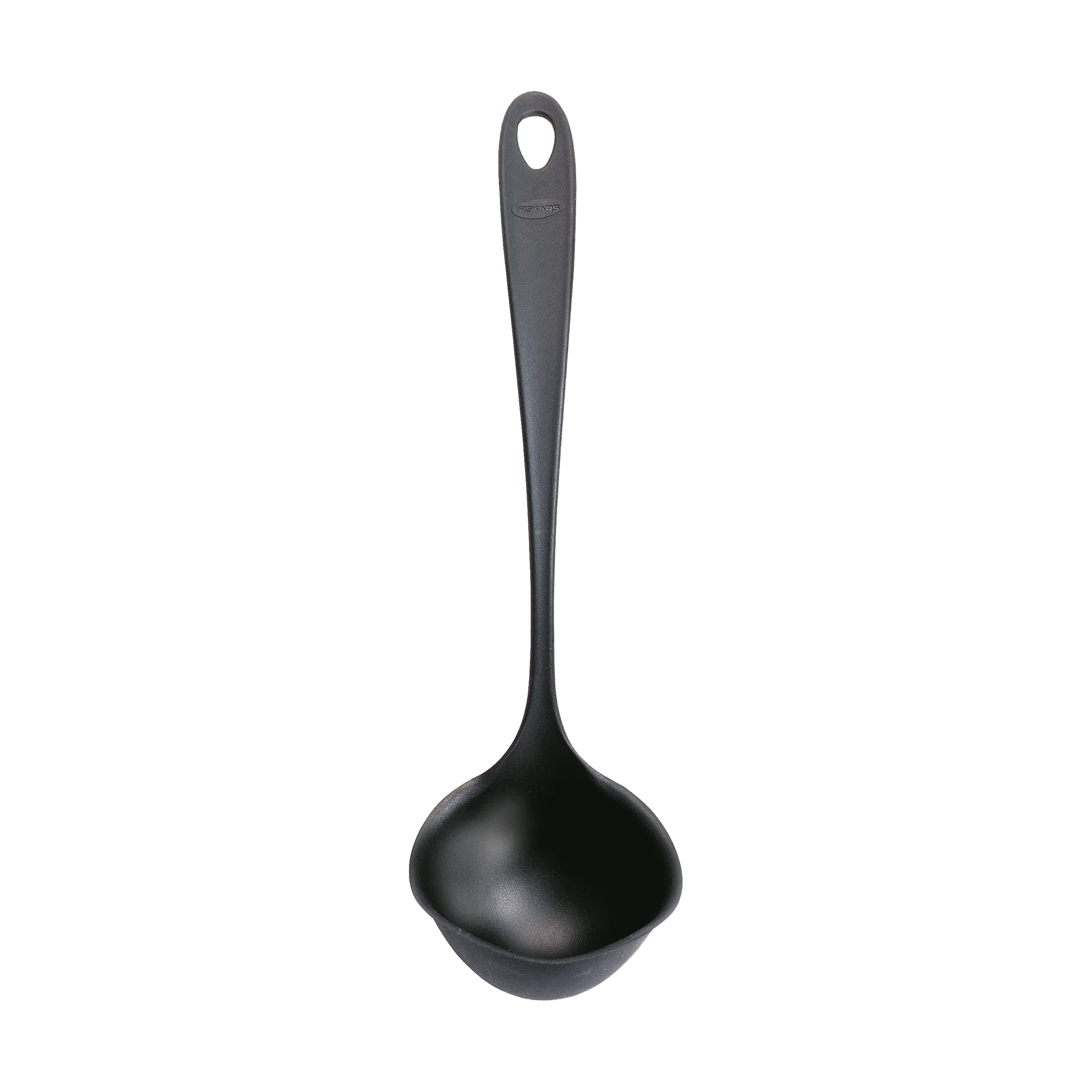
The Essential soup ladle is twenty-eight centimetres long, which is the measurement that matters. Your hand stays above the rim and out of the steam when you go down to the bottom of a deep pot. The bowl is generous enough that one scoop is a portion, the handle ends in a hole so it can hang by the hob, and the whole thing is a single piece in black, with no joint for soup to collect in.
⸻
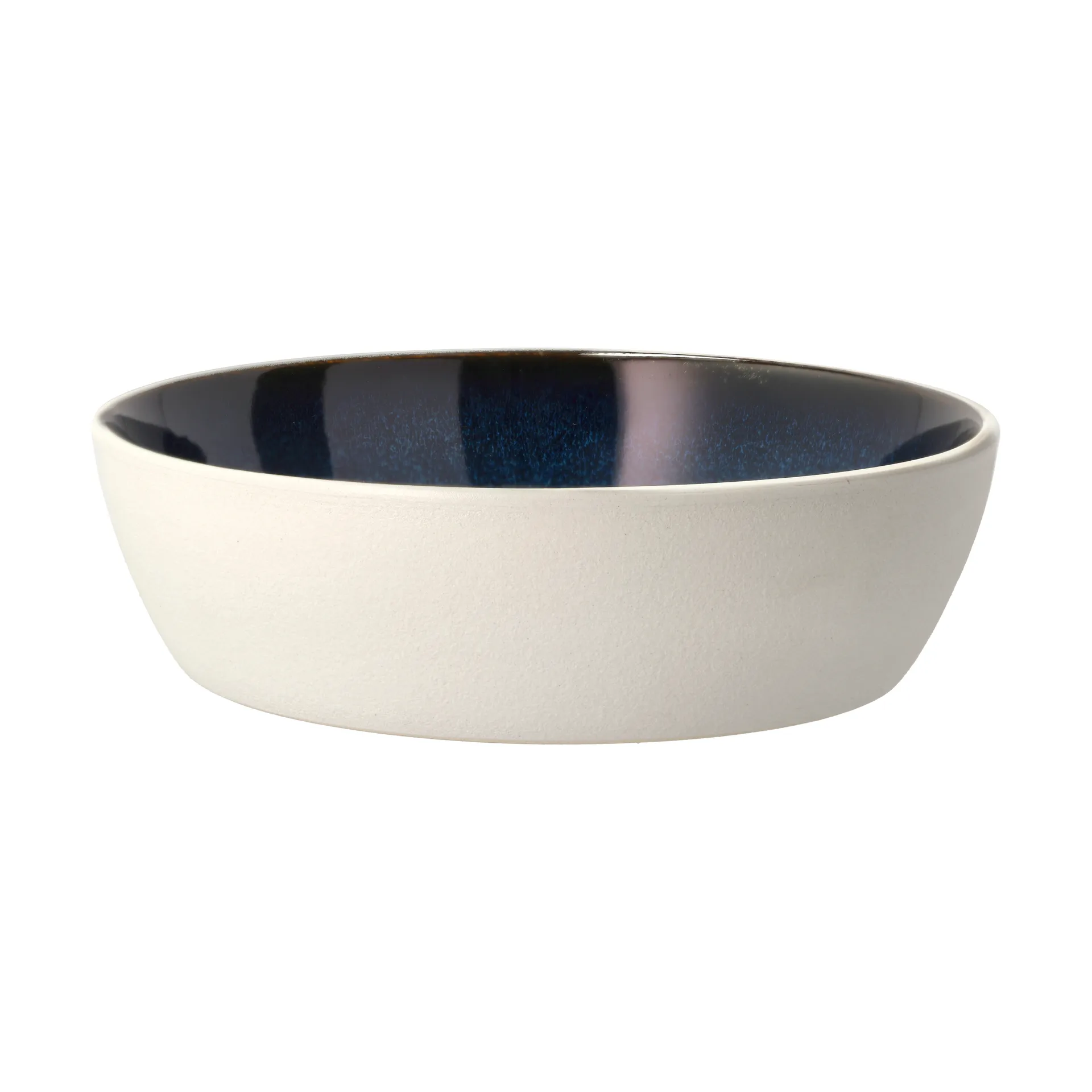
The Bitz soup bowl is eighteen centimetres across and wide rather than deep, cream-white outside and glazed a dark glossy blue within that pools almost black at the base. A broad, shallow bowl brings soup down to eating temperature quickly, which counts for more on a weekday than it sounds. The glaze is heavy and even, the rim is thick where chips usually start, and the shape stacks, so six of them take up the shelf space of four.
⸻
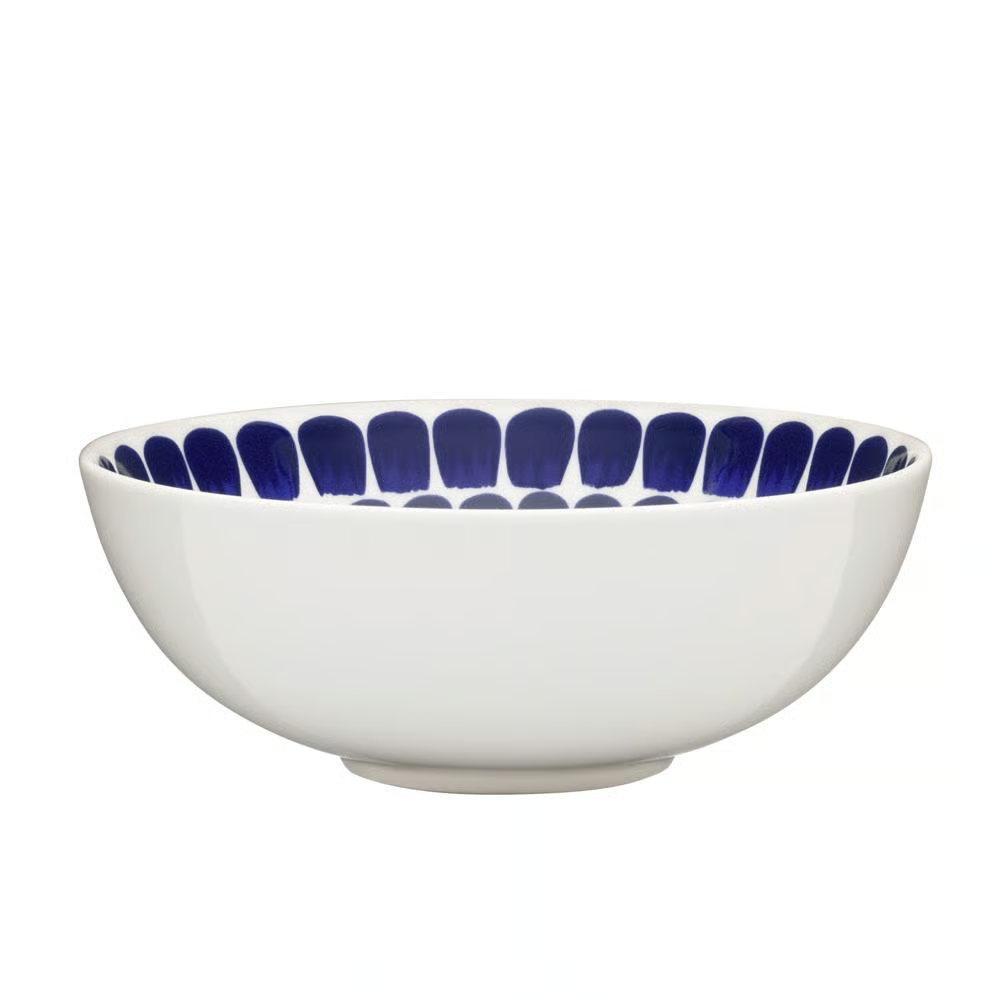
Arabia's 24h shapes were drawn by Heikki Orvola in 1996 for a kitchen that uses the same pieces from breakfast to late evening. The Tuokio bowl sets a ring of cobalt brushstrokes just inside the rim, each petal laid down in one movement against plain white. At eighteen centimetres it is the deeper of the two bowls here and the better one for a broth with barley or a stew with more in it than liquid. Keep both shapes and let the table mix them.
⸻
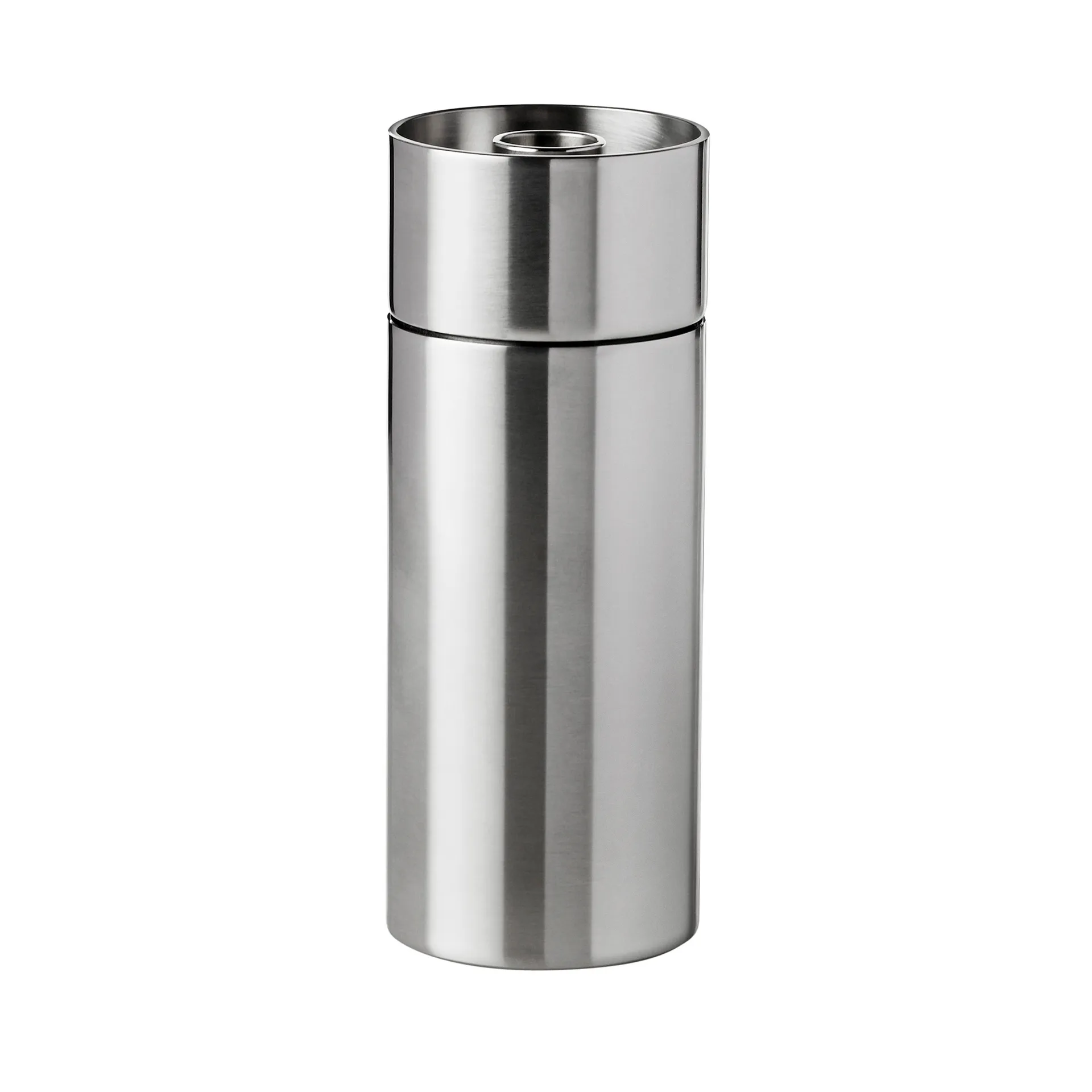
Soup is seasoned at the table as much as in the pot, and a mill that lives there has to look like it belongs. The AJ cylinda-line mill is a plain brushed-steel cylinder with a flat top, part of the cylinder family Stelton has built its kitchen pieces around. The ridged collar turns easily and the grind drops straight down rather than drifting. There is no wood to darken with steam and no paint to chip.
⸻
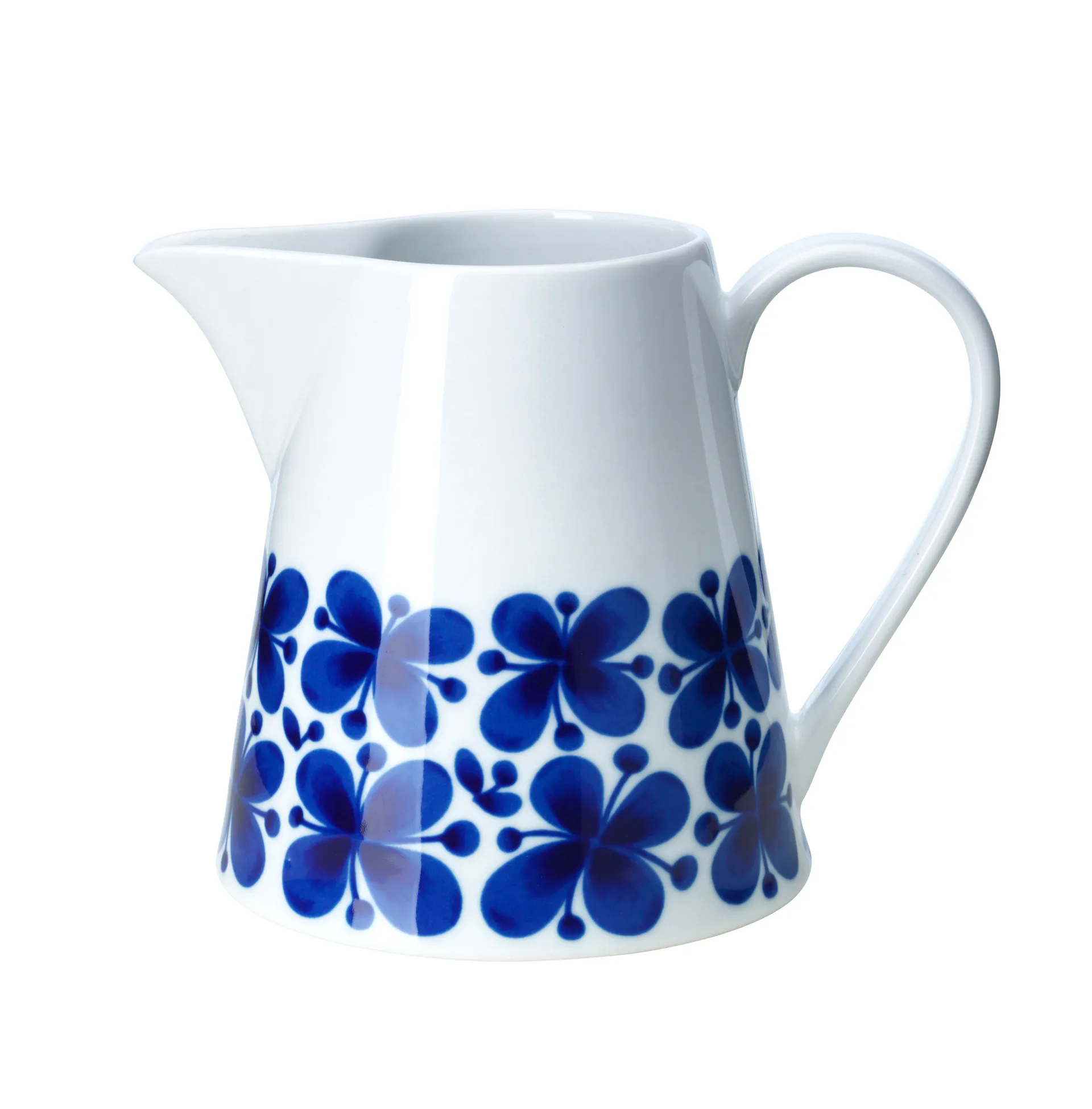
The Mon Amie jug holds 1.2 litres in white porcelain, with small cobalt four-petal flowers scattered over the lower half, a high curved handle and a lip that stops the pour cleanly. Water is its weekday job, and a jug on the table saves the interruption of the tap halfway through a meal. It takes milk for a creamed soup just as well, and in the weeks when nothing is being served it holds whatever greenery the season has left.
⸻
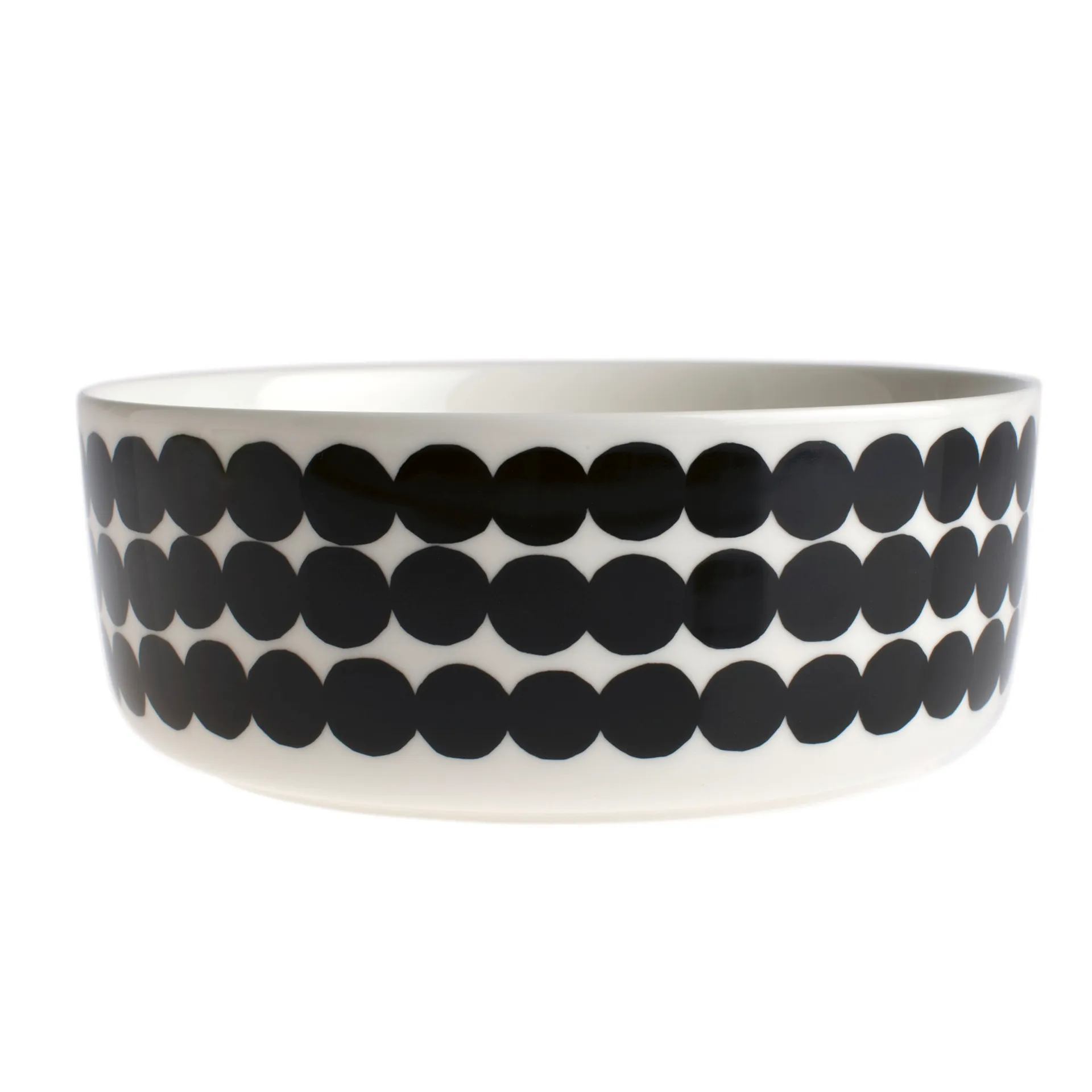
Räsymatto means rag rug, and the pattern is drawn like one: three bands of thick black dots around a white bowl, each laid by hand so no two sit quite alike. The serving bowl holds 1.5 litres, which is a loaf torn into pieces, a salad for four, or the boiled potatoes that go beside a fish soup. On a table of plain bowls and a dark pot it is the one piece doing any talking, and that is enough.
⸻
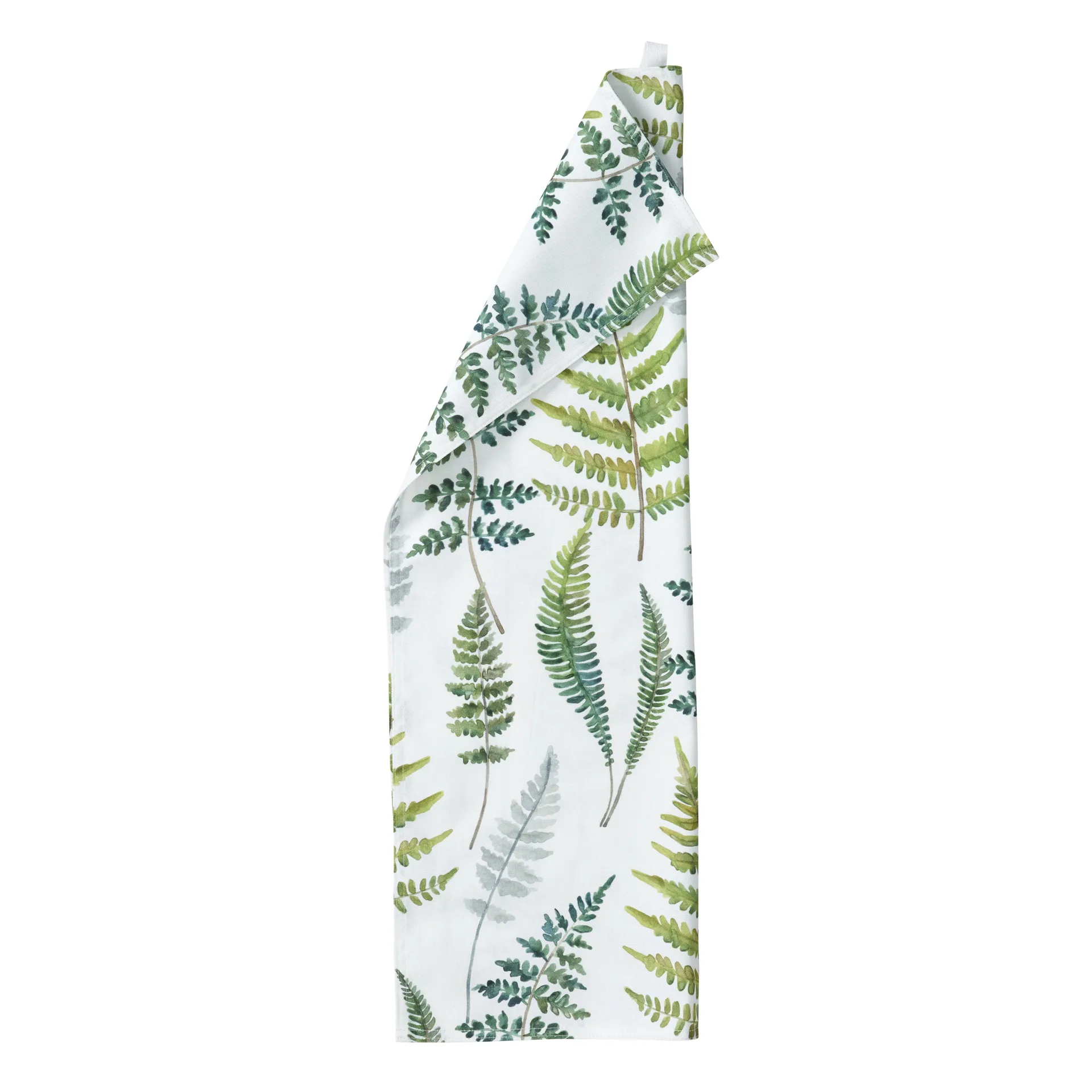
Klippan has been weaving in southern Sweden since 1879, and the small pieces are where the mill is easiest to live with. The Fräken tea towel is white, printed with green fern fronds that grow up from the lower edge and thin out towards the top. Folded in four it lifts a hot lid, laid over a basket it keeps bread warm, and hung on the oven door it is the only decoration a working kitchen needs in October.
⸻
A one-pot kitchen asks for very little, and what it does ask for it uses every week. That is the test worth applying in October: not whether a piece is beautiful in a photograph, but whether it will be out on the hob again on Thursday. Cast iron, a thick glaze, a steel cylinder and a printed cloth all pass it, and they go on passing it for years, which is the only sustainability argument that has ever really worked.
Start with the pot and the ladle if you are starting at all; bowls accumulate on their own. Then let the rest arrive slowly, a trivet here, a jug there, until the table sets itself. Every piece in this guide is in stock in all four regions, and you can compare prices across the shops on ScandiDeals before you buy.
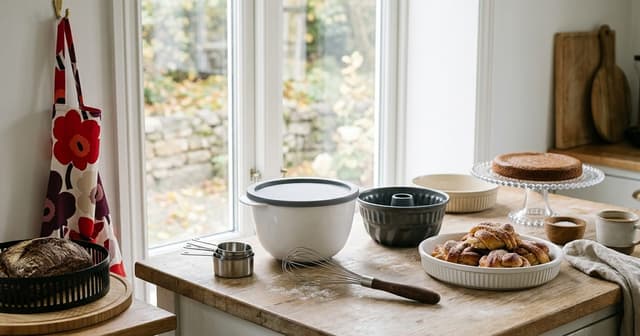
Baking turns seasonal the week the light starts going. Ten Nordic pieces, from a Danish mixing bowl to a dewdrop cake stand, for a kitchen that smells of cardamom.
Read More →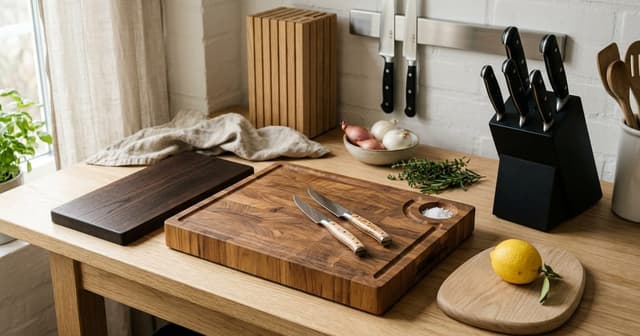
A sharp blade and a board that can take it change the cooking more than any gadget. Ten Nordic pieces for chopping, storing and keeping an edge.
Read More →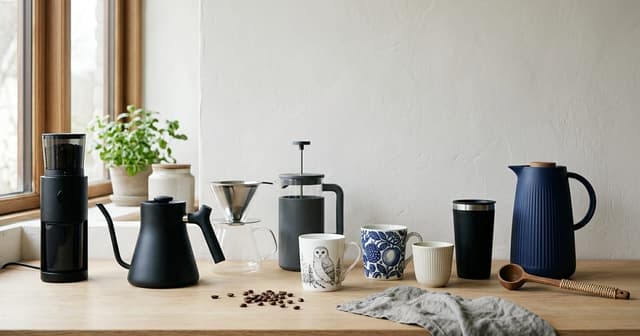
Nordic countries drink more coffee than anyone else. Ten pieces, from grinder and gooseneck kettle to thermos jug and mugs, for a slower morning.
Read More →