
The Scandinavian Coffee Ritual: 10 Pieces for Better Mornings
Nordic countries drink more coffee than anyone else. Ten pieces, from grinder and gooseneck kettle to thermos jug and mugs, for a slower morning.
Read More →A sharp blade and a board that can take it change the cooking more than any gadget. Ten Nordic pieces for chopping, storing and keeping an edge.
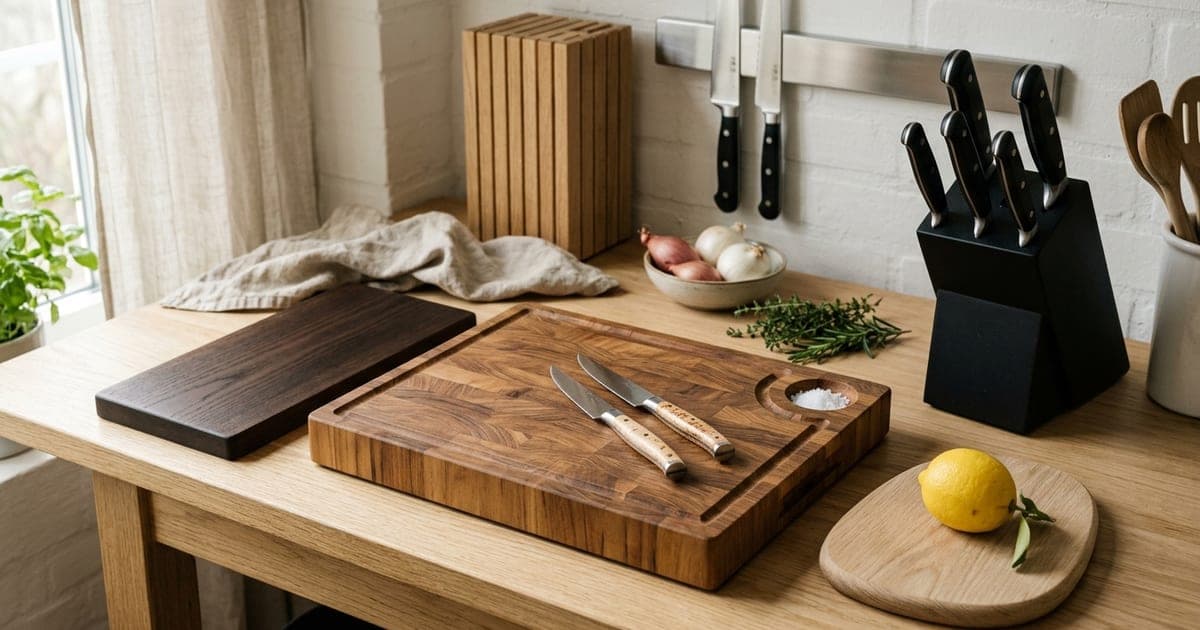
Most kitchen frustration comes down to two objects. A knife that stopped cutting some months ago and has been pushed through onions ever since, and a board too small for the job, sliding on the worktop while you chase a carrot across it. Neither is a dramatic problem. Both make every meal slower than it needs to be, and both are cheap to fix compared with the appliances people buy instead.
The Nordic answer is not a knife roll of twenty blades. It is a few good ones, somewhere sensible to keep them, a board with enough room to work on, and a way of bringing the edge back before it is properly gone. These ten pieces cover exactly that, from an end-grain teak slab to a pocket-sized sharpener, and all of them are in stock and available to compare across the UK, Germany, Norway and Denmark on ScandiDeals.
⸻
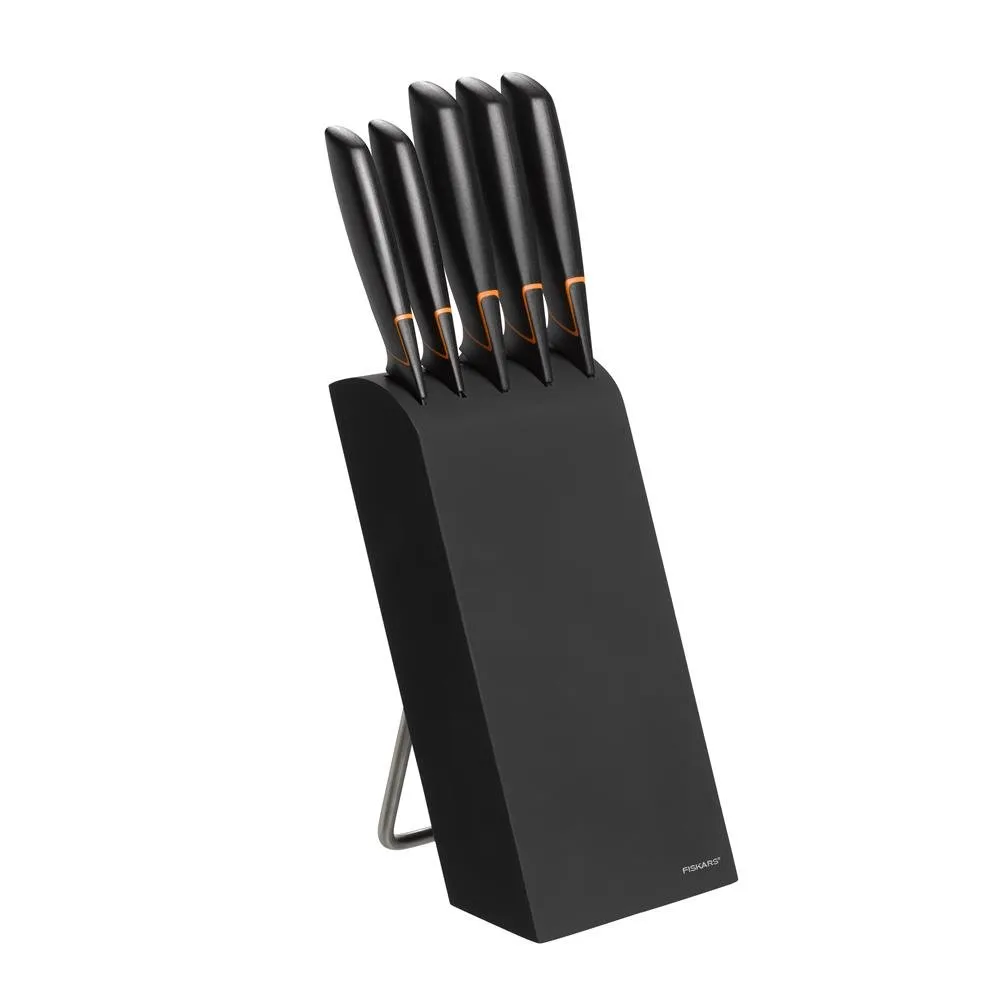
If you are starting from nothing, start here. The Fiskars Edge knife block with five knives is the Finnish maker's five-piece set in a matte black wedge that leans back on a thin steel leg, handles angled towards you. Five blades is the honest number for a home kitchen: a cook's knife, a bread knife, something small for peeling and two in between. The handles are the deep-set Fiskars shape, flat-sided so your fingers know where they are, and the block wipes clean rather than collecting crumbs in slots.
⸻
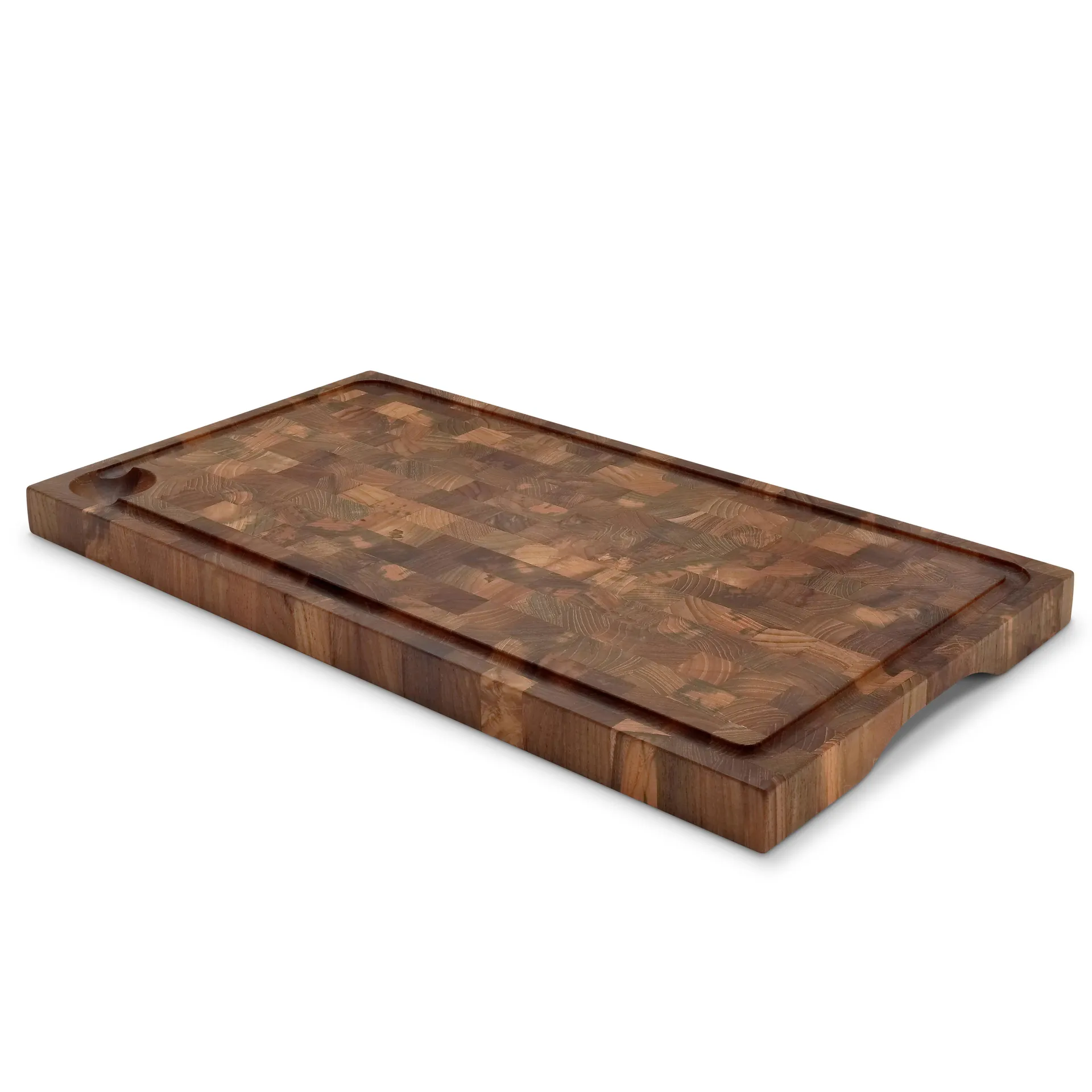
The Fritz Hansen Skagerak cutting board in teak, 50 by 27 centimetres is built end grain: the blocks stand on end so the blade parts the fibres rather than cutting across them. The board takes the mark and closes over it, and the edge stays sharp longer. It is thick enough to stay put on its own, cut out at both ends for lifting, and grooved around the rim with a small round well in one corner to catch what runs off a roast. A piece to keep out, not to put away.
⸻
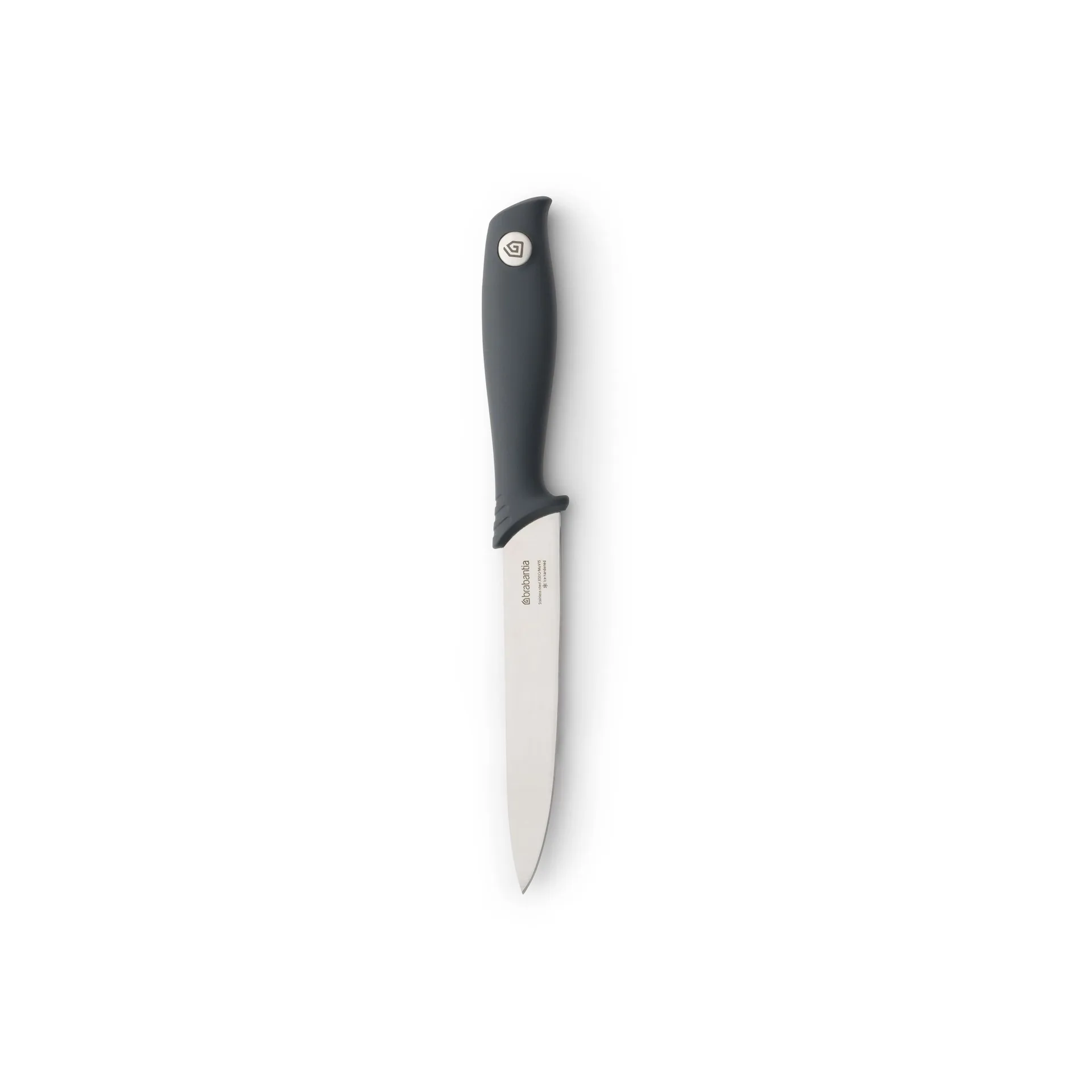
Every kitchen has one knife that does four fifths of the work, and it is rarely the big one. The Brabantia Tasty vegetable knife is that knife: a straight, narrow blade in ice-hardened stainless steel, stamped on the flat, with a dark grey moulded handle that stays gripped when your hands are wet. Long enough for a cabbage, short enough to turn a shallot in your palm. It is the least expensive thing on this list, and the one most likely to live on the board rather than in the block.
⸻
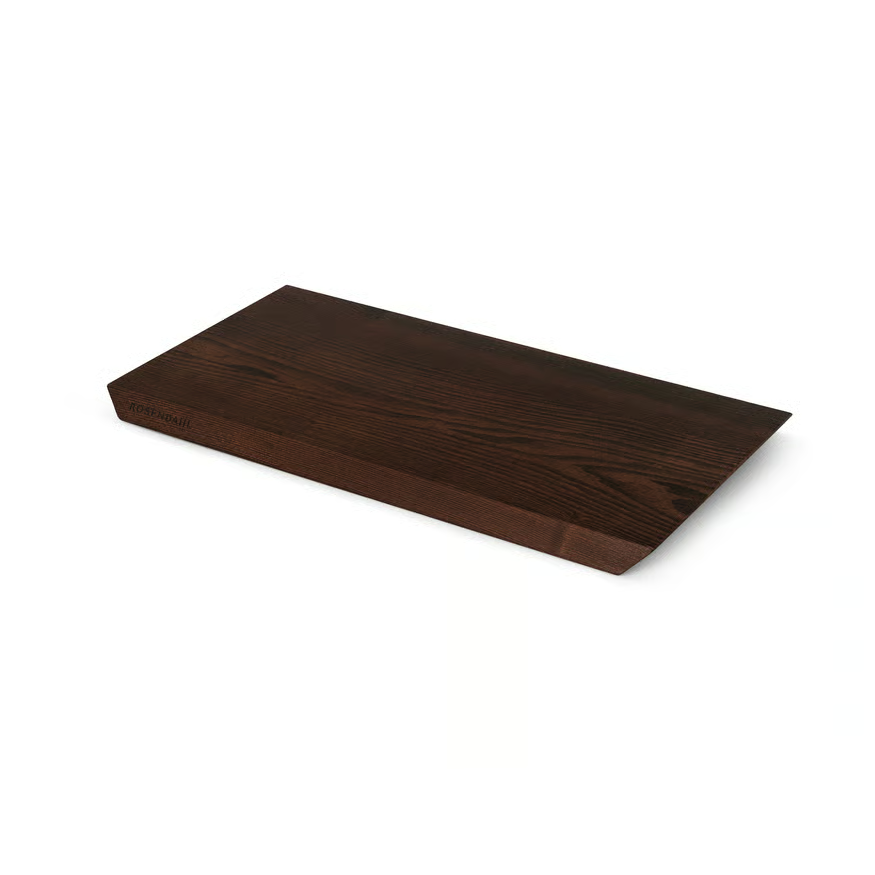
Thermo-treated ash is ash that has been through heat rather than stain, which takes it to a deep chocolate brown right through and makes it markedly less thirsty than raw timber. The Rosendahl RÅ board, 28 by 51 centimetres uses it as a long, flat plank with one end tapered to a thin bevel, so a knife can sweep chopped herbs straight off it. Dark wood also hides beetroot and turmeric, which pale boards never quite recover from. Oil it now and then and the colour deepens.
⸻
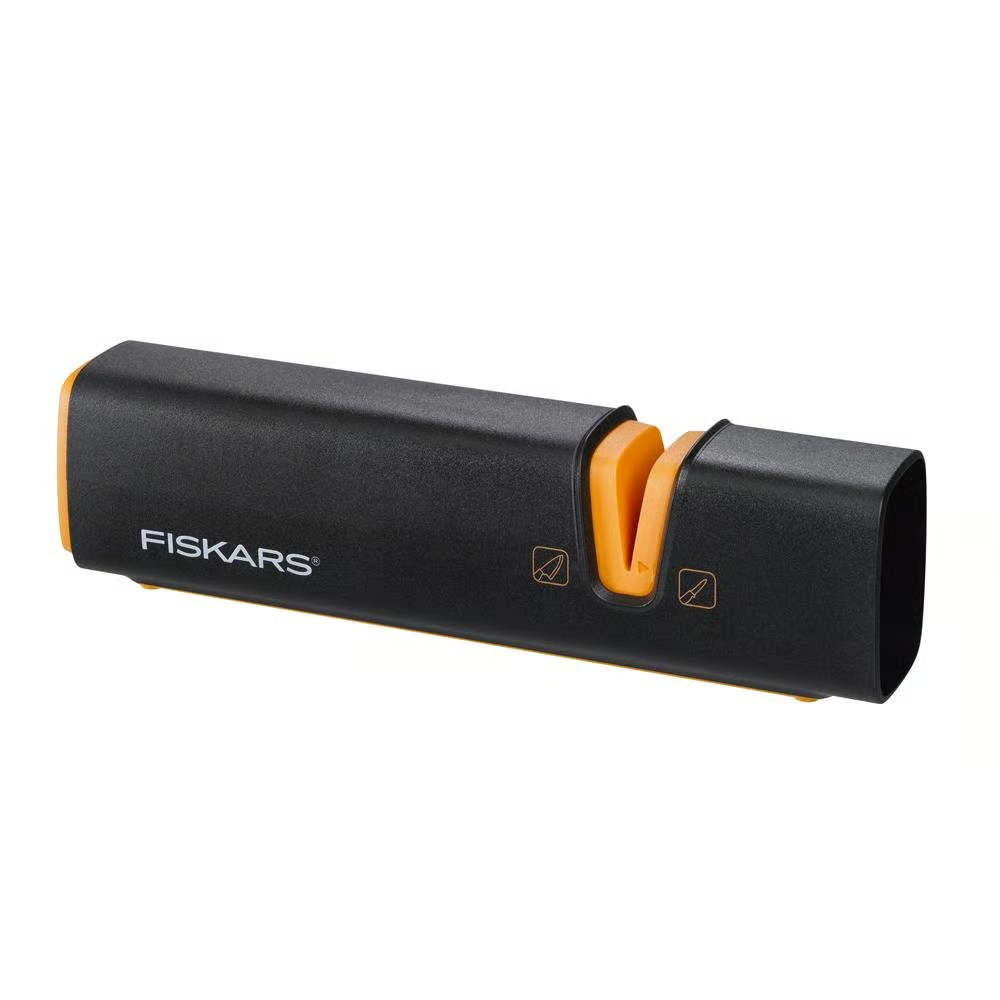
Knives do not go blunt overnight; they go blunt so slowly that you adjust. The Fiskars Edge Roll-Sharp sharpener is the cure for that drift. Set it on the worktop, hold the black body down, and draw the blade through the orange slot a handful of times: a rolling wheel inside does the work at a fixed angle, so you cannot ruin the bevel by holding it wrong. It handles both straight and serrated edges, stores in a drawer, and takes about as long as filling the kettle.
⸻
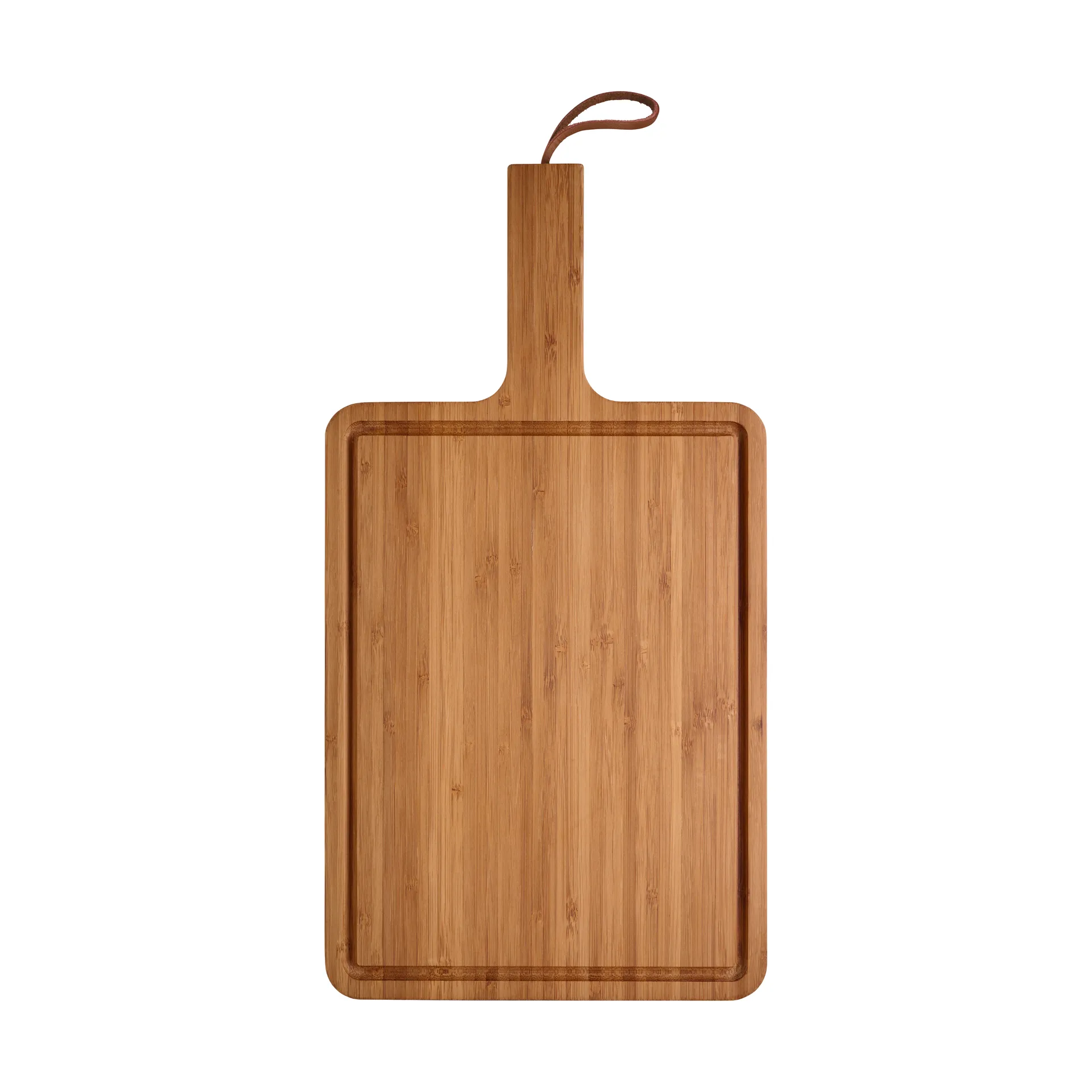
The board with a handle earns its keep twice. The Eva Solo Nordic kitchen cutting board in bamboo, 24 by 32 centimetres is a paddle shape with a leather loop at the top, a groove running right around the cutting face and rounded corners. Chop on it at the hob, then carry it to the table with the bread or the cheese still on it. Bamboo is hard and light, which is why it works at this size: big enough for a real job, light enough to hang by the loop afterwards.
⸻
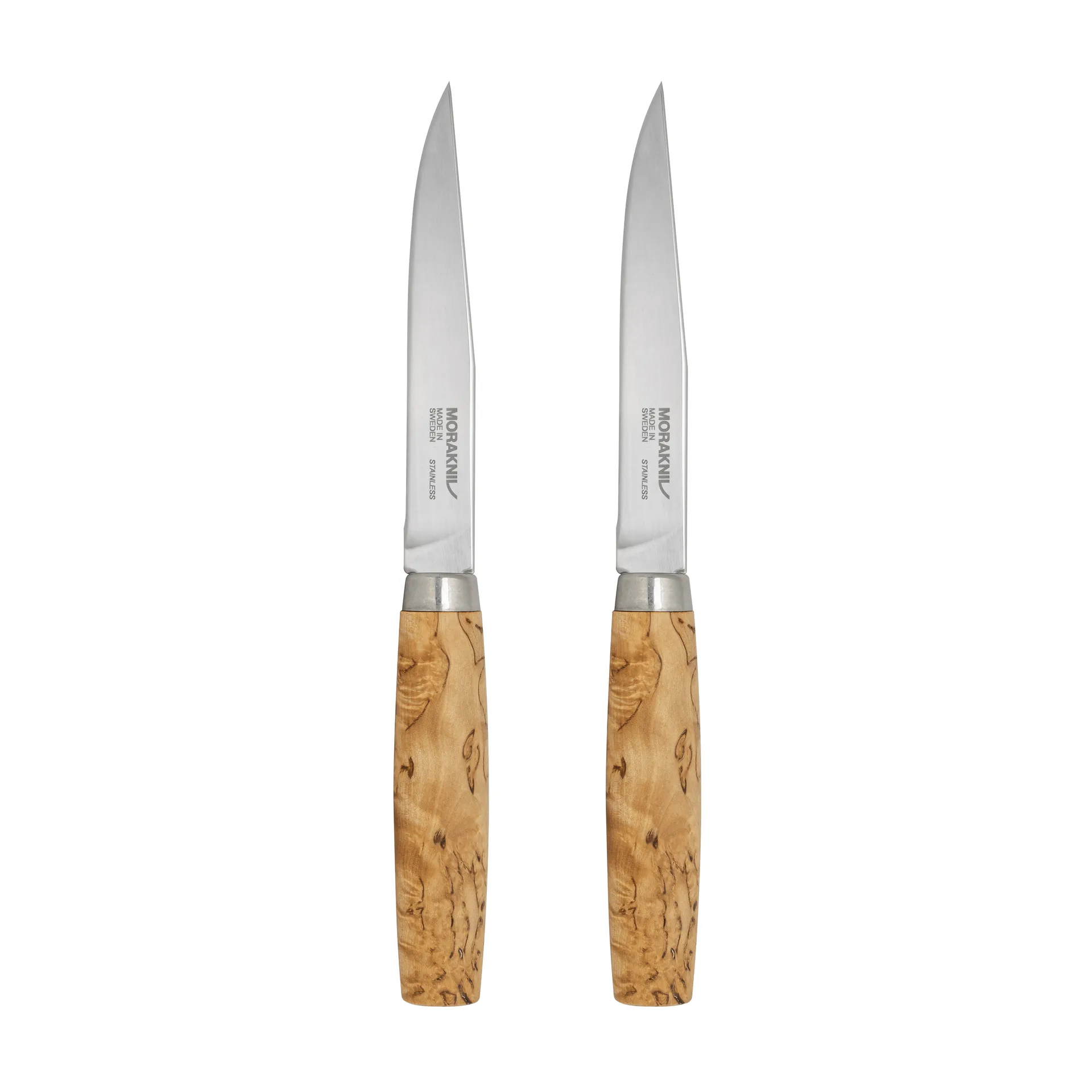
Morakniv makes its knives in Mora, in Sweden, and the blades on these say so. The Morakniv Masur steak knife two-pack puts a plain, properly pointed stainless blade into a barrel handle of masur birch, the figured Nordic birch whose flecked grain runs differently in every piece, finished with a steel ferrule where the two meet. No serrations, which means they can be sharpened for good rather than replaced when they dull. Two is the right number to start with; they age like the wooden handles on old outdoor knives.
⸻
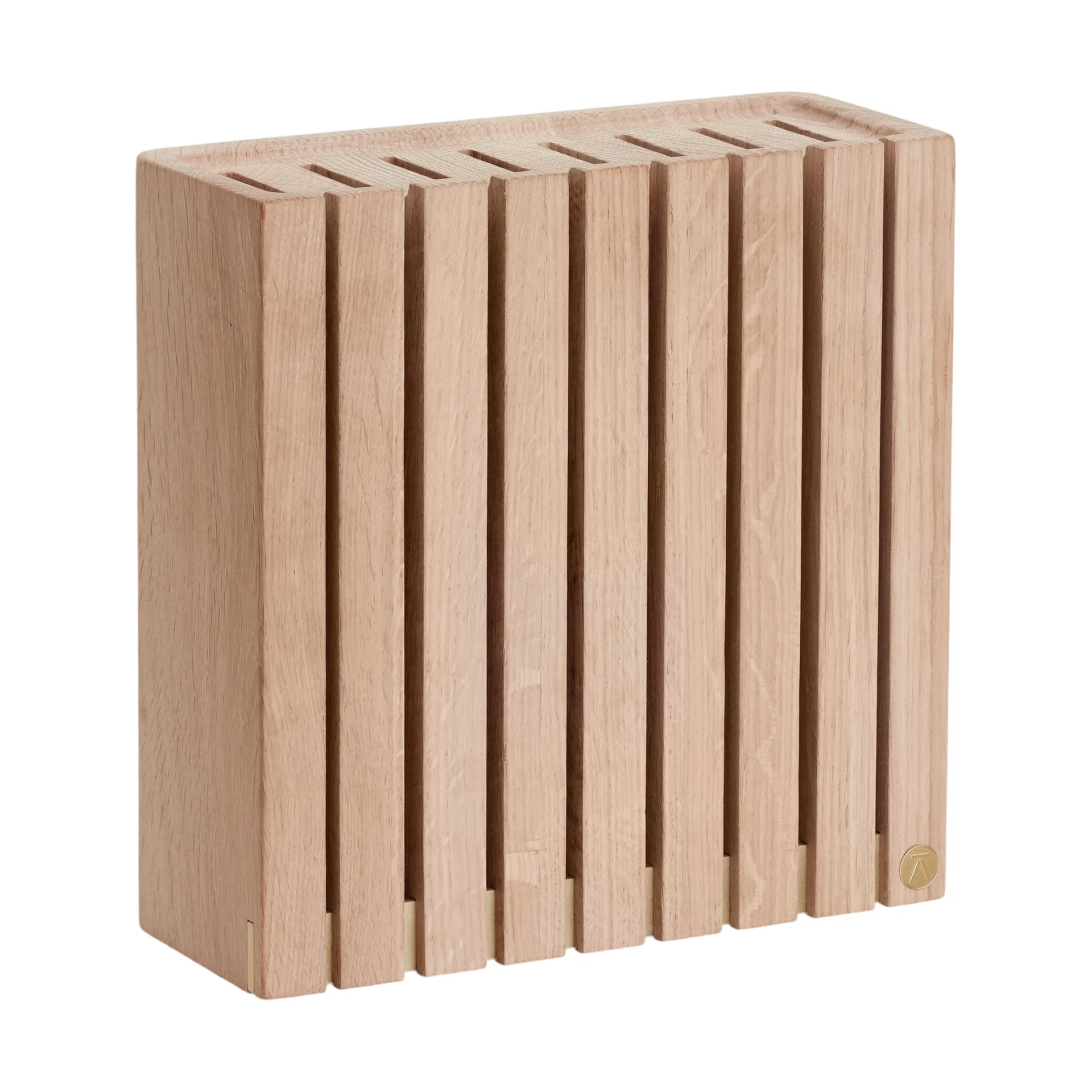
Most knife blocks are a solid lump with narrow holes that never dry inside. The Andersen knife block in oak is built instead from upright oak staves with air between them, brass pins at the foot and a small brass disc set into one face. The slots on top are open cuts rather than drilled channels, so blades slide in at any width and the wood can breathe around them. It looks like a piece of furniture, which is the point when a kitchen opens onto the room you sit in.
⸻
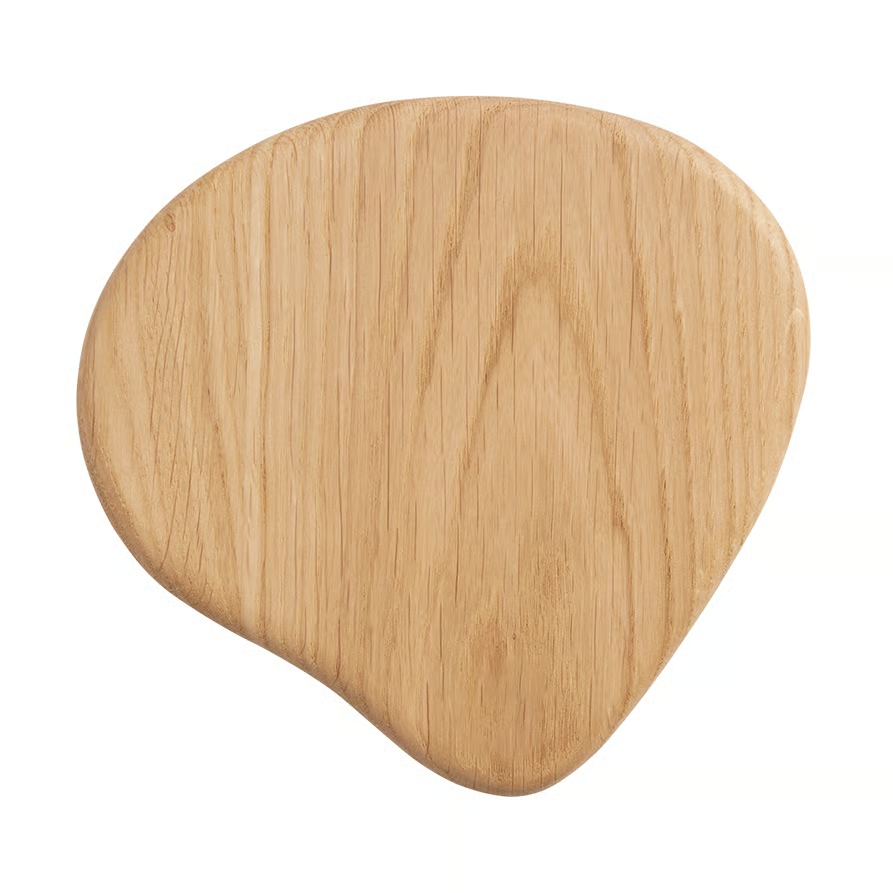
Not everything needs half a metre of worktop. The Broste Copenhagen Limfjord board, 15 by 13.5 centimetres is a small, soft-edged piece of pale wood cut to a rounded, slightly lopsided pebble, with no straight sides anywhere on it. Use it for a lemon, a knob of butter, one piece of cheese with a knife laid across it. It is the board that lives on the counter beside the kettle, and the one that ends up on the table when two people are eating bread and cheese.
⸻
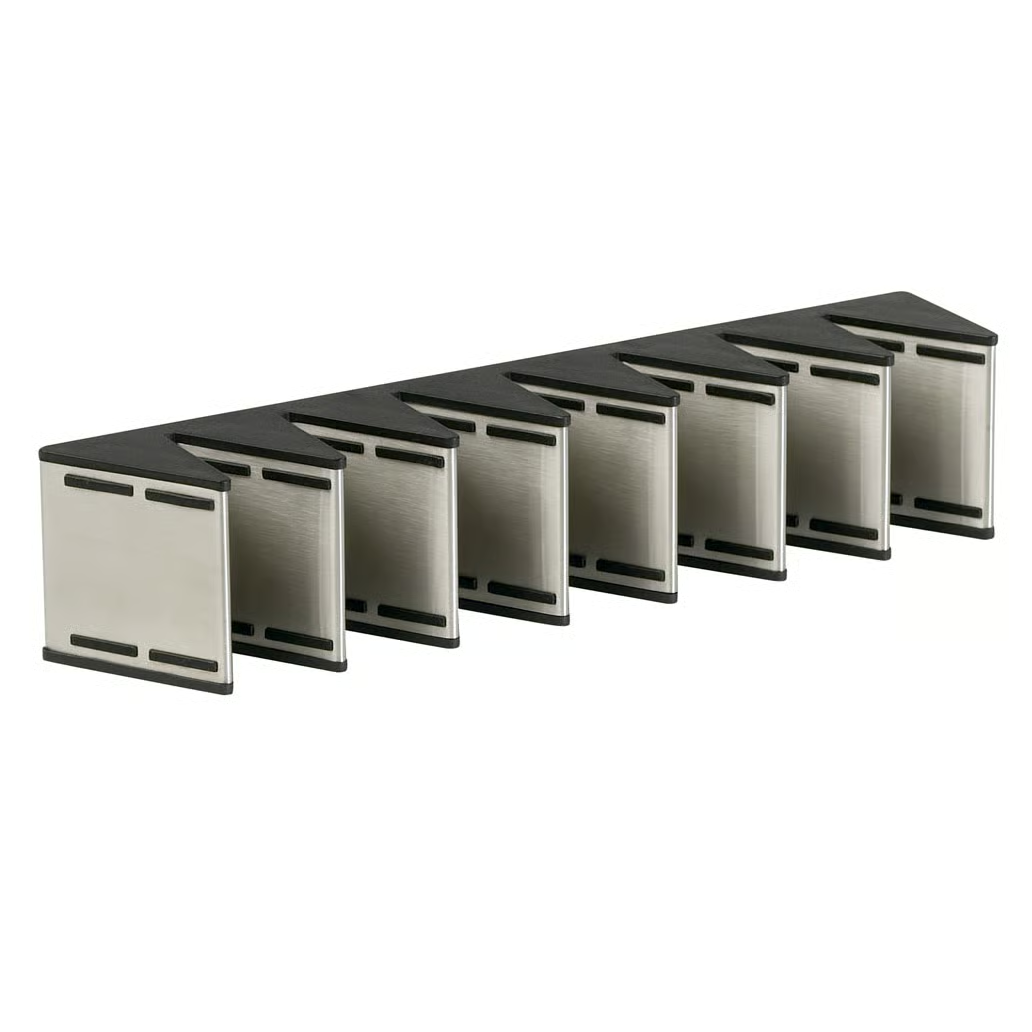
If the drawer is where edges go to die, the wall is where they survive. The Eva Solo Magneto knife magnet in stainless steel is a row of angled brushed steel plates, each faced with black magnetic strips, mounted so the blades hang clear of the wall and slightly out from it. Nothing touches anything else, so no edge is chipped by a neighbour, and you can see what you are picking up. It suits a short wall between cupboards, or the return beside a window.
⸻
None of this is about owning more. Five knives kept sharp will outcook fifteen kept in a drawer, and one board large enough for the task beats three that are not. The Nordic habit is to buy the good version once, keep it visible, and maintain it: oil the wood a few times a year, run the sharpener through before the edge goes, wash by hand and dry standing up. Wood handled that way gets better looking with age, which is more than can be said for most of the kitchen.
Prices for all ten pieces move between the Nordic shops, and rarely in step. Compare them across the UK, Germany, Norway and Denmark on ScandiDeals before you buy, and put the difference towards the board you thought was too big.
Nordic countries drink more coffee than anyone else. Ten pieces, from grinder and gooseneck kettle to thermos jug and mugs, for a slower morning.
Read More →
Discover 10 affordable Scandinavian kitchen gadgets that combine elegant design with practical functionality to transform your cooking experience.
Read More →
A bouquet is a Friday purchase and a Tuesday problem. Ten Nordic vessels for one stem, three stems or a branch, from a pin holder to a frosted glass tower.
Read More →