
Closed Windows: 10 Nordic Pieces for the Scent of Autumn
From now until March the air indoors is the air you make. Ten Nordic pieces for it: candles in glass and tin, reeds, a spray, a small aluminium pyramid.
Read More →Summer time ends on Sunday and the afternoon goes dark for five months. Ten Nordic clocks, two timers and one hygrometer for the season indoors.
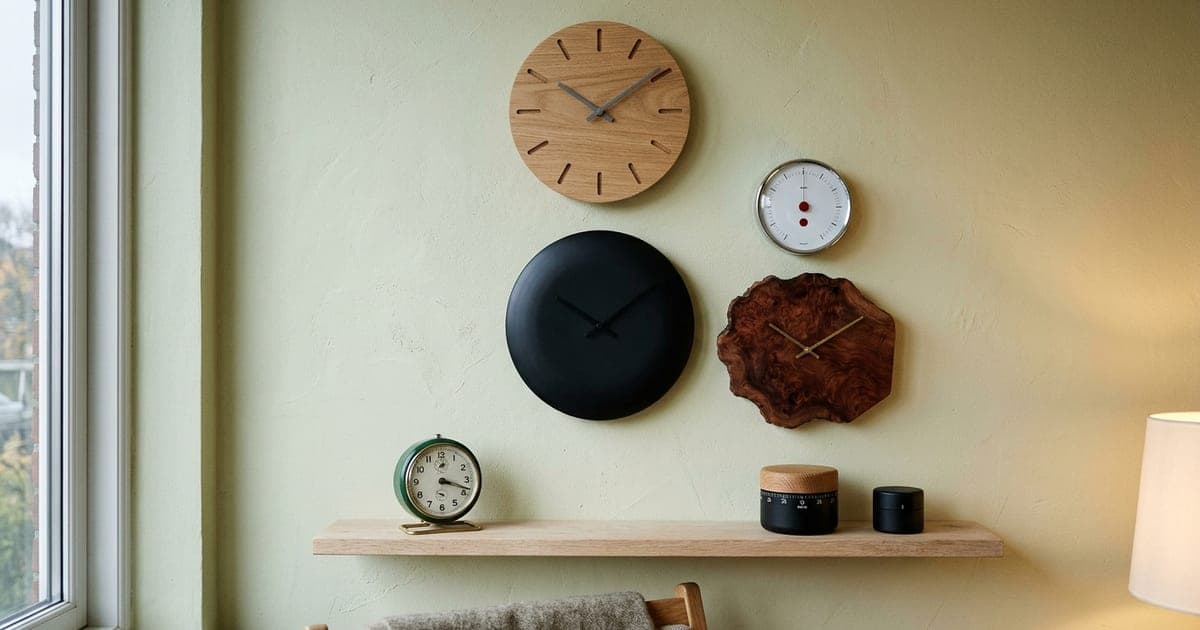
Early on Sunday morning the clocks go back an hour, and it is the afternoon that follows which changes everything. By the middle of next week it is dark before the shops shut, and by December the light has gone by four. This is the week the house stops taking its time from the window. Nobody looks up at the sky at half past three in Oslo in November and learns anything useful from it.
What takes over is a dial on a wall, a small clock beside the bed, a timer rattling on a kitchen counter: the things that keep a house running on hours rather than on daylight. Ten of them follow, and one of them is not a clock at all. Every piece here is in stock in the UK, Germany, Norway and Denmark, and every one can be compared across the shops on ScandiDeals.
⸻
The phone changes itself. The clock by the bed does not, and that small Saturday-night job is how most people mark the end of summer time. The Arne Jacobsen Clocks AJ Station table clock is worth doing it on: a domed case in deep bottle green, standing in a bent brass bow, with a white dial, plain black numerals and slim brass hands tipped in black. It is an alarm clock, which means it earns its keep by letting the phone stay out of the bedroom altogether.

⸻
A wall clock is read from across a room, so it wants a face with almost nothing on it. The Applicata Watch:Out wall clock is cut from oak, thick enough to stand well clear of the plaster, with the hours marked by twelve short slots routed into the pale face and two grey hands turning above them. There are no numbers. From the sofa you read the angle rather than the dial, and in lamplight each slot holds a small shadow.

⸻
The Gejst Momentt wall clock takes the same idea further: a thirty-centimetre disc, gently domed, black hands over a black face and no markings at all. In flat daylight it reads as a dark circle on the wall and keeps its time to itself. Switch a lamp on and the hands lift out of the surface in a line of reflected light. It suits a wall you would rather keep quiet, in a season when most of the reading happens by lamp.

⸻
The Ferm Living Melt wall clock is twenty-eight by thirty-three centimetres and not quite round: the disc leans a little, as though it had softened and settled. The dark stained burl carries the clustered eyes that burl wood always does, no two pieces alike, and two thin brass hands turn over them. Nothing marks the hours. On a pale hallway wall it reads first as a piece of wood somebody chose carefully, and tells the time as a second job.

⸻
Andersen Furniture's A-Wall clock hangs an oak dial inside a tall brass loop, seventy-six centimetres from top to bottom and forty-one across, the face sitting high with the empty curve of brass below it. Markers and hands are brass on pale oak. It behaves more like a piece of wall furniture than an instrument, which makes it the one for the top of a stairwell, or for the long bare wall in a hallway that no picture has ever quite fitted.

⸻
The HAY Table Clid clock is the practical one. A small round white case sits on a short cylindrical foot on a desk or a shelf, and comes off it to go on a wall when the room changes. The dial is pale grey, numbered at the even hours only, with black hands and a red second hand that is the single piece of colour in the object. At four in the afternoon it does the job the phone would do, without the phone.

⸻
Swedish kitchens have had this shape for a long time. The Bengt Ek wall clock with timer is a polished aluminium case holding a cream dial with black numerals right round it, and a second, smaller dial slung underneath with a knob at its centre. The small one is a mechanical timer, marked to sixty minutes, and it rings. One object doing two jobs, hung above the worktop where both faces can be read and set with wet hands.

⸻
The Eva Solo Nordic Kitchen timer is a squat black cone wearing a wide, dished oak cap, with the minutes printed small around its base. You twist the cap to wind it. Being mechanical it wants no battery and gives back the dry ticking that tells a room something is in the oven. The oak decides its life: this is a timer left out on the worktop, not shut in a drawer.

⸻
The RIG-TIG TIME-IT timer is the plain version of the same idea: a matt black puck that sits in a palm, a ring of minute marks around its lower half, a small grey arrow to line them up against. Turn the top, it counts down and rings. Buy it for a child working out what ten minutes feels like, or keep it by the teapot, where a minute of overshoot is the difference between a good cup and a bitter one.

⸻
The last piece is not a clock. The Arne Jacobsen weather station hygrometer borrows the dial drawing of the bankers clocks that share its name, twelve spokes of small open squares with a red disc at the centre and a chrome rim over a white face, but the scale runs from twenty to one hundred per cent relative humidity. From November to March a heated flat sits far drier than it should. Hung beside a clock, it explains the sulking plants and the cracked hands.

⸻
None of these does anything a phone cannot, and that is the argument for them. A clock on a wall gives the time to a room rather than to one person, and it asks for nothing back: no notification, no scroll, no three minutes gone. In a season when the sky stops keeping score at about three in the afternoon, a dial you can read from the doorway is worth more than it was in June.
Buy one good one instead of three cheap ones. Oak, brass, aluminium and glass survive being carried from flat to flat, and a clock chosen this week will still be on a wall in fifteen years, reset by hand twice a year for all of them. What each piece costs moves between the Nordic shops week by week, so compare them on ScandiDeals first.
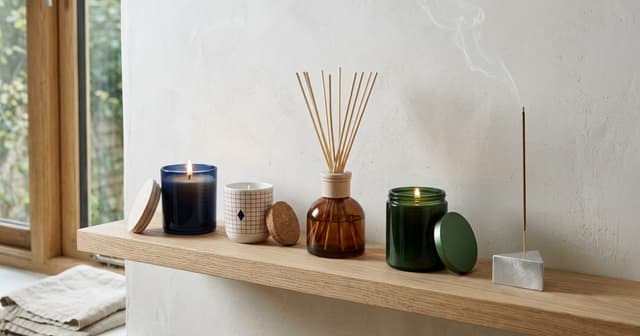
From now until March the air indoors is the air you make. Ten Nordic pieces for it: candles in glass and tin, reeds, a spray, a small aluminium pyramid.
Read More →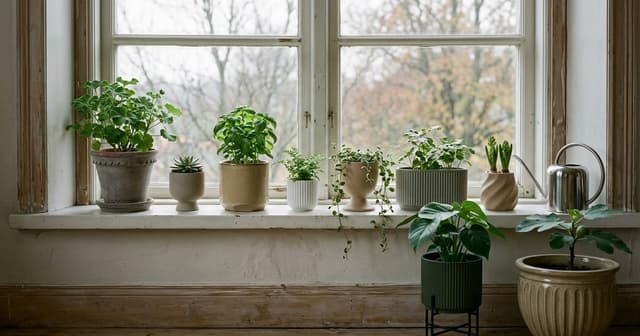
In October the plants come in and the windowsill becomes the brightest place in the flat. Ten Nordic pots for the next six months.
Read More →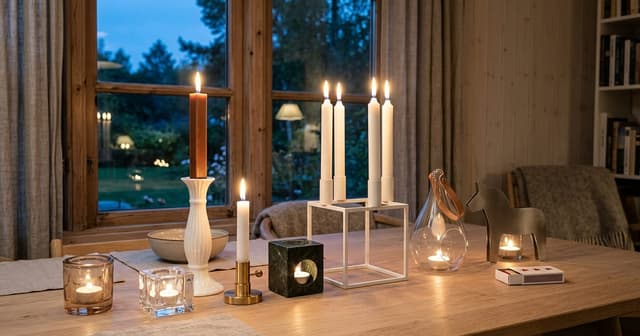
In the Nordic countries October is the month the candles come out and stay out until spring. Ten pieces in glass, brass, porcelain and steel to carry the flame.
Read More →