
Danish Design Icons: 10 Classics You Can Actually Afford
The famous Danish chairs and lamps cost a month's rent. The same houses make small things: ten Danish classics, from a cotton tea towel to a walnut dog.
Read More →The Nordic habit is not owning more, it is owning things that stay. Ten pieces in wool, cast iron, porcelain and steel, chosen for the decade after the purchase.
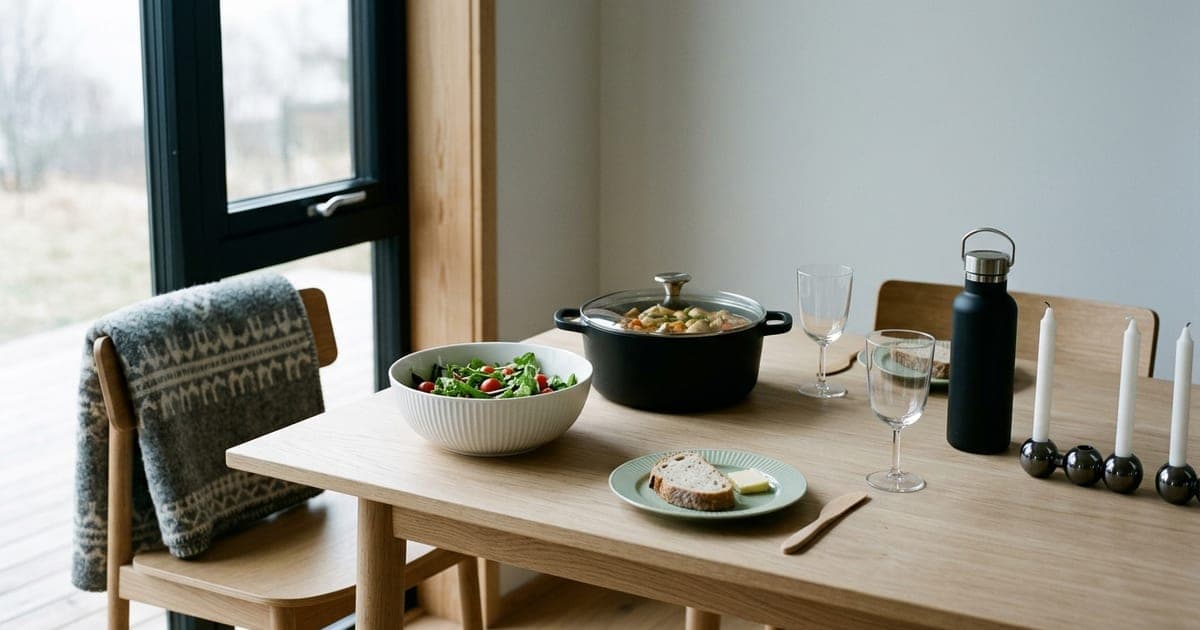
There is a version of Scandinavian design that arrives flat-packed and leaves in a skip four years later. There is another, older and quieter, that assumes you will keep the thing for thirty years: wool that is aired rather than washed, cast iron that can be scraped, porcelain in a pattern still being made, a candle holder you add to instead of replacing.
Buying better rarely means buying expensive. It means buying once, from makers still producing the same piece a decade on, in materials that improve with use or at least hold their ground. Ten of them are below, from a wooden butter knife that costs less than lunch to a shelf you can keep extending, and every one is in stock and available to compare across the UK, Germany, Norway and Denmark on ScandiDeals.
⸻
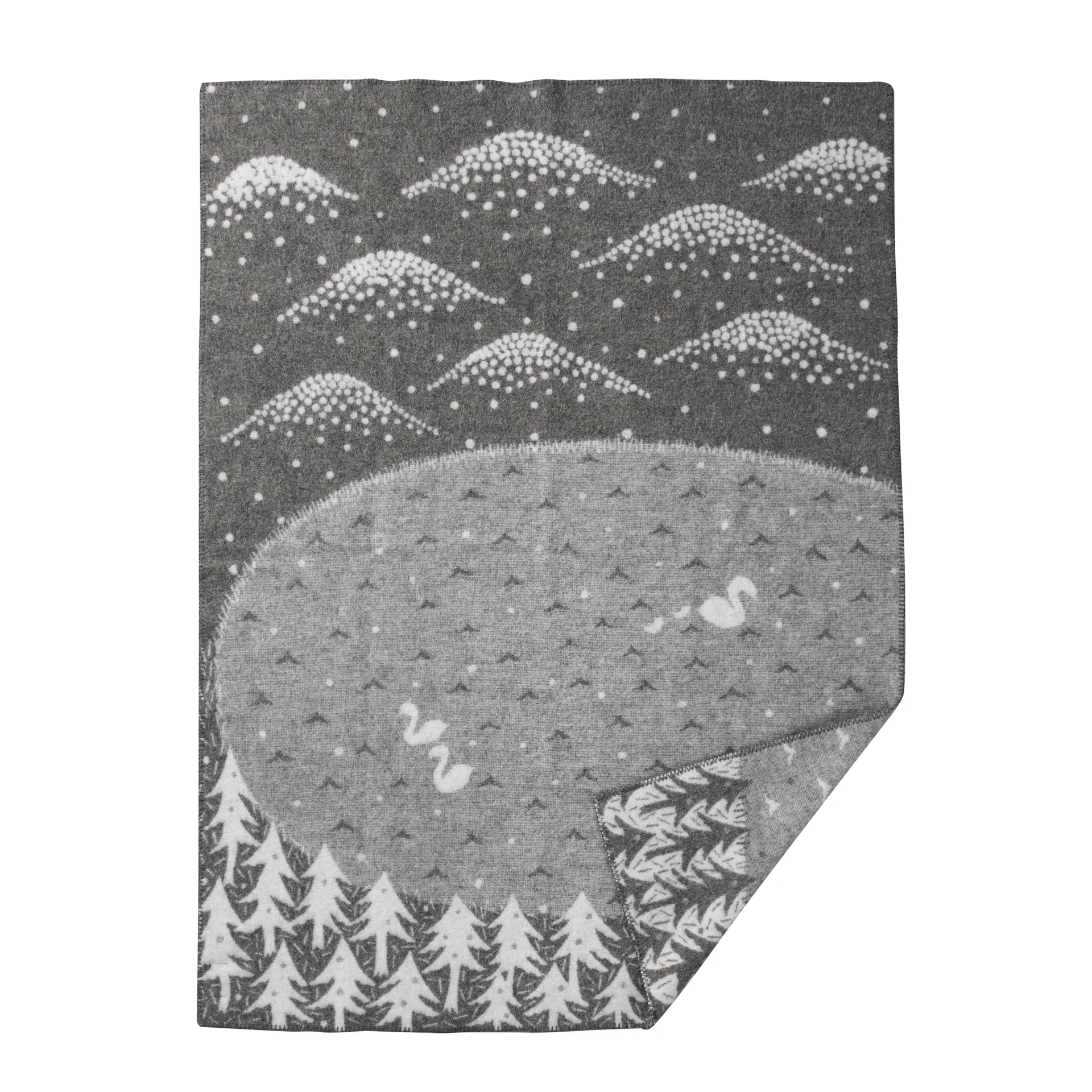
The Klippan mill has been weaving in southern Sweden since 1879, and the Lake in the Valley throw shows why the habit stuck. It is a landscape in grey and chalk white: hills stippled with snow above a lake with two swans on it, a band of fir trees along the lower edge. The wool does the work you cannot see. It holds warmth when slightly damp, sheds dirt, and does not go limp after a winter on the sofa. Air it on the balcony rather than washing it.
⸻
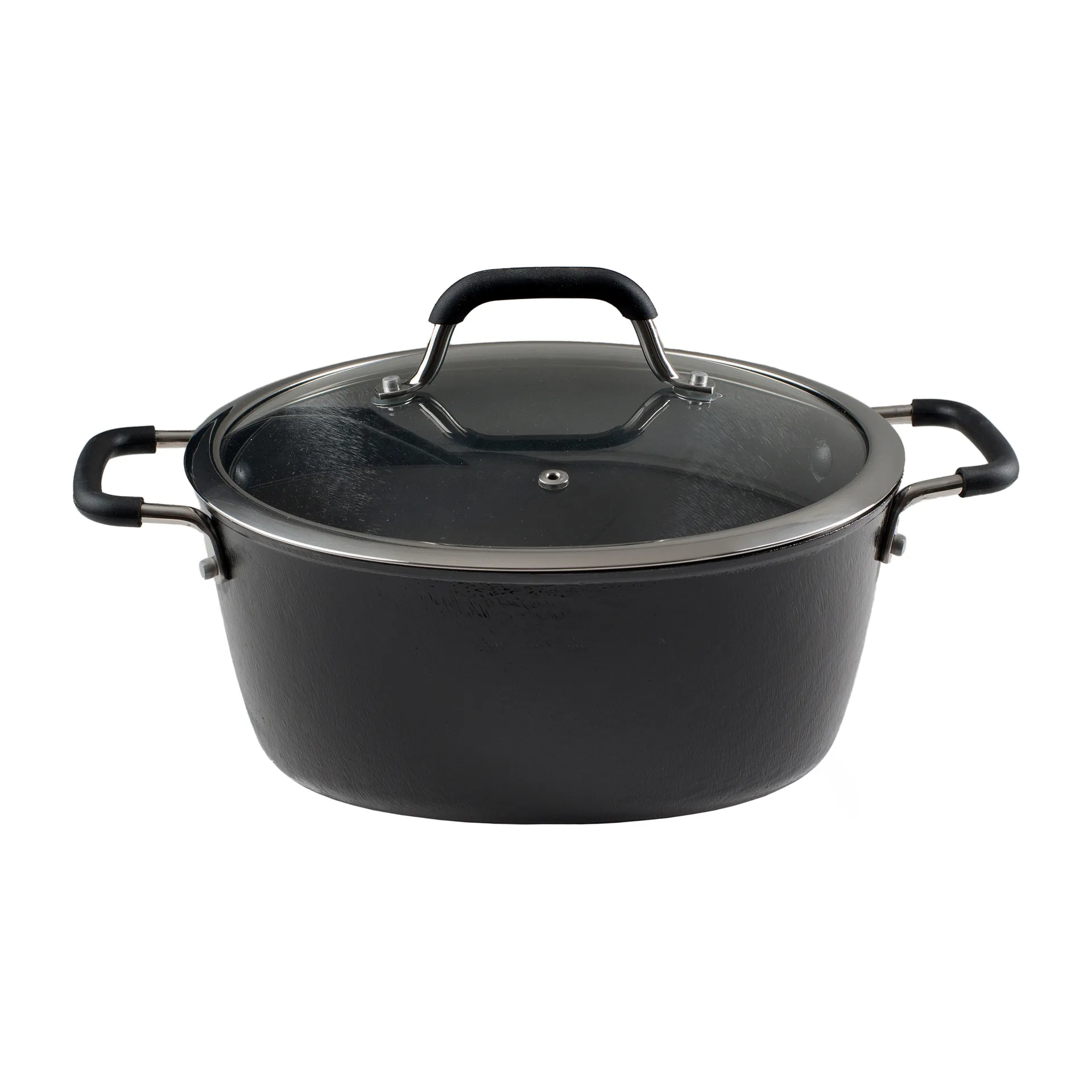
Cast iron cannot really be improved, only inherited. The Ronneby Bruk Ultra Light Original casserole answers the one honest complaint about the material, which is that seven litres of stew in a heavy pot is a two-handed lift. The walls here are thinner and the weight drops with them, while the base still takes heat slowly and holds it. Black enamel inside and out, a glass lid so you can watch a simmer, stubby handles at both sides.
⸻
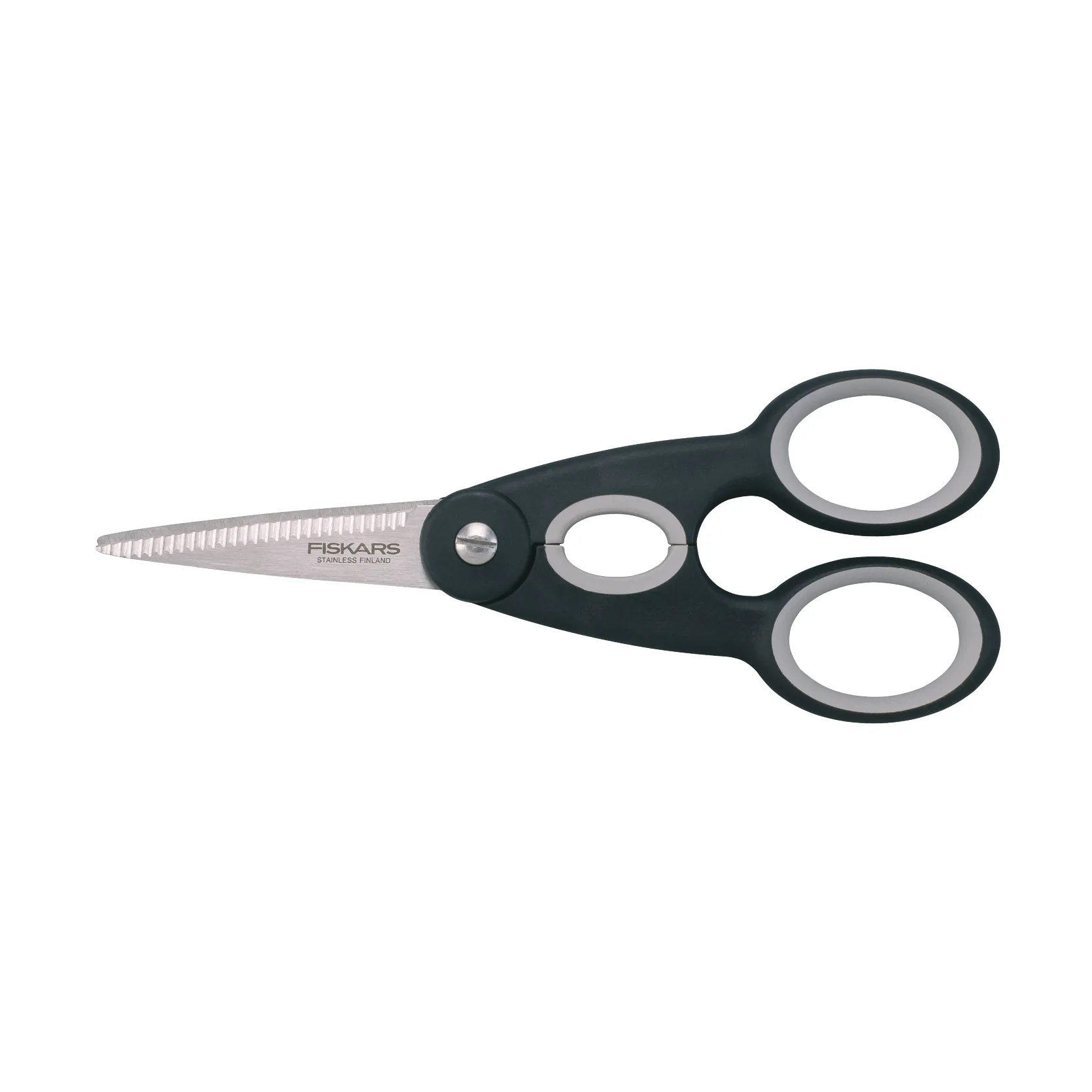
Most kitchen drawers hold three pairs of scissors and no good ones. The Fiskars Functional Form kitchen scissors replace all three. The blades are stainless steel with a finely scalloped edge on one side, so chives, bacon rind and baking paper are gripped rather than pushed away from the cut. The handles are the flat-sided moulded shape the Finnish maker has used for years, easy to hold with wet hands. Wash them by hand and they are still cutting when the kettle has been replaced twice.
⸻
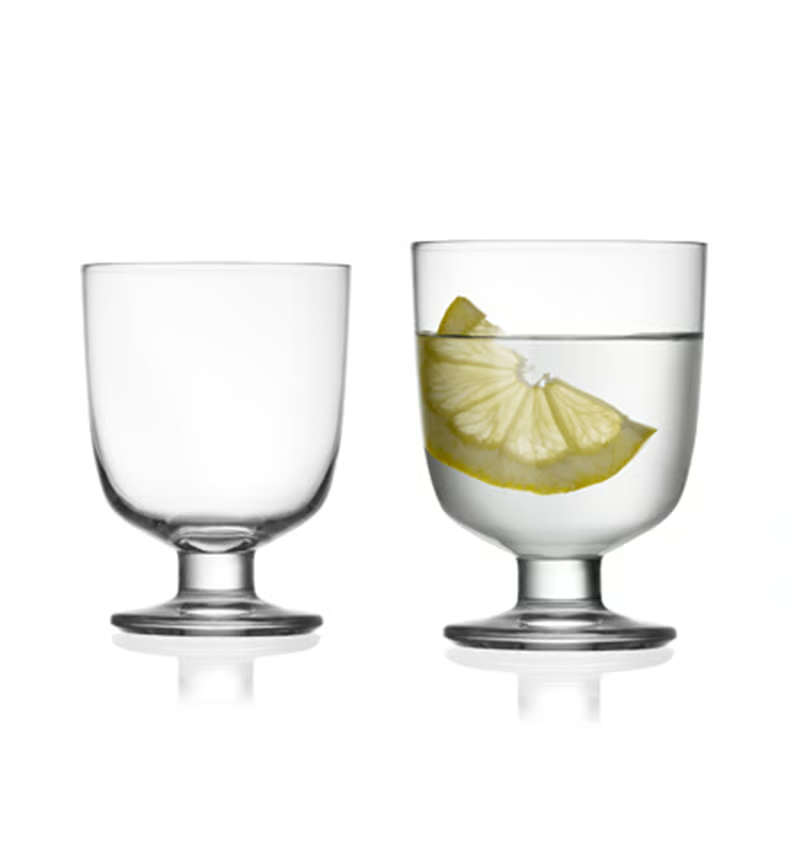
Glassware fails one piece at a time, which is the argument for choosing a design that stays in production. The Iittala Lempi glass comes in pairs: a straight-sided beaker of 34 centilitres on a short pedestal foot, somewhere between a tumbler and a wine glass and used happily as both. The foot lends a formality the plain shape does not have, so it carries water at lunch and wine at dinner. They stack, which small cupboards notice, and when one goes you buy one, not a new set.
⸻
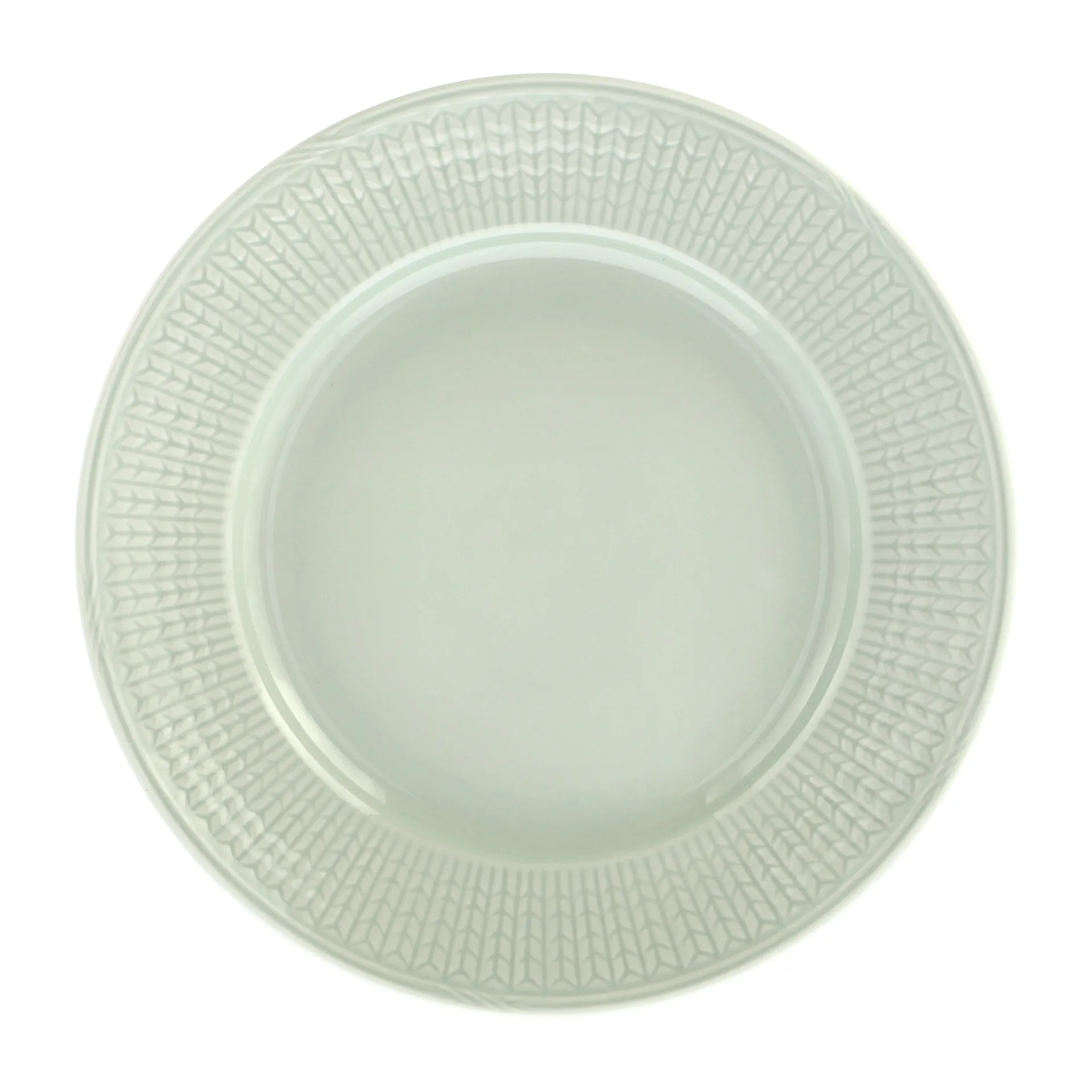
Rörstrand has been making porcelain since 1726, and Swedish Grace is the pattern that gets handed down. The small plate in meadow green carries the range's fluted rim, narrow ribs radiating from a plain centre, under a pale glaze soft enough to flatter most food. At 21 centimetres it is the side plate, the pudding plate and the one that takes a slice of cake at four o'clock. Buy two now and two next year if the budget says so: the pattern will still be there.
⸻
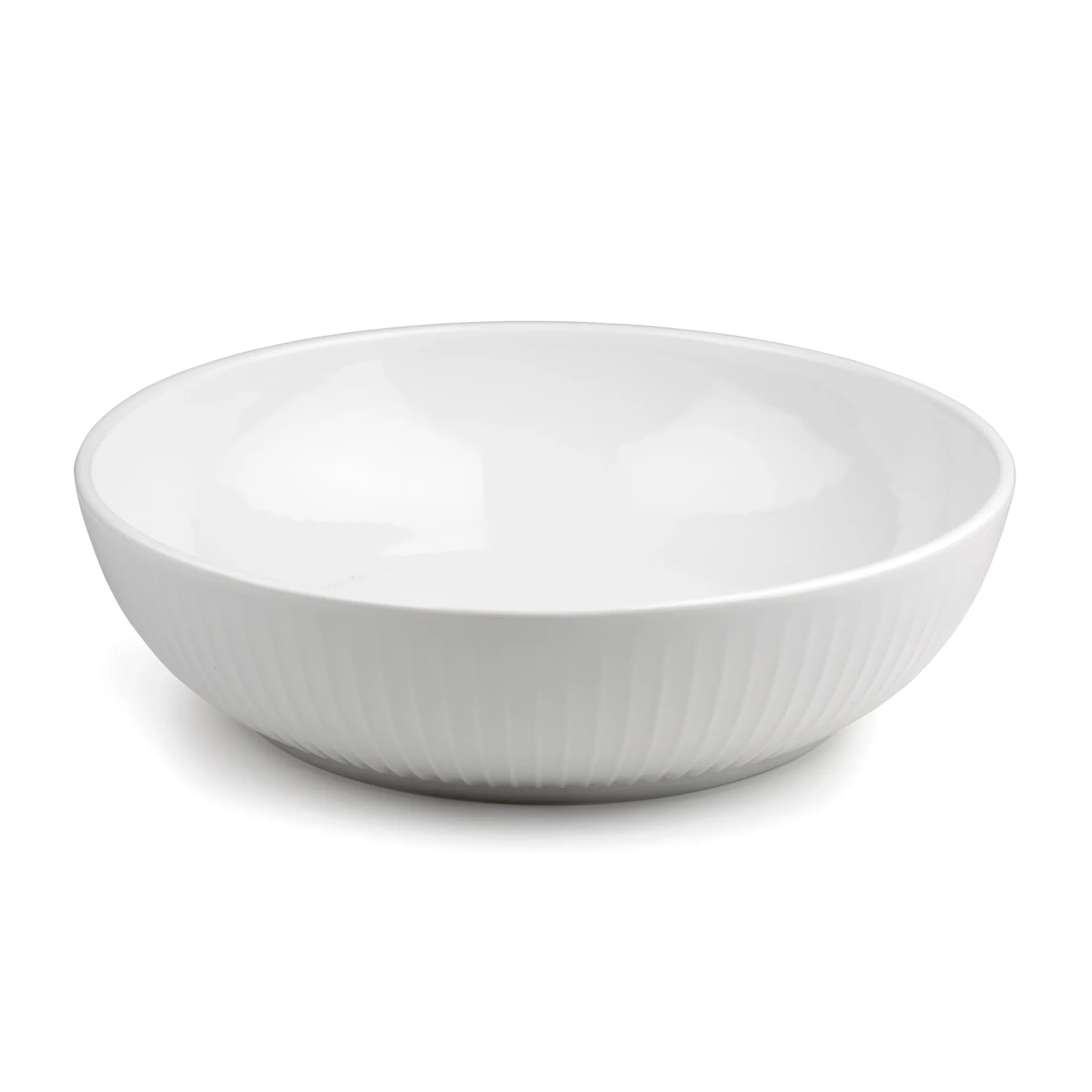
One deep white bowl does more work than four specialised dishes. The Kähler Hammershøi salad bowl is wide and gently rounded, glazed a clean white inside, with the shallow grooves that run around the outside of everything in the Hammershøi range. The fluting is not only decoration: it gives wet hands something to hold when the bowl is full. Salad, but also pasta for four, roast potatoes carried to the table, fruit left out between meals.
⸻
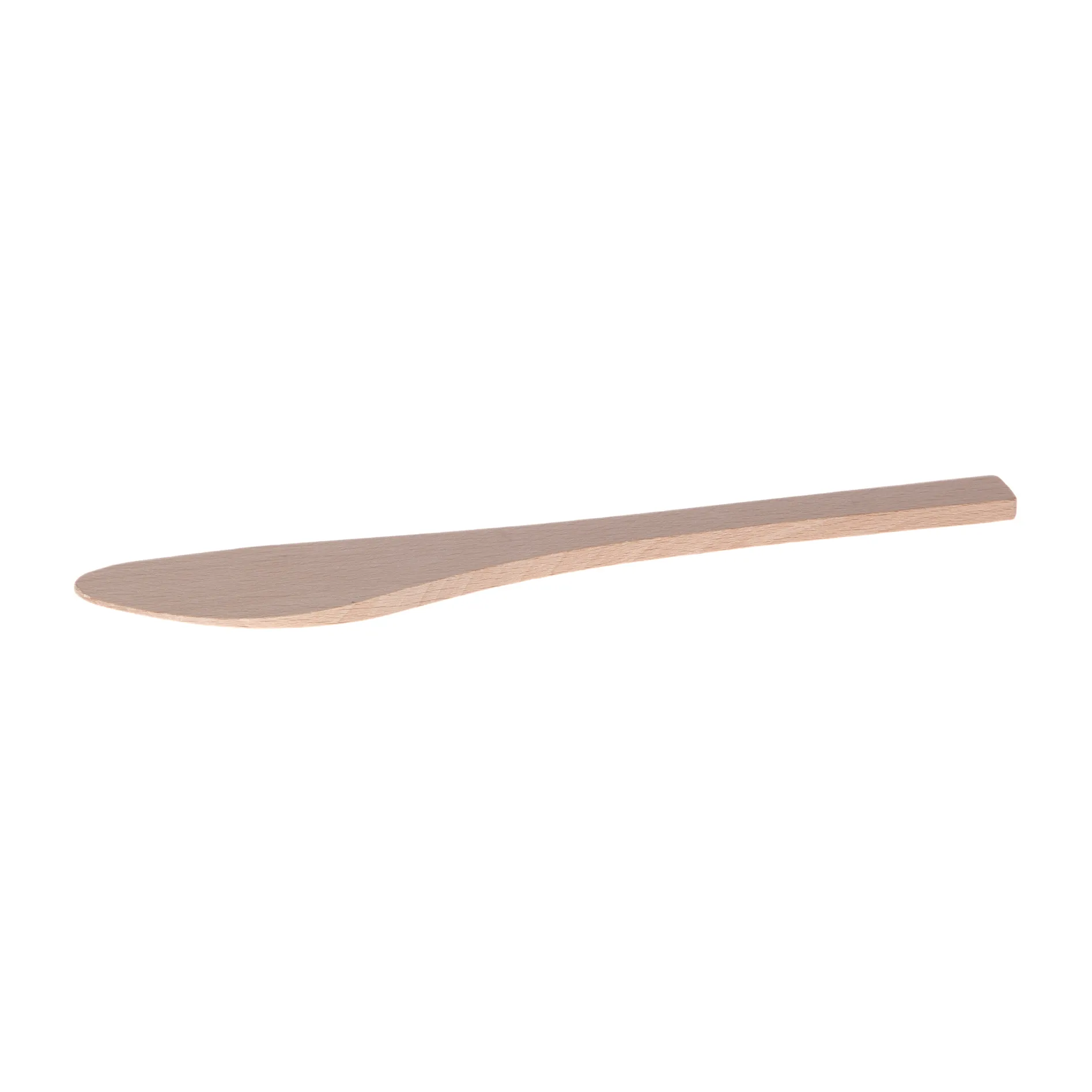
The least expensive thing here, and the one with the least to go wrong. The Iris Hantverk butter knife is a single piece of pale wood, a long slim handle tapering into a flat blade with a rounded tip. No rivets, no joint, no coating to wear through. It takes cold butter across bread without tearing it. Keep it out of the dishwasher, wipe it dry, and rub in a little oil when the grain looks thirsty.
⸻
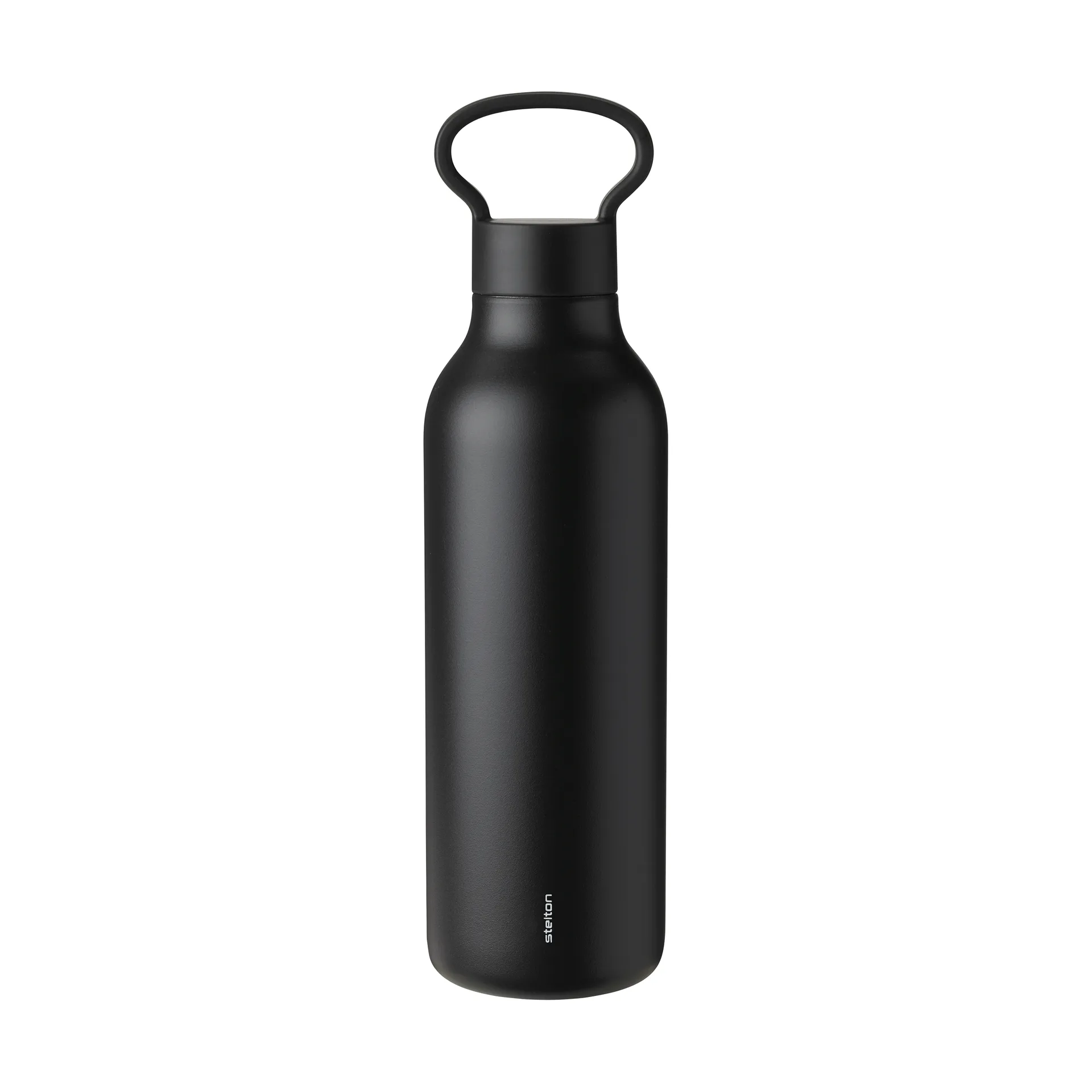
The Stelton Tabi bottle is the Danish house's reply to the disposable cup: a 0.55 litre double-walled steel flask in matte black, with a slim steel bail across the cap so it hangs from a finger or a bag strap. The vacuum wall keeps coffee hot through a morning of meetings and water cold through an afternoon outside. Steel takes the knocks that end a plastic bottle, and the mouth is wide enough for ice and for a brush, which is the real test of whether a flask stays in use.
⸻
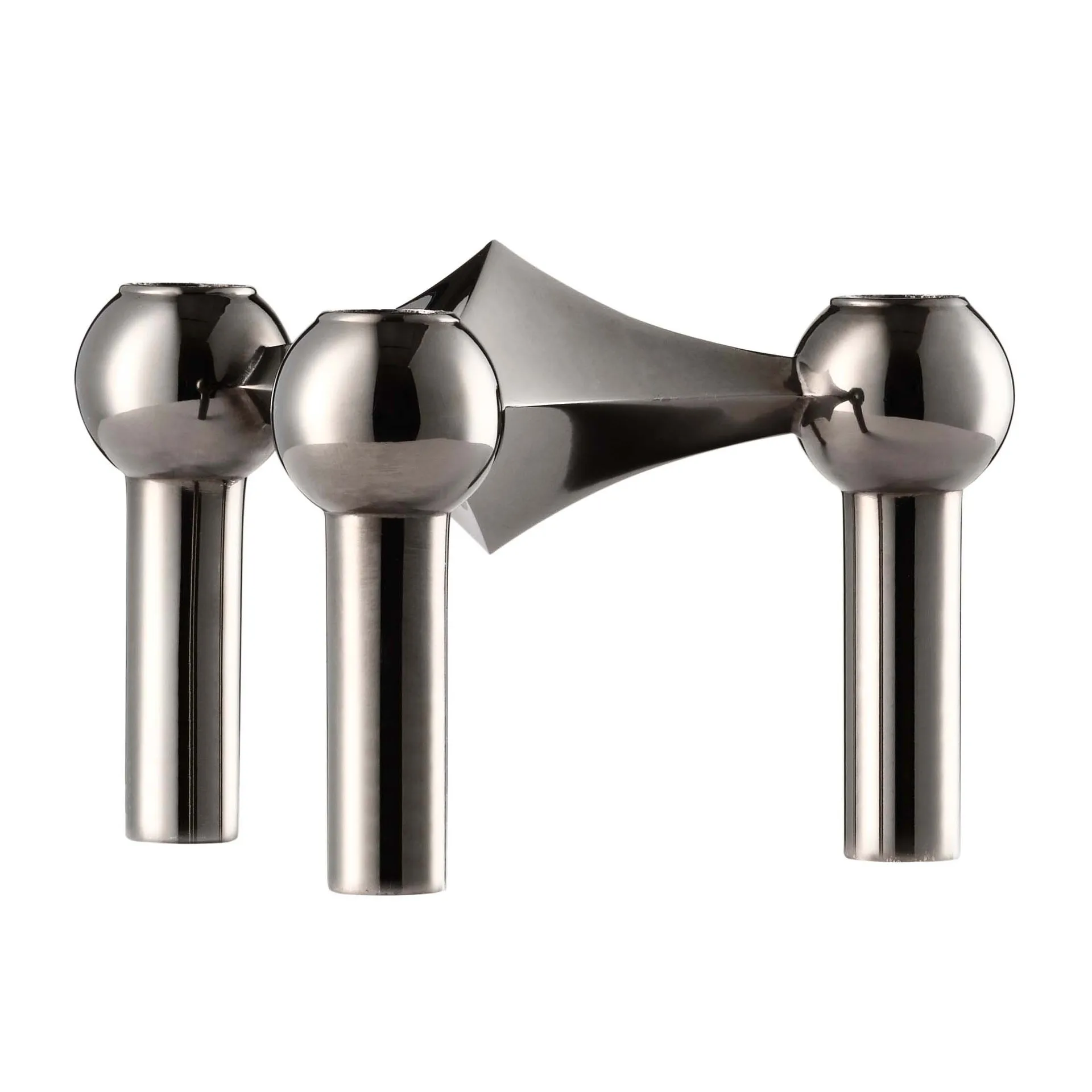
Werner Stoff and Hans Nagel designed this in the 1960s, and it remains the cleverest candle holder made. Each piece is a metal cup on a stem with a ball at either shoulder, and the balls lock into the neighbouring piece, so a line grows sideways across a table as far as you want to take it. The black chrome finish is darker and warmer than bright steel, nearer graphite than silver. Add to it at Christmas, and again the year after.
⸻
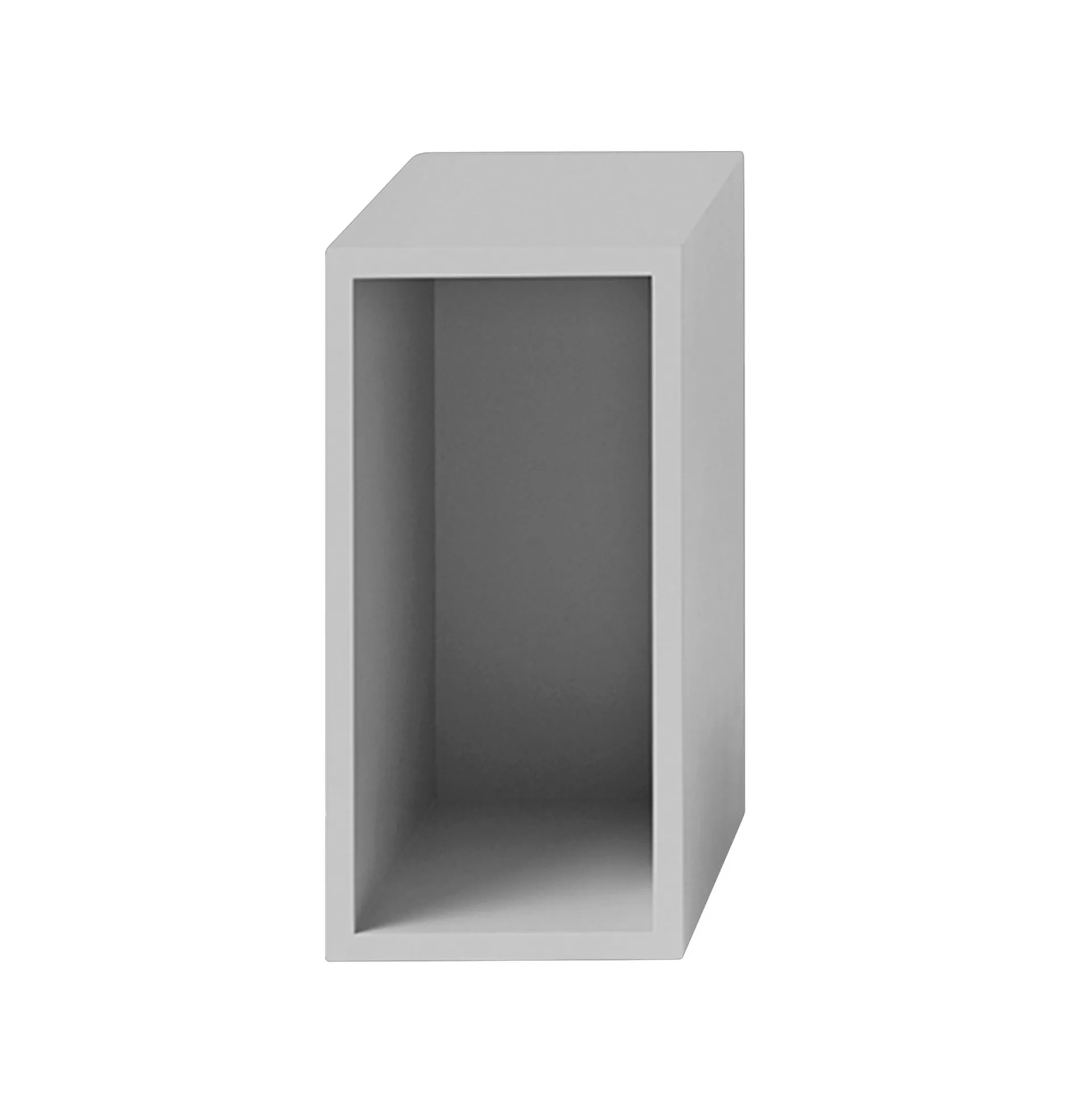
Shelving is usually bought in one panicked afternoon and outgrown within a year. The Muuto Stacked 2.0 module works the other way round: one open box in light grey with a back panel, joined to the next box and the one after, on the wall or standing on the floor, in a row or in a column. The small size is the sensible place to start, about a short row of books wide. Move flat and the same boxes make a different shape on a different wall.
⸻
None of this is an argument for spending more. It is an argument for spending once, on the version that will still be made in ten years, and then looking after it: oil the wood, dry the steel, air the wool, and let the enamel and the porcelain take their marks. The rooms that look calm in photographs are rarely full of new things.
What undermines buying well is paying more than you had to. Prices for these ten move between the Nordic shops, and rarely in step. Compare them across the UK, Germany, Norway and Denmark on ScandiDeals before you buy, and put the difference towards the next piece.
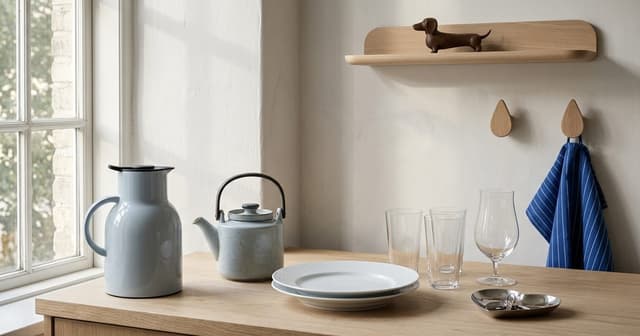
The famous Danish chairs and lamps cost a month's rent. The same houses make small things: ten Danish classics, from a cotton tea towel to a walnut dog.
Read More →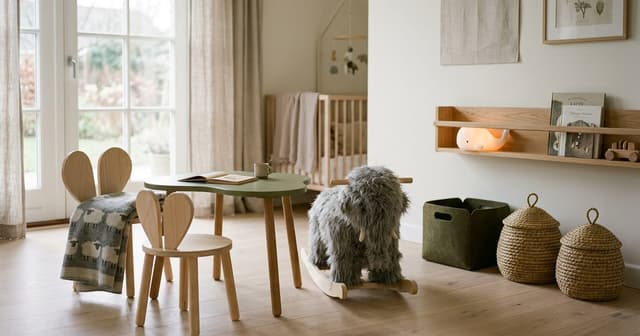
A child's room takes more wear than any other. Ten Nordic pieces built to come through it: birch, wool, felt, silicone and Finnish steel.
Read More →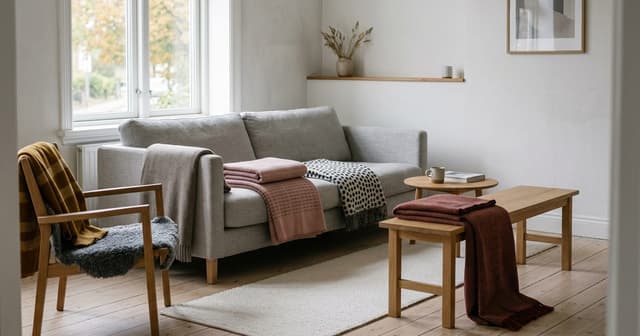
Mountain mills, merino, sheepskin and recycled yarn: 10 Nordic wool pieces for the cold half of the year, and how to choose one that lasts.
Read More →