
Nordic Kids' Rooms: 10 Pieces That Survive Childhood
A child's room takes more wear than any other. Ten Nordic pieces built to come through it: birch, wool, felt, silicone and Finnish steel.
Read More →The famous Danish chairs and lamps cost a month's rent. The same houses make small things: ten Danish classics, from a cotton tea towel to a walnut dog.

Danish design has an access problem. The pieces everyone can name — the lounge chair, the pendant over the dining table, the sideboard in teak — are furniture-shop money, and the copies that undercut them are worth less than the difference. So the whole idea arrives second-hand, as something admired in other people's houses.
What gets forgotten is that the same houses have always made small things. Georg Jensen began with silver you could hold in one hand. Stelton's best-known object is a coffee jug. Kay Bojesen made animals. A tea towel from a Copenhagen studio is still drawn by the people who draw the furniture, and it costs what a tea towel costs. This list is ten of those: ten Danish makers, one piece each, nothing over the price of a decent dinner out. All ten are in stock and available to compare across the UK, Germany, Norway and Denmark on ScandiDeals.
⸻
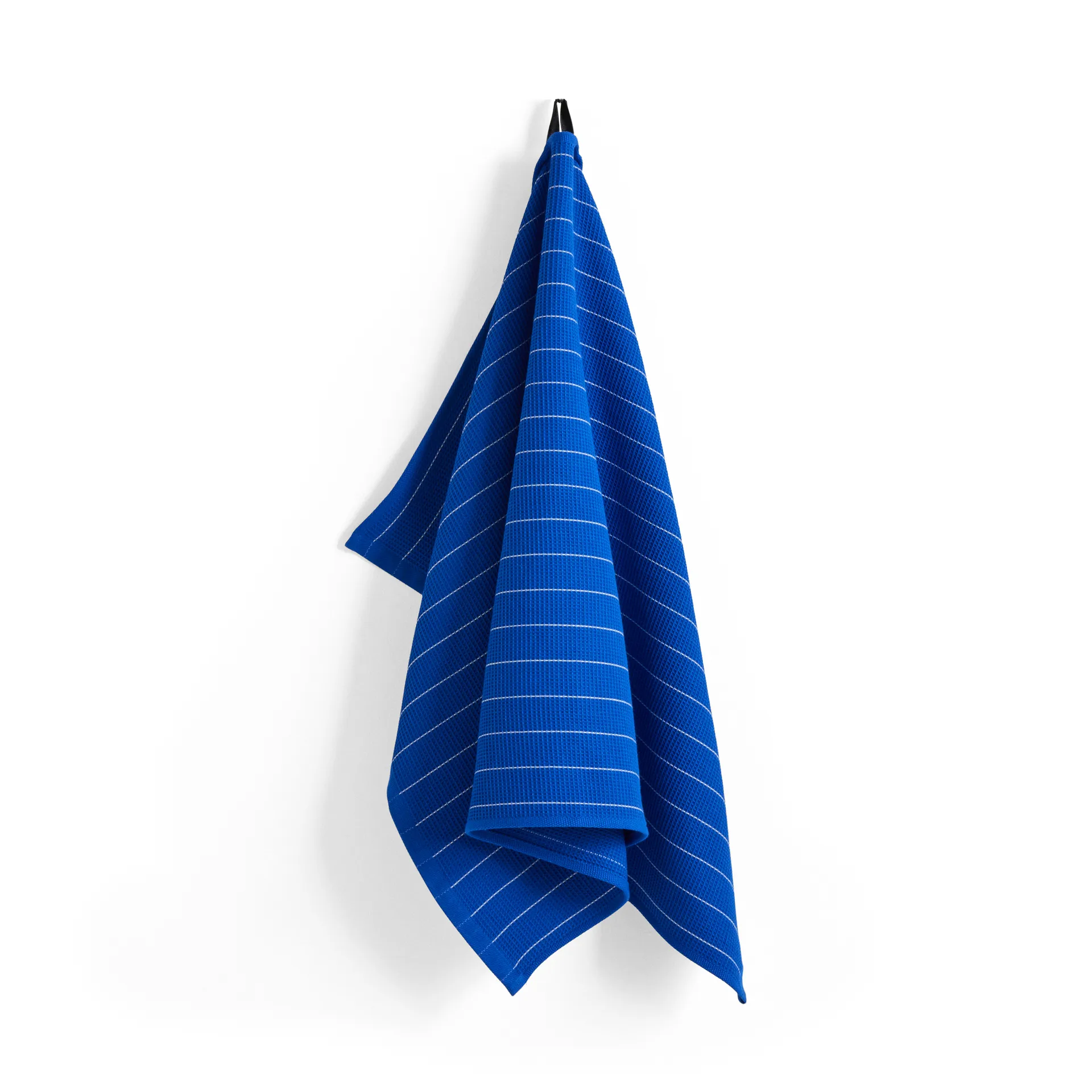
A tea towel is the cheapest way to live with a design house, and the one you handle most. The HAY Canteen kitchen towel in blue pinstripe is woven cotton, 52 by 80 centimetres, in a saturated cobalt crossed by fine white lines. The weave has enough tooth to dry a glass rather than push the water around it, and the colour is strong enough to be the one bright thing in a pale kitchen. HAY is a Copenhagen house with a talent for supermarket formats.
⸻
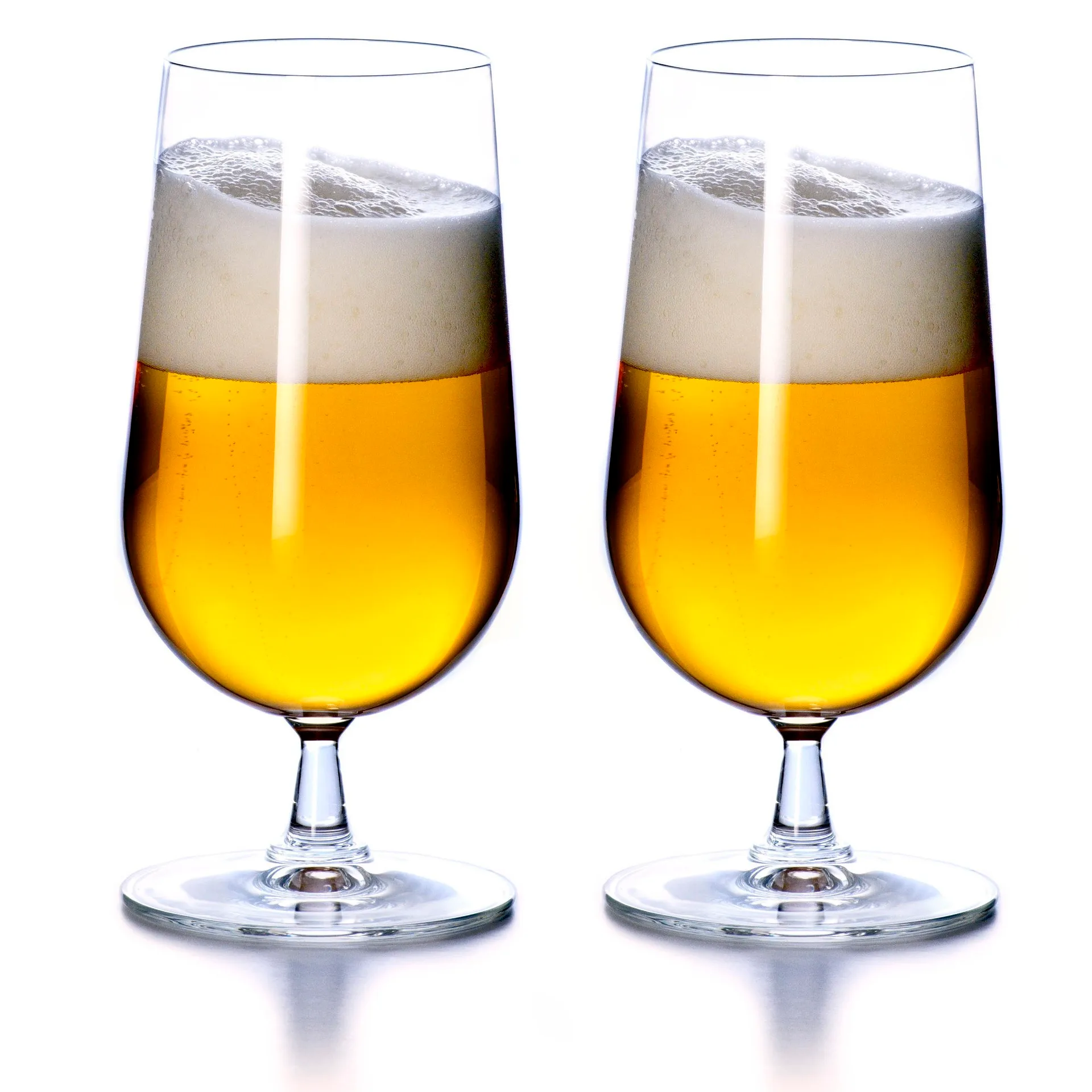
In Denmark beer is poured into something with a foot. The Rosendahl Grand Cru beer glasses, two in a pack hold 50 centilitres in a tulip bowl that narrows at the rim, on a short stem and a wide clear base. The shape keeps the head where it should be and the hand off the cold glass. Thin-walled, weighted low, and closer to a wine glass than to anything handed over a bar. Two to a pack, which is the right number for a Friday.
⸻
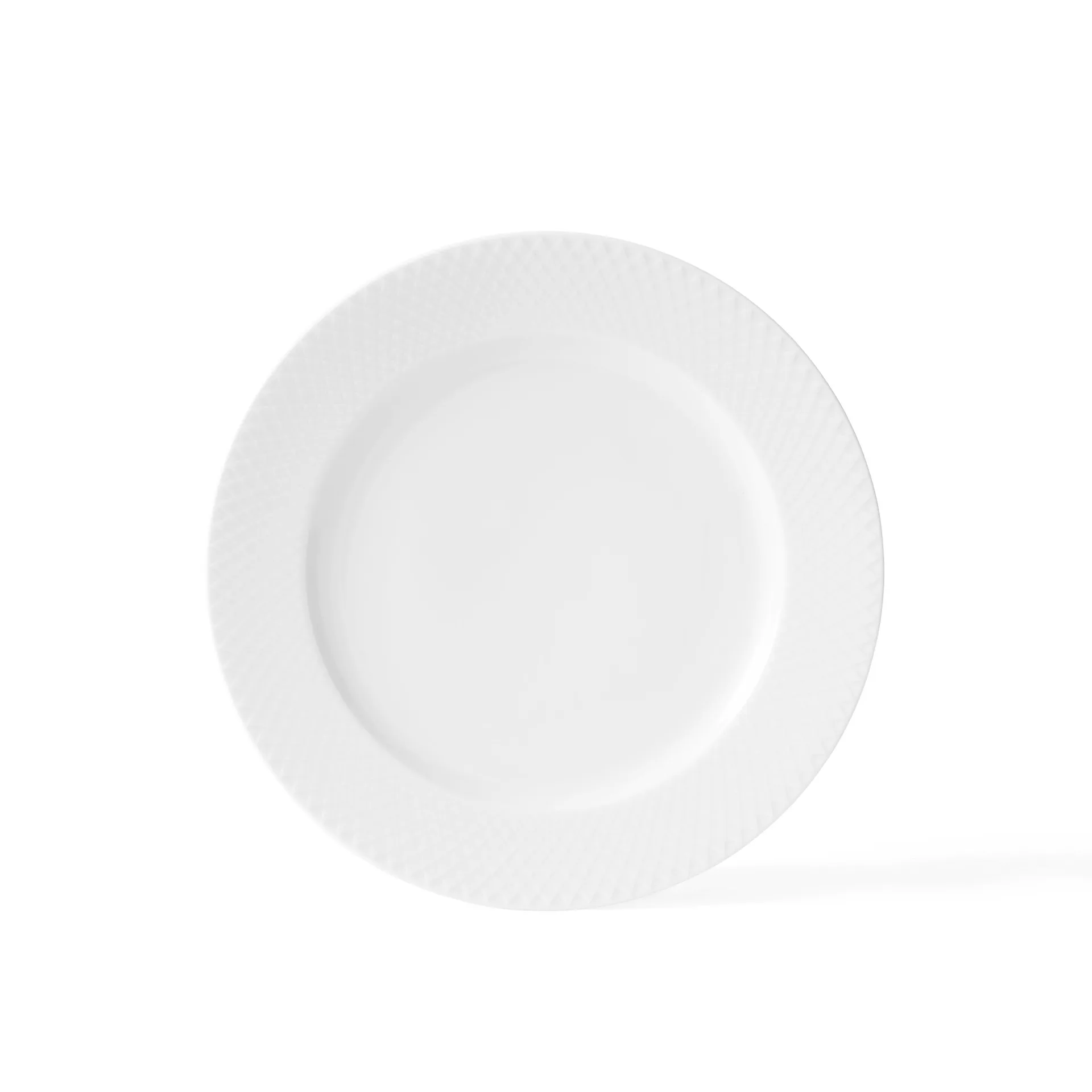
The Lyngby Porcelæn Rhombe plate, 27 centimetres across, is white porcelain with a broad rim cut into a field of small diamonds. The pattern is relief rather than print: it catches the light along the edge of the table, then disappears the moment there is food on the plate. The well is smooth and deep enough for sauce. Nothing on it can fade in a dishwasher, which is the practical case for putting the decoration in the shape instead of on the surface.
⸻
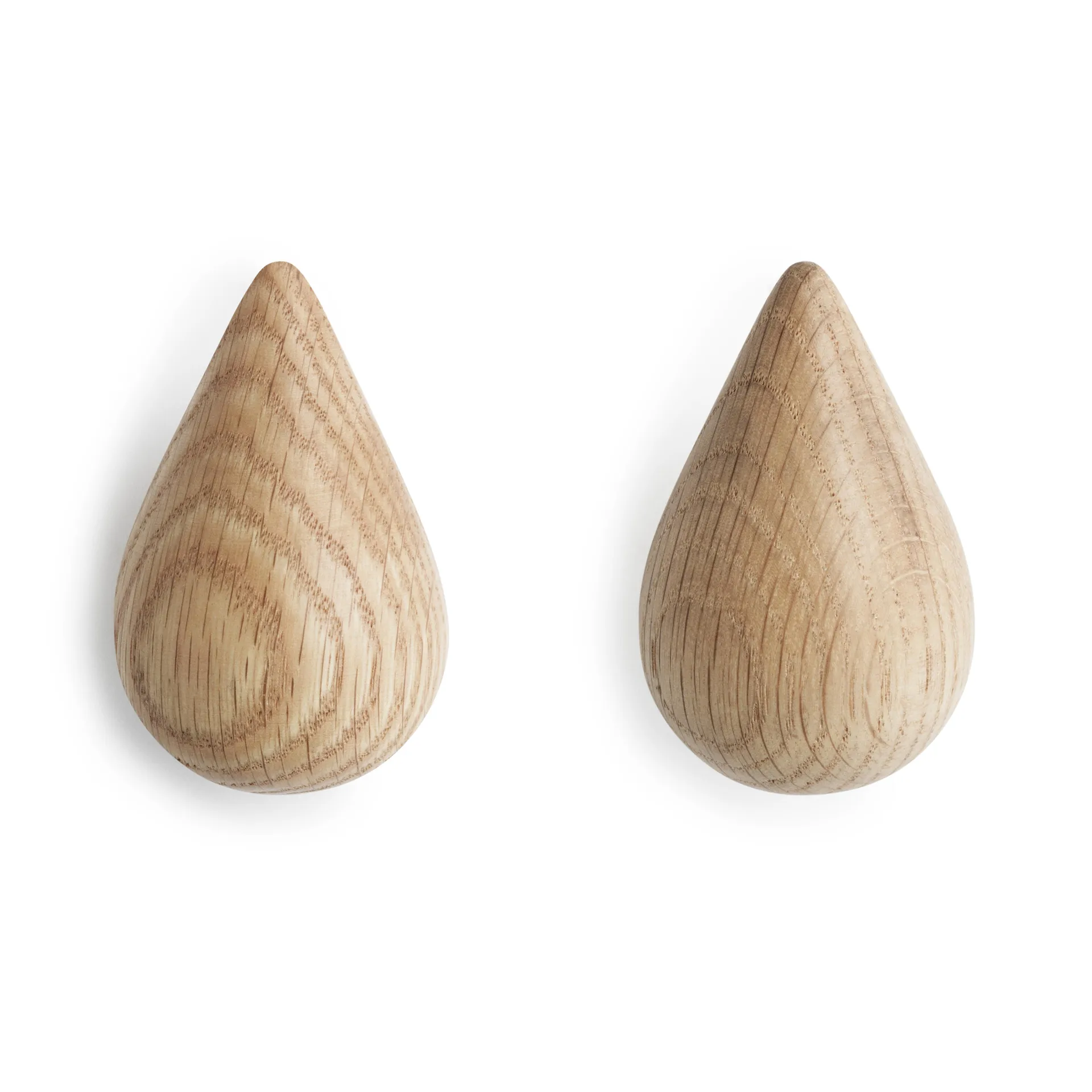
The Normann Copenhagen Dropit hangers in wood, large are a pair of turned teardrops that screw to the wall point-up, so a coat, a towel or a bag hangs on the widening curve below. There is no hook to catch a sleeve and no metal to mark a door frame. The grain runs the length of each drop, which means the two are never quite identical. Normann Copenhagen has built a business on this: an ordinary fitting, redrawn until it is worth looking at.
⸻
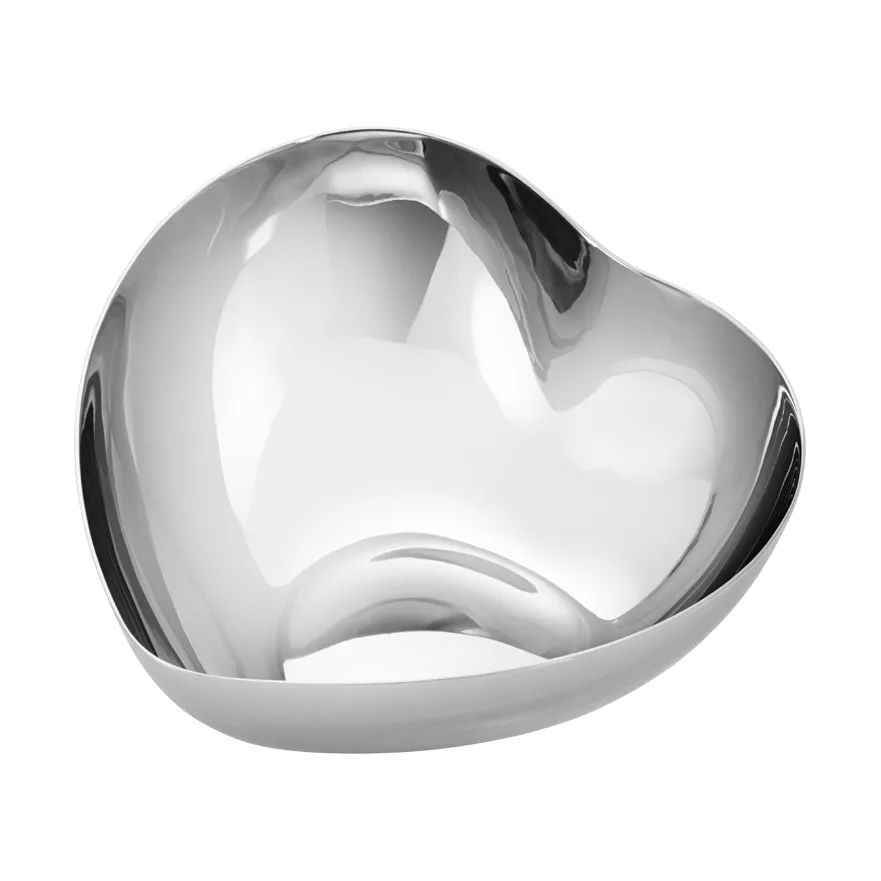
Georg Jensen started as a silversmithy in Copenhagen, and the discipline shows even at this end of the range. The Heart tray in polished steel, medium is a shallow heart pressed from a single sheet of stainless, the sides lifting and folding in at the cleft so the shape reads from above and as a plain curve from the side. Keys by the door, salt on the table, rings beside the sink. Steel rather than silver is why it costs what it does.
⸻
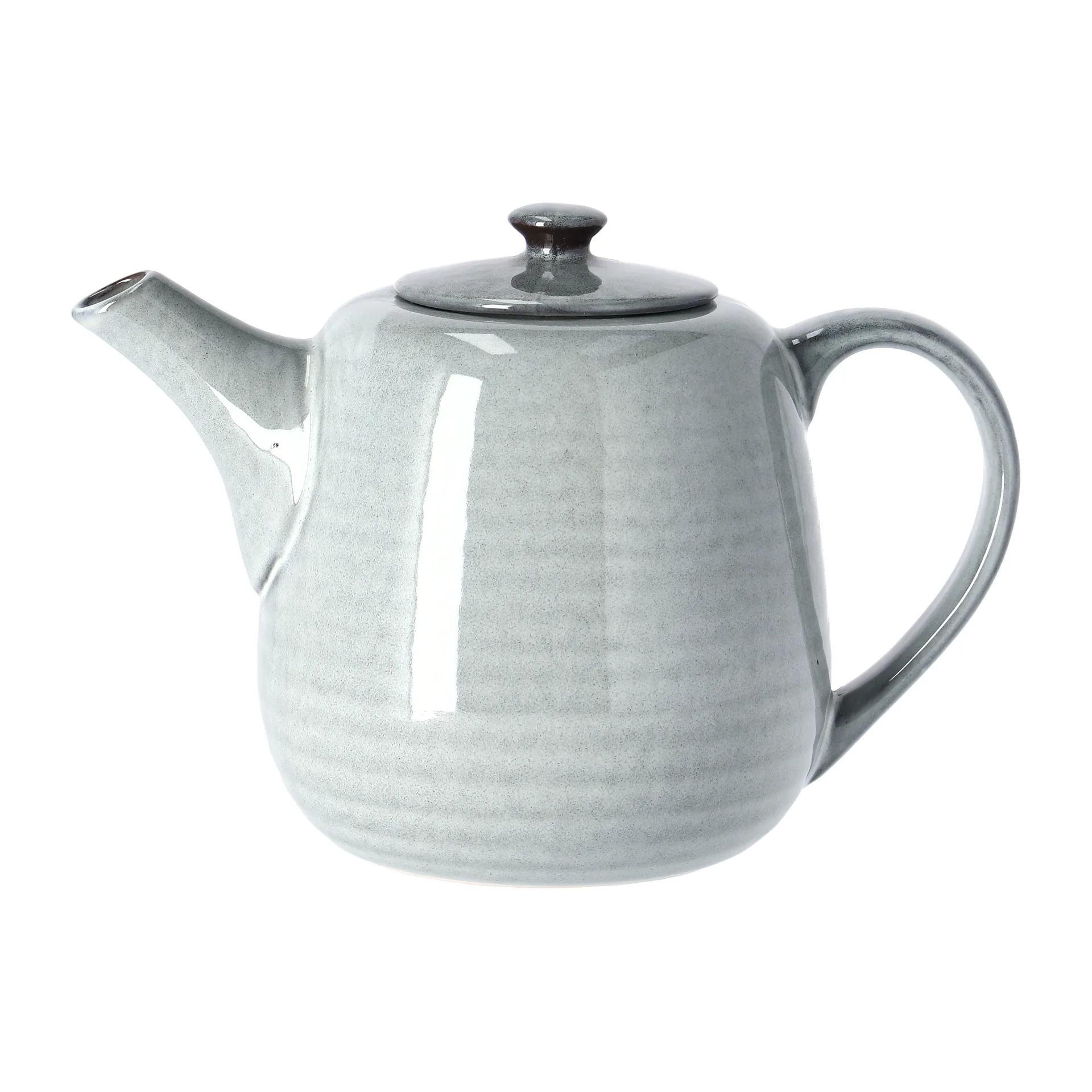
The Broste Copenhagen Nordic Sea teapot holds 1.3 litres, which is four large cups and a refill. It is stoneware under a reactive glaze that runs pale grey-blue over the belly and gathers darker at the rim, the spout and the lid knob, so no two pots come out the same. The body is thrown with faint horizontal bands, the handle is a full loop, and the weight is honest. Tea stays hot in it longer than in anything thin-walled.
⸻
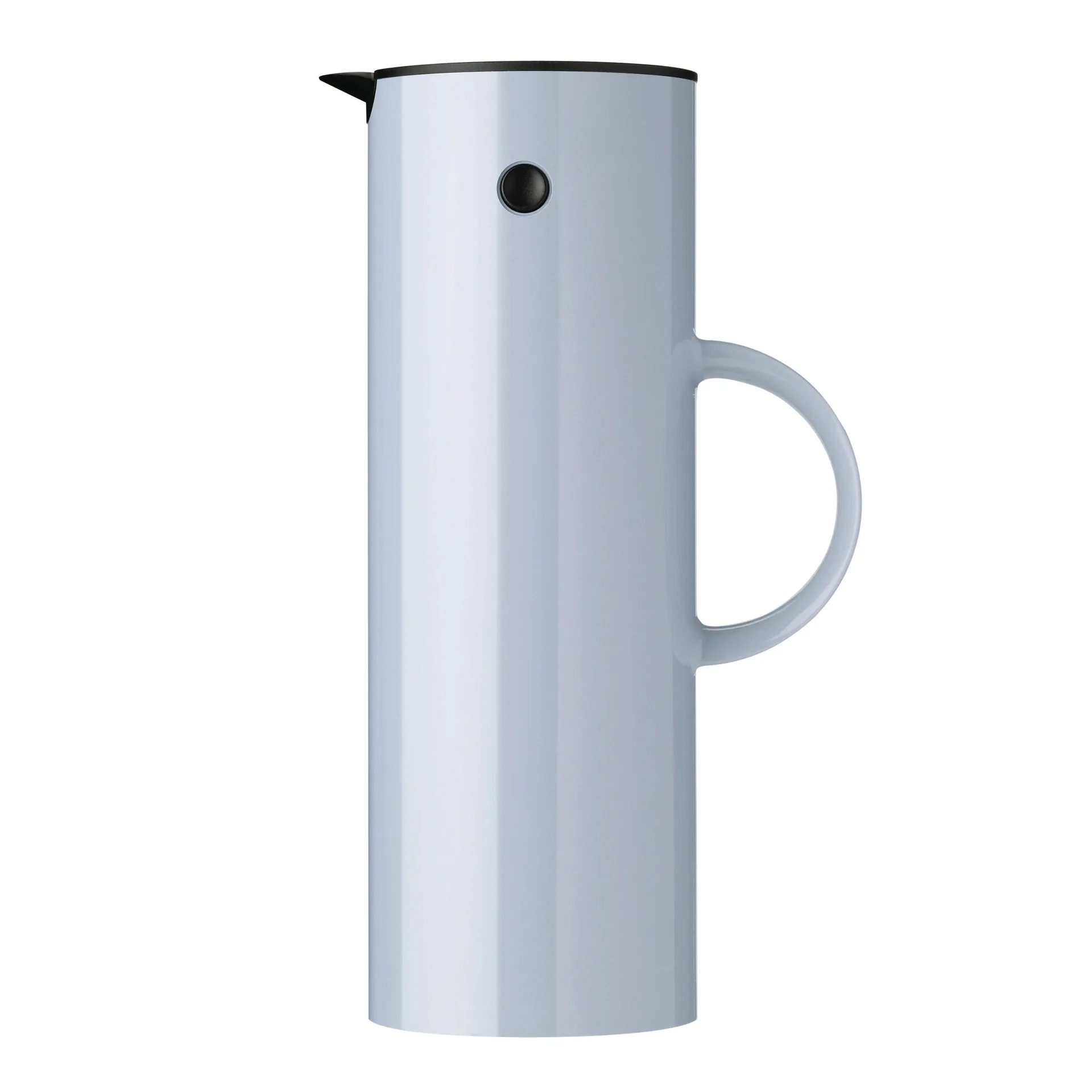
The Stelton EM77 vacuum jug in Cloud is the Danish object most likely to appear in a photograph of a Danish kitchen. Erik Magnussen drew it in 1977: a plain one-litre cylinder with a large C-handle and a black rocker stopper that tips open as you pour and shuts as you set the jug down, so the lid never leaves the table. This one is glazed a soft blue-grey. Coffee made at eight is still worth drinking at eleven.
⸻
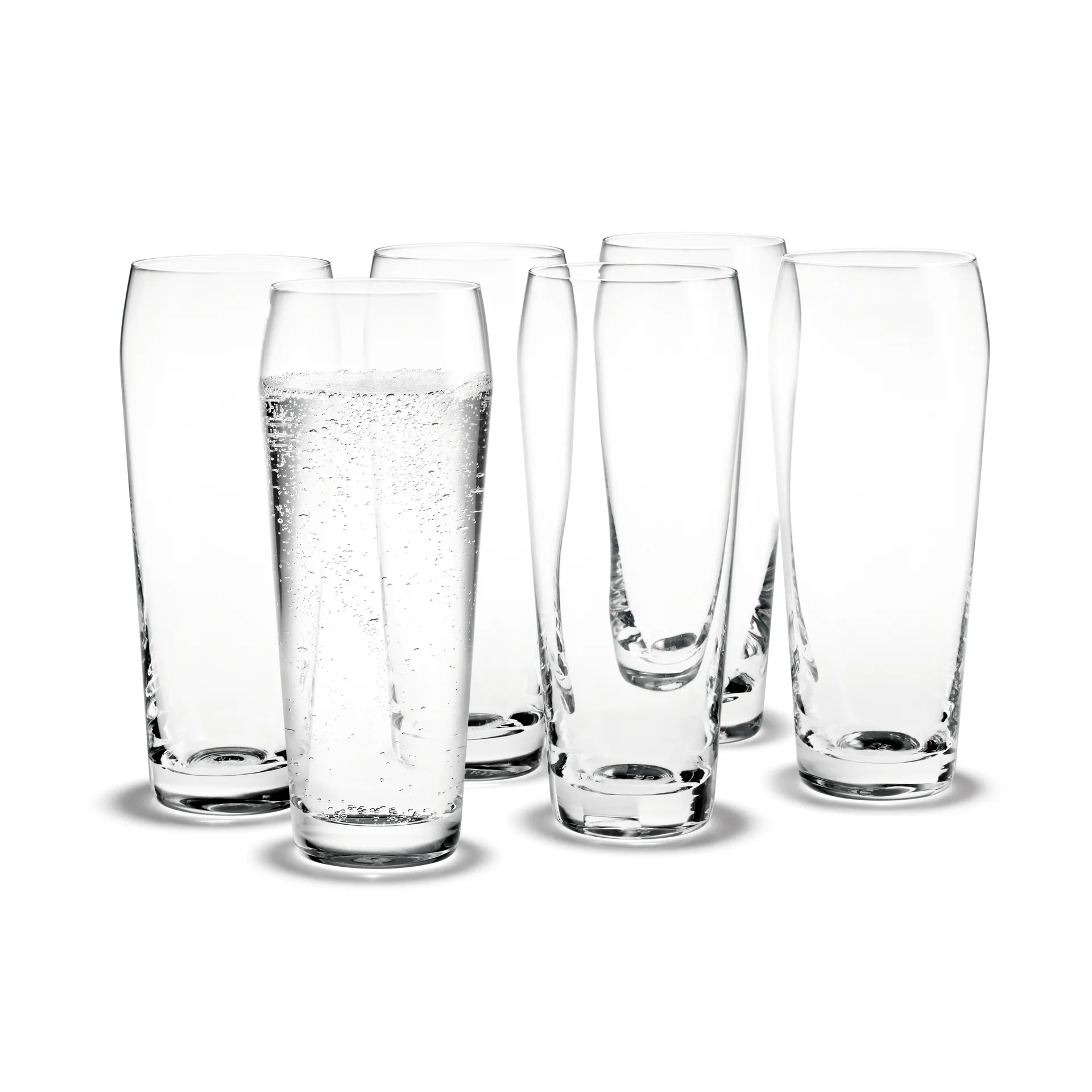
Buying six identical glasses is a decision rather than a purchase. The Holmegaard Perfection water glasses, 45 centilitres, six in a box are tall and barely conical, clear, with a thick base that holds them steady and a rim thin enough to drink from properly. Holmegaard has been making glass in Denmark since 1825 and understands the difference between plain and characterless. They take water, beer or a long drink, they stack on a shelf, and losing one does not break a set.
⸻
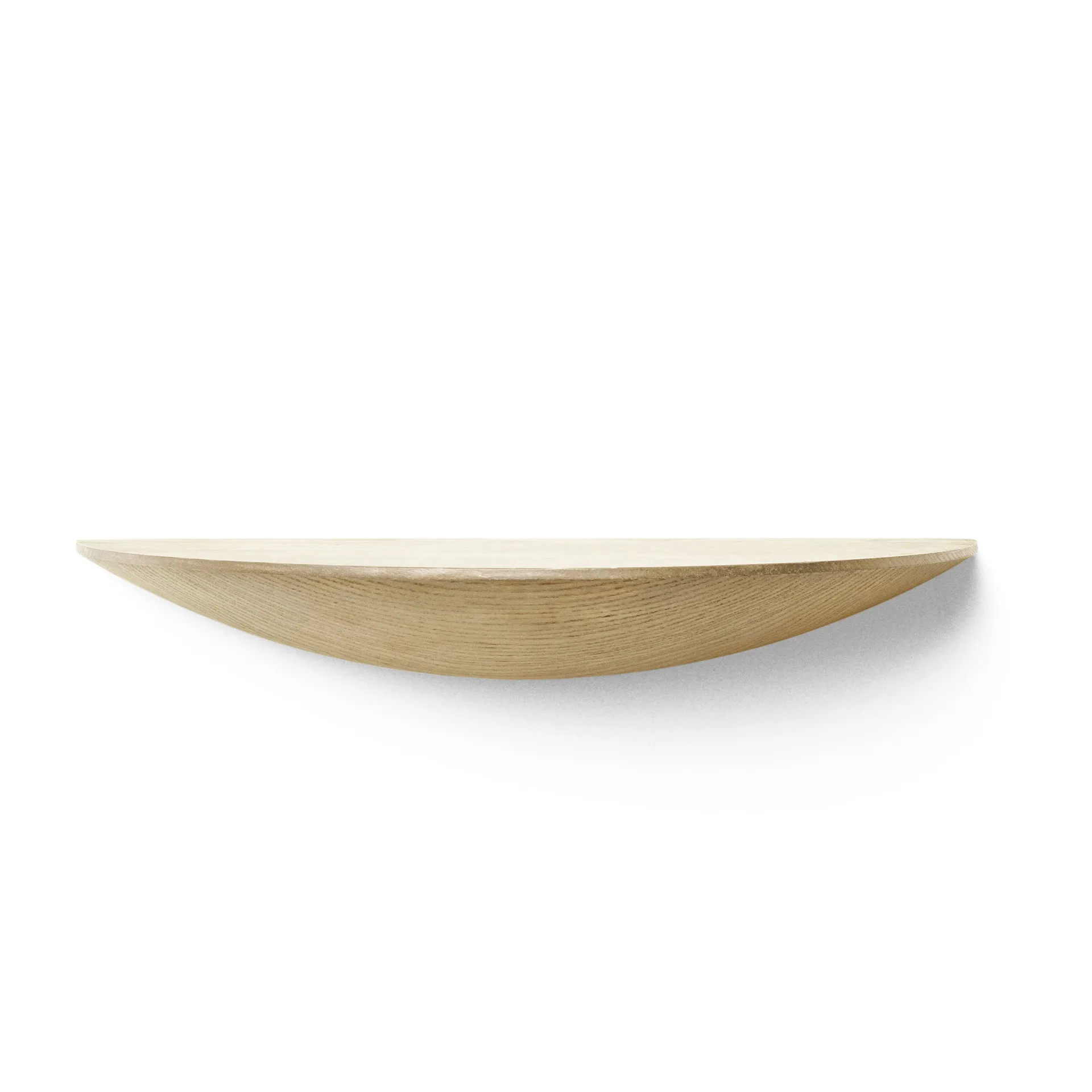
The Audo Copenhagen Gridy Fungi shelf in oak, medium comes off the wall the way a bracket fungus comes off a trunk: a shallow oak dish, deep where it meets the plaster and thinned to a fine edge at the front, with the curve doing the work a lip would do on a straight shelf. It takes keys, a candle, one small plant. Not storage, and not pretending to be. The oak is left pale and will warm over a few years.
⸻
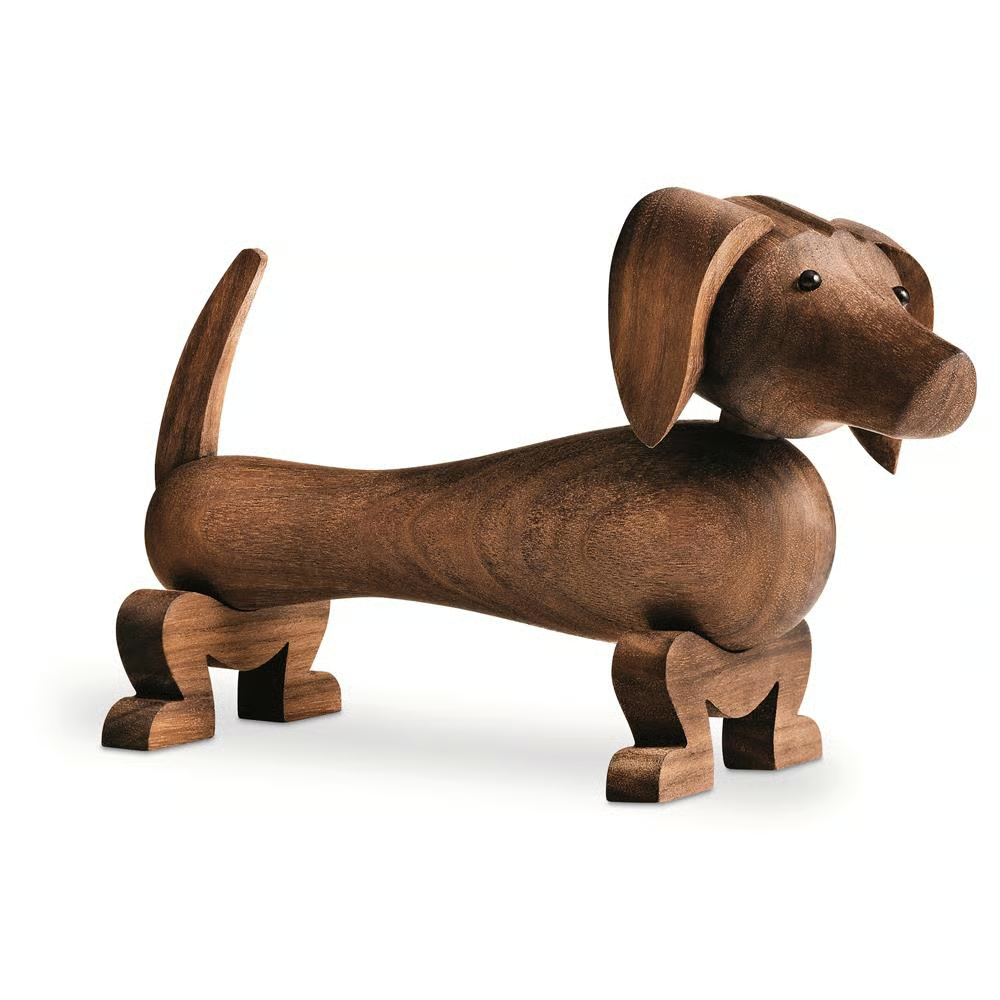
Kay Bojesen trained as a silversmith and is remembered for animals. The Kay Bojesen dog in walnut, 18.5 centimetres is a dachshund built from turned and sawn parts: a long barrel of a body, a blunt muzzle, two ears left loose so they swing, a tail up. The eyes are two dots and there is nothing else. Walnut darkens where it is handled, which happens to this one, because it is a toy by intention and an ornament only by habit.
⸻
None of these are the pieces that make the auction catalogues, and that is the point. Danish design was never only about furniture; it was a habit of drawing the ordinary object properly and then making it in numbers. A jug that closes itself, a hook with no hook, a pattern that lives in the porcelain rather than on it — the thinking is the same as in the expensive chairs, applied to things that sit in a drawer.
Bought one at a time, this is also how a house fills up without a scheme. Each of these ten will still be in use in ten years, and none of them commits you to anything else. All are in stock in the UK, Germany, Norway and Denmark, and what the Nordic shops charge for them moves from week to week. Compare the prices on ScandiDeals before you buy.
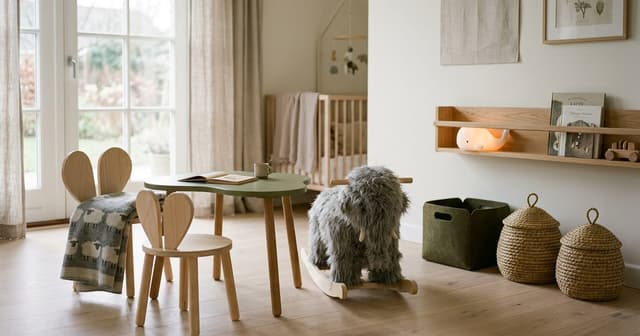
A child's room takes more wear than any other. Ten Nordic pieces built to come through it: birch, wool, felt, silicone and Finnish steel.
Read More →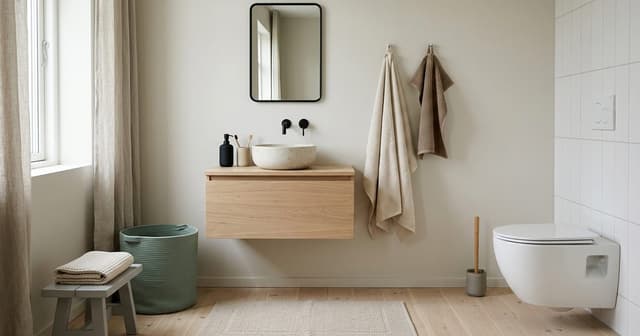
The bathroom is the smallest room and the one you use most. Ten Nordic pieces, from the pump on the basin to the basket in the corner.
Read More →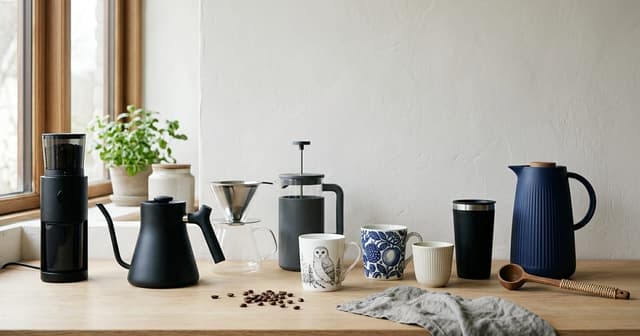
Nordic countries drink more coffee than anyone else. Ten pieces, from grinder and gooseneck kettle to thermos jug and mugs, for a slower morning.
Read More →